
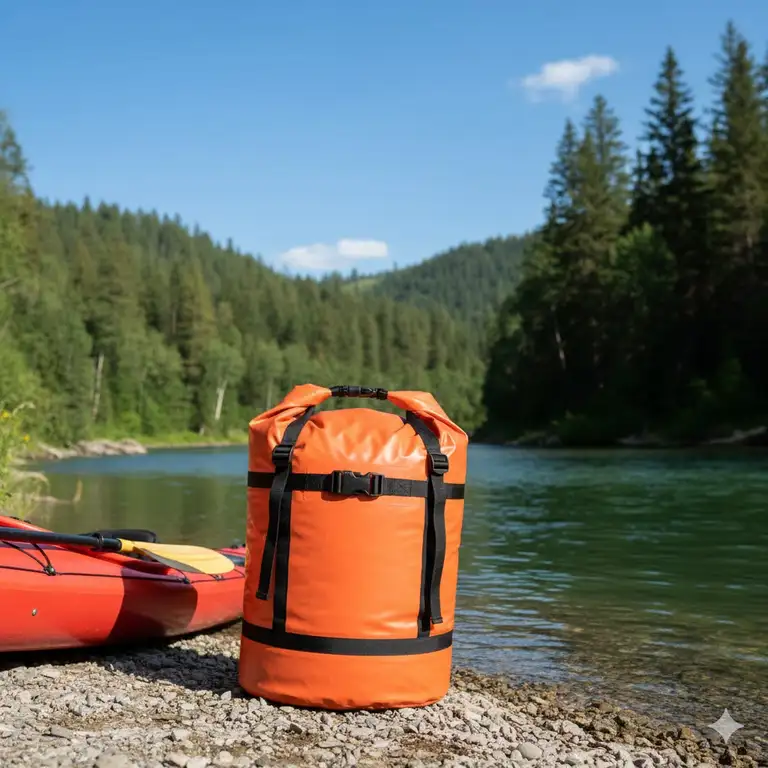
Let’s be honest. You’re not here if you’re packing for a weekend. You’re here because you have an expedition. You’ve got a mountain of gear—a week’s worth of clothes, a 4-season sleeping bag, a tent, cooking gear, you name it—and it all has to stay bone-dry. That’s where the 100l dry bag comes in. This isn’t just a bag; it’s a portable vault for your gear, a lifesaver on a multi-day raft trip, a cross-country motorcycle journey, or an overlanding adventure.
✨Was this helpful? Spread the word! 🚀
[addtoany]But a 100 liter dry bag is a serious piece of equipment, and picking the wrong one can be a disaster. A bag that’s just “water-resistant” won’t cut it when it’s strapped to a kayak going through rapids. Conversely, a bag that’s too heavy and complex might be overkill for the back of your truck.
This guide is my deep dive into the world of massive-capacity dry bags. We’ll break down the materials, compare the “bombproof” submersible zippers to the classic roll-tops, and, most importantly, review the top models on the market today. We’re talking about the gear haulers that can mean the difference between a warm, dry sleeping bag and a 50-pound sack of wet misery.
Before we jump into the top picks, let’s see how a 100l dry bag stacks up against other common gear-hauling solutions.
Table 1: 100L Dry Bags vs. Common Alternatives
| Feature | 100l dry bag | Hard Case (e.g., Pelican) | Standard Duffel / Backpack |
| Waterproofing | ✅ Excellent to Submersible (IPX6-IPX8) | ✅ Excellent (Submersible, IP67+) | ❌ Poor to None |
| Portability | Good (Often has backpack straps) | ❌ Poor (Heavy, rigid, wheels help) | ✅ Excellent (Designed for carry) |
| Storability | ✅ Excellent (Rolls/folds down) | ❌ Poor (Fixed volume) | ✅ Good (Collapsible) |
| Impact Protection | ❌ Poor to Fair | ✅ Excellent | ❌ Poor |
| Best For | Rafting, Kayaking, Motorcycle, Overlanding | Sensitive Electronics, Air Travel | Hiking, General Travel, Gym |
🌊 Quick Comparison: Top 7 100L-Class Dry Bags of 2025
Sometimes you just need to see the specs. Here’s a quick rundown of the heavy-hitters we’re about to explore. Note: We’re looking at the 100L “class,” so some may be slightly larger or smaller (e.g., 90L or 115L) but compete for the same user.
Table 2: Top 7 Quick Spec Comparison
| Product | Capacity (Liters) | Primary Material | Closure System | Carry System | Price Tier |
| YETI Panga 100 | 100L | High-Density Nylon / TPU | HydroLok Zipper (Submersible) | Backpack / Duffel | 💰💰💰 Premium |
| Sea to Summit Hydraulic Pro | 100L | 1000D TPU-Laminated Nylon | Roll-Top | Backpack Harness | 💰💰💰 Premium |
| NRS Bill’s Bag | 110L | TobaTex (PVC) | Roll-Top | Backpack Harness | 💰💰 Mid-Range |
| SealLine Boundary Pro | 115L | 300D Urethane-Coated Nylon | Roll-Top | Backpack Harness | 💰💰💰 Premium |
| Earth Pak Duffel | 100L | 500D PVC | Roll-Top | Backpack / Duffel | 💰 Budget |
| IDRYBAG Duffel | 100L | 840D TPU | Roll-Top | Backpack / Duffel | 💰 Budget |
| COR Surf Duffel | 100L | PVC Tarpaulin | Roll-Top | Backpack / Duffel | 💰 Budget |
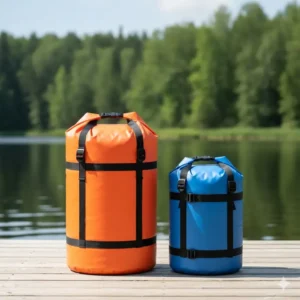
🏆 Top 7: Expert Analysis of the Best 100L Dry Bag Options
I’ve hauled, thrown, strapped, and submerged these bags. Here’s the detailed breakdown of who they’re for and how they perform in the wild.
1. YETI Panga 100 Waterproof Duffel (Premium Submersible Pick)
If you’ve ever looked at a river and thought, “I wonder if my bag could survive at the bottom of that for 30 minutes?”—the YETI Panga is your answer. This isn’t just a dry bag; it’s a submersible fortress.
- Specifications:
- Material: High-density nylon “ThickSkin” shell with TPU lamination.
- Closure: Patented HydroLok Zipper. This is the star of the show. It’s a true IPX7-rated waterproof zipper, meaning it can be fully submerged.
- Carry: Removable backpack straps (DryHaul straps) and multiple grab handles.
- Extras: Laminated interior mesh pockets.
- Customer Review Analysis: Owners universally praise its “bombproof” construction. The word “indestructible” comes up a lot. The main (and only significant) complaint is the stiffness of the zipper, which is a necessary trade-off for its submersible rating. Pro-tip: It comes with zipper lubricant—use it!
- Warranty: YETI offers a 3-year warranty on the Panga series.
- Professional Applications: Ideal for fly-fishing guides, offshore boaters, and anyone carrying irreplaceable electronics (cameras, laptops) in high-stakes water environments.
- Pros/Cons Analysis:
- Pros: ✅ Truly submersible (IPX7), extreme abrasion resistance, excellent backpack straps.
- Cons: ❌ Extremely expensive, HydroLok zipper requires maintenance and is tough to pull.
2. Sea to Summit Hydraulic Pro Dry Bag (100L) (Rafting-Ready Pick)
This is a newer, high-tech contender for the premium crown. Sea to Summit took the classic roll-top and perfected it with modern materials and a seriously comfortable carry system.
- Specifications:
- Material: 1000D TPU-laminated nylon (a super-tough, PVC-free fabric).
- Closure: Standard roll-top with an interlocking top rail, plus a removable top compression strap.
- Carry: A fully adjustable, EVA-foam padded backpack harness. This is not just two webbing straps; it’s a real harness.
- Extras: Oval base to prevent rolling, multiple lash points.
- Customer Review Analysis: Users are consistently shocked by the comfort of the backpack harness, stating it makes carrying a 100l dry bag actually feasible. They love the toughness of the PVC-free fabric and its smooth, non-snagging finish.
- Warranty: Sea to Summit offers a “lifetime guarantee” against manufacturing defects.
- Professional Applications: Expedition kayakers, canoe trip outfitters, and remote researchers who need to portage (carry) their gear long distances.
- Pros/Cons Analysis:
- Pros: ✅ Best-in-class backpack harness, extremely durable PVC-free material, oval base is practical.
- Cons: ❌ Premium price point, roll-top is not submersible like a zipper.
3. NRS Bill’s Bag Dry Bag (110L) (The Paddler’s Classic)
Talk to any professional river guide, and chances are they’ve owned or used an NRS Bill’s Bag. It’s a legend. It’s not fancy, but it has been refined over decades to be the perfect river companion.
- Specifications:
- Material: Heavy-duty TobaTex (a tough, PVC-coated polyester).
- Closure: Standard roll-top with 4 compression straps (2 over the top, 2 on the sides) to cinch it down.
- Carry: Padded backpack straps and a simple waist belt.
- Extras: 110-liter capacity gives you extra room.
- Customer Review Analysis: The love for this bag is almost nostalgic. Users talk about their Bill’s Bags lasting 10 or 20 years. They are “the workhorse of the river.” The simplicity is its strength. Some find the harness less comfortable than modern ones (like the Sea to Summit), but praise its durability.
- Warranty: NRS offers a solid warranty and is famous for its customer service.
- Professional Applications: This is the industry standard for commercial rafting companies and seasoned whitewater boaters.
- Pros/Cons Analysis:
- Pros: ✅ Proven, time-tested durability, massive 110L capacity, excellent value for the quality.
- Cons: ❌ Backpack harness is basic, PVC material is heavy.
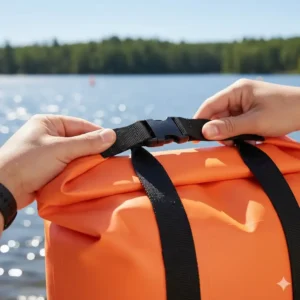
4. SealLine Boundary Pro Dry Pack (115L) (Made in USA Pick)
SealLine (part of Cascade Designs) is another icon in the paddling world, and their Boundary Pro is built for the absolute worst conditions. It’s a favorite for Alaskan expeditions and brutal portages.
- Specifications:
- Material: 300D urethane-coated nylon (lighter than PVC, extremely tough, and excellent in cold weather).
- Closure: Roll-top (DrySeal™ design) with a top compression strap.
- Carry: Fully adjustable, padded backpack harness with a sternum strap and waist belt.
- Extras: Made in the USA (Seattle, WA), RF-welded seams are considered the strongest in the industry.
- Customer Review Analysis: Owners call it “bombshell” and “expedition-grade.” The main praise is for the material, which doesn’t crack in extreme cold like some PVC bags, and the comfort of the harness. It’s a direct competitor to the NRS and Sea to Summit.
- Warranty: SealLine offers a limited lifetime warranty.
- Professional Applications: Arctic explorers, canoeists in the Boundary Waters, and anyone who demands gear made in the USA.
- Pros/Cons Analysis:
- Pros: ✅ Made in USA, excellent cold-weather performance (no cracking), very comfortable harness, 115L capacity.
- Cons: ❌ Premium price, can be hard to find in stock.
5. Earth Pak Waterproof Duffel Bag (100L) (Best Value Pick)
Not everyone is crossing the Arctic. Sometimes you just need a big, reliable 100l waterproof bag for a camping trip or the back of the truck. Enter Earth Pak. They dominate the “value” category for a reason.
- Specifications:
- Material: 500D PVC Tarpaulin.
- Closure: Roll-top with clips on the top and sides (for compression).
- Carry: Removable backpack straps and standard duffel handles.
- Extras: Comes in multiple colors, often includes a smaller (10L) dry bag.
- Customer Review Analysis: The reviews are glowing for the price. People are “pleasantly surprised by the quality” and love its versatility for travel, camping, and fishing. It’s not a YETI, but it’s 80% of the performance for 20% of the price.
- Warranty: Typically a 1-year warranty, with very responsive customer service.
- Professional Applications: Great for budget-conscious outfitters, weekend adventurers, and as a “bug-out” bag.
- Pros/Cons Analysis:
- Pros: ✅ Incredible value for the money, versatile carry options, surprisingly durable.
- Cons: ❌ 500D PVC is less durable than 1000D, backpack straps are basic.
6. IDRYBAG Waterproof Duffel Bag (100L) (Budget All-Rounder)
Similar to Earth Pak, IDRYBAG has carved out a niche by offering solid performance at a great price. Their 100L duffel is a strong contender for the best budget 100 l dry bag.
- Specifications:
- Material: 840D TPU (this is a step up from PVC, impressive for the price).
- Closure: Roll-top with a full-length zipper on top (note: this outer zipper is usually not waterproof; the roll-top does the work).
- Carry: Padded, removable backpack straps.
- Extras: Reflective elements for visibility.
- Customer Review Analysis: Users highlight the tough-feeling TPU material and the comfortable straps. It’s a popular choice for motorcyclists who need a large, highly visible, and inexpensive dry bag 100l.
- Warranty: Standard 1-year warranty.
- Pros/Cons Analysis:
- Pros: ✅ Uses TPU material (PVC-free), great price, reflective accents.
- Cons: ❌ Outer zipper can be confusing (it’s not the waterproof seal), build quality isn’t on par with premium brands.
7. COR Surf 100L Waterproof Duffel Bag (Surf & Travel Pick)
Designed with surfers in mind, the COR Surf bag is built to haul wet, sandy wetsuits and gear without leaking, which also means it’s great at keeping water out.
- Specifications:
- Material: PVC Tarpaulin.
- Closure: Roll-top with top/side compression.
- Carry: Padded backpack straps and duffel handles.
- Extras: An inner zip pocket (great for keys/wallet) and an outer splash-proof pocket.
- Customer Review Analysis: The “set it and forget it” bag for beach-goers and travelers. People love the simple, effective design and the handy pockets. It’s often described as the perfect trunk-liner for wet gear.
- Warranty: COR Surf offers a 1-year warranty and is known for its “no-questions-asked” customer support.
- Pros/Cons Analysis:
- Pros: ✅ Internal and external pockets are very useful, good balance of features and price.
- Cons: ❌ Basic PVC material, not designed for extreme portaging.
✨ Find Your Perfect Expedition Bag Today!
Ready to commit? Your next adventure is waiting. Take one more look at the comparison tables and click on the names of the bags that caught your eye. Checking out the latest reviews and specs is the final step to locking in your perfect 100l dry bag. Don’t let a wet sleeping bag ruin another trip! 🛶
💬 Just one click – help others make better buying decisions too!😊
[addtoany]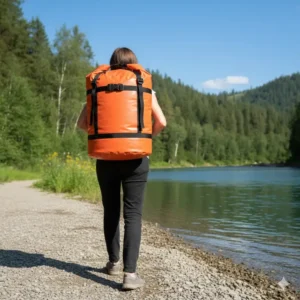
🤔 What Exactly Is a 100L Dry Bag and Why Do You Need One?
A 100l dry bag is a quantitative monster. To put 100 liters in perspective, that’s over 26 gallons. It’s the standard size for a large expedition backpack. A 100l dry bag is designed to hold all your personal gear for a multi-day (or multi-week) self-supported trip.
You need one if you are:
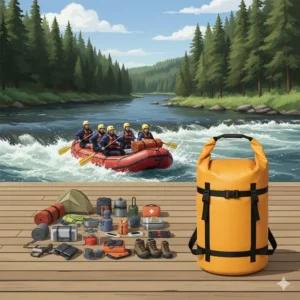
- A River Runner: On a 7-day rafting trip, this bag holds your sleeping bag, tent, clothes, and “day kit.” It gets strapped to the raft frame and gets splashed (or submerged) all day.
- A Motorcycle Adventurer: A 100l waterproof bag strapped to the back of your bike is the perfect all-weather luggage system. It’s 100% dust-proof and rain-proof.
- An Overlander: Strapped to a roof rack, it keeps your gear clean and dry through mud, rivers, and dust storms.
- An Expedition Paddler: When you’re packing a canoe for a 10-day portage trip, a 100 liter dry bag is your closet and pantry.
A dry bag 100l is not for hiking (it’s the wrong shape) and it’s not for air travel (it’s a soft bag that’s a nightmare for baggage handlers). It’s a purpose-built tool for keeping massive amounts of gear dry in wet and wild places.
⚙️ Key Features to Scrutinize in a 100 Liter Dry Bag
Not all bags are created equal. The devil is in the details.
Material Melee: PVC vs. TPU vs. Laminated Nylon
The fabric is the soul of the bag.
- PVC (Polyvinyl Chloride): The classic. It’s tough, cheap, and easy to weld (RF-welding). However, it’s heavy, can crack in extreme cold, and isn’t great for the environment. Found on NRS, Earth Pak, COR.
- TPU (Thermoplastic Polyurethane): The modern upgrade. It’s lighter than PVC, more abrasion-resistant, performs way better in the cold, and is more eco-friendly. It is, however, more expensive. Found on YETI (as a coating) and IDRYBAG.
- Urethane/TPU-Coated Nylon: The premium blend. This takes a tough nylon fabric base (like 300D or 1000D) and coats/laminates it with Urethane or TPU. This gives you the best of all worlds: tear resistance (from the nylon) and waterproofness (from the coating). Found on Sea to Summit and SealLine.
Table 3: Material Comparison (PVC vs. TPU vs. Coated Nylon)
| Feature | PVC | TPU | Coated Nylon (TPU/Urethane) |
| Durability | Good (Tough) | Very Good (Abrasion-Resistant) | ✅ Excellent (Tear-Resistant) |
| Weight | ❌ Heavy | ✅ Light | ✅ Light-to-Medium |
| Cold Performance | ❌ Poor (Can crack) | ✅ Excellent | ✅ Excellent |
| Eco-Friendly | ❌ Poor | ✅ Good | ✅ Good |
| Cost | 💰 Budget | 💰💰 Mid-Range | 💰💰💰 Premium |
Closure Systems: The Great Debate (Roll-Top vs. Zipper)
This is the most critical feature. How does it seal?
- Roll-Top: The industry standard. You fold the top down 3-4 times and clip the buckle. This creates a highly water-resistant seal (rated to IPX6, meaning it can withstand powerful water jets). It’s simple, field-repairable, and reliable.
- Waterproof Zipper (e.g., YETI HydroLok): This is a different beast entirely. This is a true submersible, airtight/watertight zipper, often rated to IPX7 (submersible to 1 meter for 30 minutes). The trade-off is high cost, stiffness, and it requires maintenance (lubrication) to function.
For a great technical explanation of these ratings, check out the Wikipedia page on the IP Code, which details what each number (like IPX6 vs IPX7) actually means in terms of water exposure.Table 4: Closure System Pros & Cons
| System | Waterproof Rating | Pros | Cons |
| Roll-Top | IPX6 (Splash/Jet Proof) | ✅ Simple, reliable, field-repairable, lower cost | ❌ Not fully submersible, can leak if not rolled properly |
| Zipper | IPX7-IPX8 (Submersible) | ✅ 100% submersible, airtight, quick access (no rolling) | ❌ Expensive, requires maintenance, can snag/break |
The Carry System: Backpack Straps vs. Duffel Handles
You have 100 liters of gear, which could weigh 50-70 lbs. How will you move it from the car to the boat?
- Basic Webbing: Just two straps. Fine for 20 feet, torture for 100 yards.
- Padded Duffel Straps: Better. Can be slung over a shoulder.
- Removable Backpack Straps: The new standard for duffel-style bags (YETI, Earth Pak). They are surprisingly functional for short-to-medium carries.
- Integrated Backpack Harness: The “portage” king. These (on NRS, SealLine, Sea to Summit) have padded shoulder straps, a sternum strap, and often a waist belt. This is built for carrying.
✅ The Massive Benefits of a 100l dry bag (And Some Drawbacks)
A 100l dry bag is a specialized tool, and it’s important to know its pros and cons.
Table 5: Benefits vs. Traditional Luggage (Suitcase/Backpack)
| Benefit | 100l dry bag | Traditional Hardside Suitcase | Hiking Backpack |
| Total Weather Protection | ✅ Unbeatable. Rain, mud, dust, river-splashes are no issue. | ❌ Poor. Zippers and seams will leak. | ❌ Poor. Requires a separate rain cover, which can fail. |
| Gear Consolidation | ✅ Excellent. One giant “black hole” for all your soft goods. | ✅ Good. Organized, but not waterproof. | ✅ Good. Organized, but not waterproof. |
| Durability | ✅ Excellent. Built to be strapped to roof racks and thrown in boats. | ❌ Fair. Wheels and handles break. Shells crack. | ❌ Fair. Lighter materials can tear or puncture. |
| Packability (Empty) | ✅ Excellent. Folds or rolls down to a small size. | ❌ Awful. It’s a rigid box. | ✅ Good. Can be compressed. |
Of course, the main drawback is the “black hole” effect. Finding a single pair of socks in a 100 liter dry bag can be an exercise in frustration. Pro Tip: Use smaller, color-coded packing cubes or small dry bags inside your main 100l dry bag for organization.
🎯 How to Choose the Right 100L Drybag for Your Adventure
The “best” 100l drys bag is the one that matches your specific activity.
Table 6: Activity-Based Feature Requirements
| Activity | Must-Have Feature | Recommended Bag | Why? |
| Multi-Day Rafting | Extreme Durability, Lash Points | NRS Bill’s Bag (110L) | It’s the industry standard for a reason. Built to be rigged. |
| Canoe Tripping (with Portages) | Comfortable Backpack Harness | Sea to Summit Hydraulic Pro | The harness makes carrying 100L of gear almost pleasant. |
| Motorcycle/Overlanding | Abrasion Resistance, Dust-proof | YETI Panga 100 | The ThickSkin shell can handle road grime and the zipper is 100% dust-proof. |
| Budget-Conscious Camping | Good Value, Versatility | Earth Pak Duffel (100L) | It’s more than tough enough for the back of a truck or a weekend campout. |
| Extreme Cold / Arctic | Cold-Resistant Material (No-PVC) | SealLine Boundary Pro (115L) | The urethane material won’t get brittle and crack in the freezing cold. |
🛠️ Pro Tips: Packing and Maintaining Your 100L Waterproof Bag
- Packing: Always put your “must-stay-dry” items (sleeping bag, emergency clothes) at the bottom. Pack your “need-to-access” items (rain jacket, snacks) at the top right before you seal it.
- “Burping” the Bag: Before you do the final roll, push down on the bag to “burp” out as much air as possible. A bag full of air is a giant, unwieldy balloon.
- Cleaning: After a trip (especially in saltwater), rinse your bag with fresh water. For heavy grime, use a gentle soap. For advice on cleaning technical gear, resources like the REI Co-op’s care guides are invaluable.
- Zipper Care: If you have a YETI Panga, you must use the zipper lubricant every few months. A dry HydroLok zipper will fuse and break.
- Storage: Store your 100l dry bag unrolled and in a cool, dry place. Storing it tightly rolled can create permanent creases that become weak points.
💰 Exploring the 100L Dry Bag Market: Price Tiers
Why does one 100l dry bag cost $400 and another $70? It’s a combination of materials, closure system, and country of origin.
Table 7: Price Tier Comparison (Budget vs. Mid vs. Premium)
| Tier | Price Range | Materials | Closure | Best For… |
| Budget | $60 – $100 | 500D PVC | Roll-Top | The occasional camper, truck-bed storage. (Earth Pak, IDRYBAG) |
| Mid-Range | $150 – $250 | Heavy-Duty PVC, TobaTex | Roll-Top | Serious amateurs, river guides. (NRS Bill’s Bag) |
| Premium | $300 – $450+ | TPU-Laminated Nylon, Urethane | Roll-Top or Submersible Zipper | Professionals, expedition use, extreme conditions. (YETI, SealLine, Sea to Summit) |
💧 Alternatives to the 100l dry bag
Is a single 100l dry bag the only solution? No.
- Multiple Smaller Bags (e.g., 3 x 30L):
- Pros: Way easier to organize. Easier to pack in the “nooks and crannies” of a kayak or truck.
- Cons: More “straps to manage” (we call this “yard-sale” potential). Slower to pack and unpack.
- Hard Cases (e.g., Pelican):
- Pros: Total impact protection. The only choice for sensitive camera gear.
- Cons: Heavy, bulky, expensive, and a terrible shape for strapping to rafts or motorcycles.
Table 8: 100L Dry Bag vs. Hard Case vs. Multiple Small Bags
| Solution | Best for Waterproofing | Best for Organization | Best for Portability | Best for Impact |
| One 100l dry bag | ✅ Excellent | ❌ Poor | ✅ Good (with harness) | ❌ Poor |
| Multiple Small Bags | ✅ Excellent | ✅ Excellent | ❌ Fair (messy) | ❌ Poor |
| Hard Case | ✅ Excellent | ✅ Good | ❌ Poor (heavy) | ✅ Excellent |
✨ Ready to Upgrade Your Gear Hauler?
🔍 You’ve seen the data, now make the choice. Whether you need a submersible vault or a reliable roll-top, your expedition starts here. Click the product names above to compare features and find the perfect 100l dry bag for your next adventure!
🧭 Conclusion: Is a 100L Dry Bag Your Ultimate Gear Hauler?
A 100l dry bag is not an everyday item. It is a massive, specialized piece of gear built for one purpose: to keep an enormous amount of equipment completely dry in the face of overwhelming water, mud, and dust.
For the right person—the rafter, the overlander, the expedition kayaker—it’s an absolute necessity. Choosing the right one comes down to honestly assessing your needs.
- Do you need true submersion (and have the budget)? Get the YETI Panga 100.
- Do you need to carry it comfortably over long distances? The Sea to Summit Hydraulic Pro or SealLine Boundary Pro are your best bets.
- Do you just need a tough, reliable bag for the river that will last 20 years? The NRS Bill’s Bag is your classic workhorse.
- Do you need a solid 100l waterproof bag for weekend trips and don’t want to break the bank? The Earth Pak Duffel delivers incredible value.
Ultimately, investing in a quality 100l dry bag is investing in peace of mind. It’s the confidence of knowing that after a brutal day on the water or a 10-hour ride in a downpour, your sleeping bag and your warm, dry clothes will be exactly that: warm and dry.
FAQs
❓ Is a 100l dry bag too big for airline carry-on?
❓ What is the best 100l dry bag with backpack straps?
❓ Can I find a cheap 100l dry bag that is still reliable?
❓ How much gear really fits in a 100 liter dry bag?
❓ YETI Panga 100 vs 100l dry bag roll-top: which is better?
Recommended for You
- 10 Liter Bag: 7 Best Waterproof Picks You Need Now
- 10l Bag: 7 Best Waterproof Options for 2025
- 10L Dry Bag: 7 Best Waterproof Options for 2025 Adventures
Disclaimer: This article contains affiliate links. If you purchase products through these links, we may earn a small commission at no additional cost to you.
✨ Found this helpful? Share it with your friends! 💬🤗
[addtoany]