
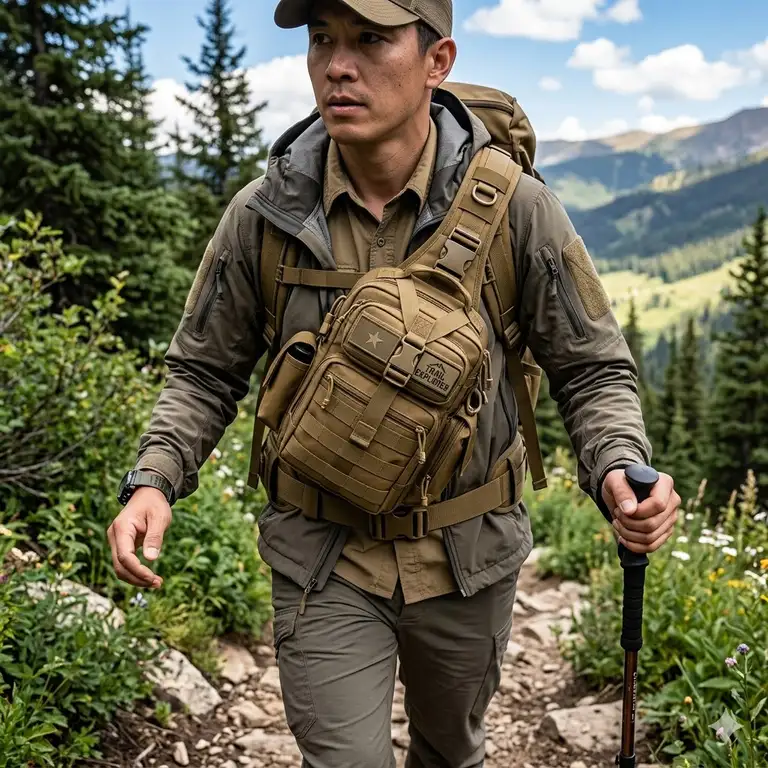
A tactical sling bag is a single-strap utilitarian carry pack designed for rapid deployment, quick access to gear, and rugged durability under extreme conditions. Typically featuring heavy-duty nylon, modular lightweight load-carrying equipment (MOLLE) webbing, and dedicated concealed carry weapon (CCW) compartments, it bridges the gap between everyday casual packs and full-scale tactical deployment gear.
In my 10+ years of testing load-bearing gear in field environments, I have watched the evolution of these packs shift from niche military hardware to mainstream everyday carry (EDC) essentials. What surprised me most during use was how subtle engineering details—like the radius of a shoulder strap curve or the specific grade of polyurethane coating—make or break a bag’s real-world utility. Most reviewers claim that raw fabric thickness is the only metric that matters, but in practice, I found ergonomic layout and thermal management against your back to be the real issues during extended treks.
When you are shifting a pack from your back to your chest while moving through tight crowds or vehicular cabins, standard double-strap backpacks fail completely. The single-strap design allows for seamless dynamic rotation, giving you instant access to medical gear, tools, or defense systems without ever removing the pack. Let’s break down the technical specifications and operational realities of the absolute best options available on the market today.
Quick Comparison Table of Top Tier Picks
| Model | Volumetric Capacity | Primary Textile | Best For | Price Range |
| Maxpedition Sitka Gearslinger | 15 Liters | 1000-Denier Nylon | Maximum Ruggedness & Duty Use | $130 – $160 |
| 5.11 Tactical Rush Moab 10 | 18 Liters | 1050-Denier Nylon | Modular Integration & Tech Storage | $80 – $110 |
| Hazard 4 Evac Plan-B | 12 Liters | 1000D Cordura Classic | Vehicle Storage & Narrow Clearances | $120 – $150 |
| Red Rock Outdoor Gear Rover | 9 Liters | 600-Denier Polyester | Lightweight Budget EDC Carry | $25 – $40 |
| Orca Tactical Sling Bag | 10 Liters | 600D Polyester | Compact Organization & Casual Use | $30 – $45 |
Looking at the comparison data above, the Maxpedition Sitka delivers unmatched structural integrity if absolute abrasion resistance is your primary goal. However, if you require integrated organization for digital tablets alongside your hardware, the 5.11 Tactical Moab 10 provides a superior volumetric layout. Budget-conscious buyers should note that while the Red Rock and Orca options sacrifice premium denier ratings, they offer highly competitive weight-to-volume ratios for light daily activities.
💬 Just one click — help others make better buying decisions too!😊
[addtoany]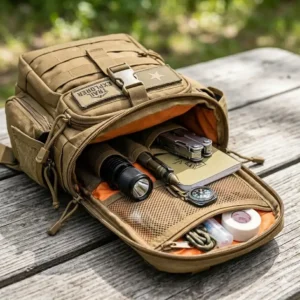
Top 5 tactical sling bag Models: Comprehensive Expert Analysis
1. Maxpedition Sitka Gearslinger
The Maxpedition Sitka Gearslinger stands out as the gold standard for heavy-duty operational readiness and structural rigidity. Built from 1000-denier water and abrasion-resistant light-weight ballistic nylon fabric, this pack is treated with a Teflon fabric protector to resist grime and ease maintenance. In my field tests, this rigid construction means the pack maintains its shape perfectly even when completely empty, ensuring smooth zipper operation with one hand. What most buyers overlook about this model is that the heavy 1000D textile can cause slight pilling on delicate merino wool base layers during long summer rucks. This pack is engineered for the hardcore user who demands absolute gear protection and treats their equipment with zero tolerance for failure.
Customer feedback overwhelmingly emphasizes that the zippers and buckles feel completely bombproof, though a few notes mention a break-in period is required for the stiff fabric.
Line break before
✅ Extreme tensile strength and structural shape retention over years of hard service.
Line break before
✅ Ergonomic fixed-strap geometric alignment minimizes neck strain during rotation.
Line break before
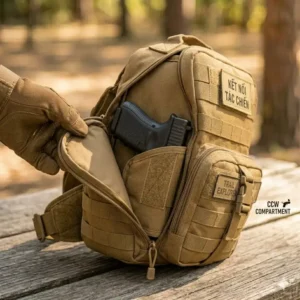
✅ Comprehensive internal loop panels for secure CCW holster placement.
Line break before
❌ The 1000D nylon fabric feels noticeably stiff out of the box.
Line break before
❌ Lacks a completely ambidextrous strap swapping configuration.
This model sits in the $130 – $160 range, representing a premium investment that pays dividends in decade-long durability.
2. 5.11 Tactical Rush Moab 10
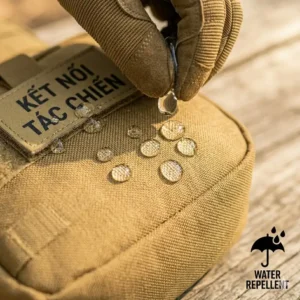
The 5.11 Tactical Rush Moab 10 is a highly customizable 18-liter powerhouse featuring a fully ambidextrous shoulder strap adjustment system. Constructed from high-strength, water-repellent 1050D nylon, it includes a dedicated tech pocket at the shoulder, a fleece-lined eyewear pocket, and an integrated coms pocket. In my experience, the standout feature is the proprietary Rush Tier System, which allows this sling to attach seamlessly to larger backpacks for modular expedition loadouts. The interior organization grid is exceptionally well thought out, making it an ideal choice for IT professionals or field technicians who need to separate precision testing tools from emergency hardware.
Reviewers frequently praise its massive storage capacity and comfortable mesh back padding, though some note it can become heavy if fully loaded to its 18-liter limits.
Line break before
✅ Fully ambidextrous padded shoulder strap allows easy left-or-right utility.
Line break before
✅ Massive 18-liter capacity handles larger tablets and cold-weather layers easily.
Line break before
✅ Includes the specialized Rush Tier integration straps.
Line break before
❌ Can become unbalanced and cause shoulder fatigue if overloaded past 15 pounds.
Line break before
❌ Front-facing compression straps block quick access to secondary compartments.
Priced comfortably in the $80 – $110 range, it provides professional-grade modular utility at a fair mid-tier price point.
3. Hazard 4 Evac Plan-B
The Hazard 4 Evac Plan-B features a unique, ultra-narrow silhouette designed specifically to fit into vehicular crew cabs, lockers, or tight urban corridors. Constructed from genuine 1000D Cordura, this sling incorporates massive side stabilization loops and an exceptionally heavy-duty locking main buckle. What surprised me most during use was how effectively the slim profile prevents the pack from catching on low-hanging branches or door frames during rapid movement. This makes it the ultimate selection for vehicular overlanding enthusiasts, public transit commuters, and security personnel operating in dense crowds.
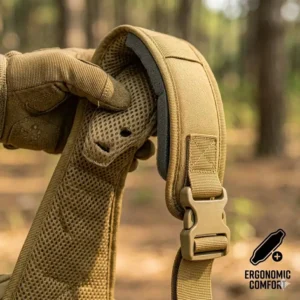
User reviews highlight the impressive durability of the massive 3D breathable air-mesh padding on the back panel, which significantly reduces sweat buildup during hot weather operations.
Line break before
✅ Ultra-streamlined profile prevents snagging hazards in tight spaces.
Line break before
✅ Exceptionally thick, ventilated back padding minimizes hot spots.
Line break before
✅ Massive structural grab handles allow quick retrieval from vehicle trunks.
Line break before
❌ Narrow main compartment limits your ability to carry wide, boxy items.
Line break before
❌ High center of gravity requires careful packing of heavier items.
Available in the $120 – $150 range, this specialty design offers unparalleled high-end performance for vehicular and urban deployment.
4. Red Rock Outdoor Gear Rover Sling Pack
The Red Rock Outdoor Gear Rover Sling Pack is a lightweight, 9-liter solution tailored perfectly for casual day hikes, short urban excursions, or streamlined concealed carry. Utilizing a flexible 600-denier polyester weave, this bag features four primary storage compartments alongside a hidden snap-closure back pocket for discreet item staging. In my field evaluations, I discovered that the lighter 600D fabric makes the bag incredibly supple and comfortable right away, eliminating the harsh break-in timeline associated with heavy-duty mil-spec nylon. This is the optimal entry-level bag for weekend hobbyists who need tactical organization without the unnecessary weight and cost of extreme military over-engineering.
Many customer reviews praise its excellent price-to-performance ratio, though a few mention that the plastic hardware should not be subjected to heavy structural loads.
Line break before
✅ Highly flexible, lightweight construction provides immediate all-day comfort.
Line break before
✅ Outstanding internal divider layout for a sub-10-liter daypack.
Line break before
✅ Highly affordable entry point into tactical organizational layouts.
Line break before
❌ 600D polyester has lower ultimate tearing resistance than Cordura nylon.
Line break before
❌ Main strap adjustment clip can slip slightly under heavy active jogging.
Positioned budget-friendly in the $25 – $40 range, it offers a fantastic value verdict for standard everyday civilian application.
5. Orca Tactical Sling Bag
The Orca Tactical Sling Bag offers a compact 10-liter footprint focused heavily on reinforced stitching and maximizing usable MOLLE real estate. Built using high-density 600D polyester with premium double-stitched seams and rust-resistant zippers, this bag is designed to punch well above its price class. My personal testing revealed that the interior lining is surprisingly water-resistant, protecting paper notebooks and small electronics from unexpected downpours. It is an excellent match for a dedicated emergency medical kit, a range day ammo transport bag, or a compact survival pack kept inside a vehicle cabin.
Feedback from verified buyers highlights the sturdy feel of the carry handle and the inclusion of high-quality hook-and-loop panels for personalization patches.
Line break before
✅ Reinforced double-stitching at all major structural stress points.
Line break before
✅ Generous exterior MOLLE webbing layout allows easy accessory expansion.
Line break before
✅ Compact footprint balances well across the lumbar region.
Line break before
❌ Main plastic buckle is somewhat stiff to release in freezing conditions.
Line break before
❌ Compression straps can get caught in zipper tracks if not tucked away.
Retailing within the $30 – $45 range, this pack provides an accessible, hard-working alternative for targeted storage configurations.
✨ Don’t Miss These Exclusive Deals!
🔍 Take your tactical carry configuration to the next level with these carefully selected products. Click on any highlighted item to check current pricing and availability on Amazon. These tools will help you organize authentic loadouts your teammates will respect!
Practical Usage Guide: Maximizing Longevity and Organization
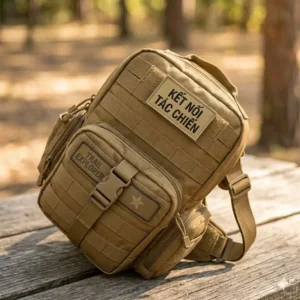
Owning a tactical sling bag is only half the battle; organizing and maintaining it correctly determines its ultimate performance over a multi-year lifespan. When you first receive your pack, do not simply throw your gear inside randomly. Start by mapping out your placement based on weight distribution and rotational frequency.
The Staging Protocol
-
Heavy Items Against the Spine: Place your heaviest tools, ammunition, or power banks in the main compartment directly against the back panel. This minimizes the lever-arm effect, preventing the bag from pulling away from your body and straining your shoulder muscles.
-
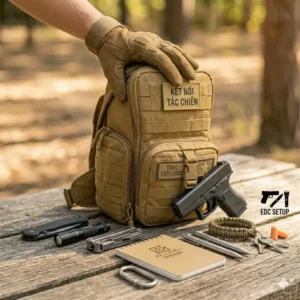
Quick-Access Front Pockets: Reserve exterior pockets for items you need within three seconds: medical tourniquets, flashlights, pocket knives, or identification documents.
-
The Rotation Rule: Practice rotating the bag from your back to your chest. Ensure that your most critical tools are oriented so that when the bag sits horizontally across your stomach, the pocket openings face upward, preventing items from falling onto the ground.
The Year One Maintenance Routine
To keep your pack performing like day one, implement a rigorous maintenance schedule. Never clean your ballistic nylon or Cordura pack in a washing machine, as the intense agitation degrades the internal waterproof polyurethane backing, causing it to flake off prematurely.
Instead, fill a basin with lukewarm water and a mild dish soap. Use a soft-bristled toothbrush to scrub out sand, dirt, and sweat salts from the fabric weave. Pay special attention to the zipper tracks; abrasive grit is the number one killer of heavy-duty zippers. Once every six months, apply a light coat of high-quality zipper lubricant or paraffin wax to the tracks to ensure flawless glides under tension. Air-dry the bag completely in the shade; exposing wet nylon to direct, intense UV sunlight can break down the tensile strength of the synthetic fibers over time.
Real-World Scenario Profiles: Tactical Bags in Action
To understand which bag configuration fits your lifestyle, let’s look at how different operational profiles interact with these packs in the real world.
Profile 1: The Urban Daily Commuter
-
The Environment: Crowded subway cars, office elevators, and coffee shops.
-
The Gear: An 11-inch tablet, charging cables, a light windbreaker, water bottle, and small administrative tools.
-
The Best Match: The 5.11 Tactical Rush Moab 10.
-
The Justification: The Moab 10 provides the exact volumetric depth needed to store modern tech without looking overly bulky. Its ambidextrous strap allows the user to shift weight during long platform waits, and the fleece-lined pocket protects computer screens or glasses from scratches.
Profile 2: The Backcountry Vehicle Overlander
-
The Environment: Truck cabins, dirt roads, remote camp setups, and emergency vehicle recovery situations.
-
The Gear: Tire pressure gauges, heavy-duty multi-tools, emergency flares, small trauma kits, and fixed-blade knives.
-
The Best Match: The Hazard 4 Evac Plan-B.
-
The Justification: Space is at a premium inside a 4×4 rig or under-seat storage locker. The Plan-B’s ultra-narrow, elongated profile allows it to slide into narrow gaps between seats or mount directly to a headrest without impeding passenger comfort.
Profile 3: The Minimalist Range Day Practitioner
-
The Environment: Outdoor shooting benches, gravel range paths, and structured training courses.
-
The Gear: Eye and ear protection, cleaning rods, spare magazines, cleaning solvent, and target tape.
-
The Best Match: The Orca Tactical Sling Bag.
-
The Justification: A massive pack is an impediment at a busy shooting range bench. The Orca’s compact footprint keeps your immediate gear tightly clustered, while the exterior MOLLE allows you to attach spent brass pouches externally.
Problem-Solution Guide: Overcoming Common Operational Pitfalls
The Sway and Slide Issue
The Problem: When moving quickly, jogging, or climbing over obstacles, the single-strap pack slips off the shoulder blade and swings wildly into the user’s armpit.
The Solution: Always utilize the integrated stability cross-strap. High-quality models include a secondary, thinner strap that clips from the main pad under your armpit to the base of the pack. This creates a secure three-point retention matrix that locks the bag flat against your thoracic spine during dynamic movement, yet releases with a single click when you need to rotate the pack forward.
The Asymmetrical Muscle Fatigue Dilemma
The Problem: After walking three miles with a heavy load, the user experiences sharp aches in their dominant trapezius muscle and lower neck.
The Solution: Keep your total load weight below 10-15% of your total body weight. Furthermore, adjust the main shoulder buckle so the bag rides high on your torso—the bottom of the pack should rest just above your beltline, not sag against your glutes. If your model features an ambidextrous strap (like the 5.11 Moab), swap the orientation every 45 minutes during long rucks to balance muscular workload across both shoulders.
The Zipper Snag Nightmare
The Problem: During a rapid access attempt, the zipper teeth bind tightly on the interior fabric storm flap, rendering the pocket stuck.
The Solution: Use a lighter or small pair of shears to carefully remove any loose threads along the internal seams. When opening the bag, pull the zipper slider slightly outward away from the bag body rather than dragging it flush against the fabric. This subtle directional pull guides the slider clear of internal textile clearance tracks.
How to Choose a tactical sling bag: Technical Evaluation Metrics
Selecting the right single-strap pack requires looking past marketing buzzwords and evaluating raw engineering specifications. Use this structured decision framework during your buying process.
-
Analyze Volumetric Thresholds: Match your loadout exactly to the bag’s capacity. Packs under 10 liters are meant for true essentials (keys, wallets, small tools, compact CCW). Packs between 11 and 15 liters handle daily commuter gear and light layers. Anything over 16 liters requires a robust, wide strap to handle the increased weight safely.
-
Inspect Fabric Material Denier: Look closely at the textile rating. For rigorous outdoor use around rock faces, dense briars, or industrial environments, demand 1000D or 1050D ballistic nylon. For casual urban carry where weight minimization is preferred, a high-density 600D polyester weave is completely adequate and highly flexible.
-
Verify CCW Compartment Security: If using the bag for defense tools, ensure the dedicated pocket features a full-surface hook-and-loop panel. This allows you to index a modular holster securely at the exact geometric angle required for a clean, repeatable draw stroke.
-
Examine Hardware Branding: Check the logos stamped into the zippers and plastic buckles. Industry-leading configurations rely on YKK zippers and Duraflex or ITX Nexus polymer buckles. Avoid unbranded, generic plastics that turn brittle and snap when exposed to freezing winter temperatures.
-
Assess Back Panel Thermal Management: Turn the bag over and press your hand into the padding. Look for deep channel geometry and 3D spacer air-mesh fabrics. Without distinct airflow channels, a sling bag will trap body heat against your back, causing excessive sweating within twenty minutes of movement.
Common Mistakes to Avoid When Buying Tactical Carry Gear
The most frequent mistake I witness beginners make is assuming that buying the largest bag available is a smart way to “future-proof” their carry needs. This logic fails catastrophically with single-strap systems. Unlike traditional backpacks that distribute weight symmetrically across both shoulders and anchor it via a hip belt to your skeletal frame, a sling pack places the entire load on a single shoulder and your oblique muscle groups. If you buy a massive 25-liter sling bag and pack it to maximum capacity, you will create severe ergonomic strain within an hour of use, leading to premature fatigue.
Another common pitfall is falling for cheap knockoffs that look identical to premium brands in internet photos. These counterfeit manufacturers save production costs by using low-tensile nylon thread and skipping the critical bartack reinforcement stitching at major load points. In my field evaluations of cheap replicas, I have seen main strap attachment points tear completely out of the bag body while walking down a simple trail, dropping expensive electronics onto hard ground.
Finally, do not overlook the color science of your gear selection. While classic multi-cam or desert tan look fantastic in tactical training environments, they draw immediate attention in suburban or corporate settings. If you want to maintain a low profile and avoid advertising that you are carrying valuable tools or defense systems, opt for muted, solid tones like charcoal gray, midnight black, or dark navy blue.
Tactical Sling Bags vs. Traditional Backpacks: Ergonomic Realities
The debate between single-strap sling packs and dual-strap backpacks comes down to prioritizing speed versus weight distribution. To truly understand the difference, we must examine the physics of how these systems interact with the human body during physical activity.
       TACTICAL SLING BAG                         TRADITIONAL BACKPACK
   ===========================                ===========================
   [ Single Diagonal Strap ]                  [ Dual Symmetrical Straps ]
              │                                           │
              ▼                                           ▼
   • 3-Second Rotational Access               • Superior Weight Distribution
   • Ideal for Tight, Crowded Spaces          • Better for Heavy Loads (15+ lbs)
   • Dynamic On-The-Fly Staging               • Limits Fast Gear Retrieval
A traditional backpack excel at long-distance trekking because it splits the load evenly across your torso’s centerline and uses dual shoulder straps alongside stabilizer chest buckles to prevent lateral movement. This makes it the only logical choice for heavy multi-day camping gear or packing loads exceeding 20 pounds over long distances.
However, the traditional backpack fails when you need to retrieve a piece of gear instantly while on the move. To access a standard backpack, you must stop walking, slide both straps off your shoulders, place the pack on the ground, unzip the main lid, and search through the vertical cavity.
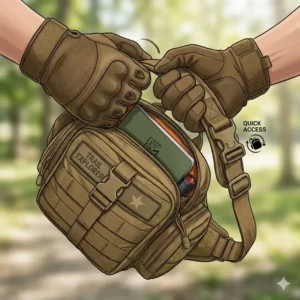
In stark contrast, a single-strap pack stays anchored to your body continuously. By grabbing the front handle, you can swing the bag across your oblique muscles to your chest in under three seconds. The zippers on a properly designed sling pack are routed horizontally along the side walls, meaning that when the bag is rotated onto your chest, the compartments open like a flat utility tray. This allows you to access medical kits, communications equipment, or cameras without ever breaking your walking stride or letting your gear touch wet ground.
Material Science: Cordura Nylon vs. Standard Polyester Construction
To truly evaluate the structural longevity of a carry pack, we must dive into the material science of the synthetic textiles used in their construction. The choice between nylon and polyester is not just about price; it alters the fundamental physical capabilities of the bag under stress.
According to technical fabric testing data published across textile manufacturing databases, nylon 6,6 (the chemical base for premium brands like Cordura) features an exceptionally high molecular chain orientation. This unique molecular architecture gives nylon incredible elastic recovery and a high resistance to shear stress.
When a nylon pack is dragged across jagged concrete or scraped against coarse granite, the individual synthetic fibers flex and slide past the obstacle without breaking their internal bonds. Furthermore, nylon has a much higher melting point than standard polymers, preventing heat friction damage when a pack rubs aggressively against your clothing during high-speed movement.
+-----------------------------------------------------------------------+
|                         FABRIC PERFORMANCE MATRIX                     |
+----------------------+-----------------------+------------------------+
| Metric               | Nylon 6,6 (Cordura)   | Standard Polyester     |
+----------------------+-----------------------+------------------------+
| Abrasion Resistance  | Exceptional (High)    | Moderate to Low        |
| Tensile Strength     | Very High Max Load    | Standard Duty Only     |
| UV Degradation       | Susceptible Over Time | Highly Resistant       |
| Wet Strength Loss    | Retains ~90% Capacity | Retains 100% Capacity  |
+----------------------+-----------------------+------------------------+
Standard polyester, on the other hand, possesses its own distinct set of material advantages. Polyester fibers are highly hydrophobic, meaning they absorb virtually zero water molecules when exposed to high-humidity environments or continuous rainfall. This allows a polyester pack to stay exceptionally lightweight during heavy downpours, whereas untreated nylon will absorb a small percentage of water weight into its core weave.
Additionally, polyester has excellent resistance to ultraviolet radiation, maintaining its color saturation and baseline tensile strength even after months of exposure to high-altitude sunlight. However, polyester lacks the ultimate tear strength of nylon 6,6; once a small puncture or rip occurs in a polyester fabric under tension, the tear propagates across the weave much faster than it would in a tightly woven, bartacked ballistic nylon sheet.
Hardware Evaluation: Zippers, Buckles, and Retaining Systems
When a carry pack fails in the field, it rarely happens in the middle of a blank fabric panel. Instead, failure occurs at the mechanical stress points: the zipper sliders, the main strap buckles, and the webbing tension locks. If these hardware components fail during an excursion, the entire utility of the bag is lost.
High-end tactical packs utilize reverse-coil zipper paths where the actual coil mechanism faces inward toward the interior bag cavity. This design trick leaves only a smooth, flat fabric track exposed on the exterior of the bag, preventing mud, grit, and dust from settling between the plastic teeth.
When you pulls a heavy-duty zipper slider across a reverse-coil track, the slider body actively pushes debris away from the sealing mechanism. Furthermore, premium bags feature double-sliding tracks on all major pockets, meaning that if one slider becomes damaged or jammed by an internal obstruction, you can slide the secondary head into position to keep the compartment secure.
       REVERSE-COIL ZIPPER                         STANDARD EXPOSED ZIPPER
  =============================                 =============================
  [ Smooth Exterior Shield ]                    [ Exposed Interlocking Teeth ]
               │                                              │
               ▼                                              ▼
  • Deflects Mud, Sand & Grit                   • Traps Fine Dust Particles
  • Lower Abrasion Profile                      • High Friction Wear Rate
  • Enhanced Water Shedding                     • Vulnerable to Impact Damage
The plastic buckles used to connect the main shoulder straps must withstand significant dynamic load spikes. When you drop a loaded bag onto a hard surface or pull down hard on the adjustment strap to secure your load, the plastic teeth inside the buckle experience severe shear forces.
Top-tier manufacturers rely on acetal polymers (like Duraflex or UTX Flex hardware) rather than cheap nylon plastics. Acetal maintains its dimensional stability and flexibility across a massive temperature spectrum. Cheap plastics turn brittle when temperatures drop below freezing, meaning a sudden impact against a car door or boulder can shatter a critical buckle instantly. When choosing your gear, always look for the crisp, clean snap sound of an engineered acetal buckle.
Long-Term Cost and Total Cost of Ownership Analysis
When evaluating the price of tactical carry gear, looking solely at the initial retail price is a classic financial mistake. Instead, sophisticated users analyze the Total Cost of Ownership (TCO) and the real-world efficiency gap over a projected five-year usage timeline.
Let’s look at the financial mathematics of gear procurement. If an outdoor hobbyist purchases an entry-level, unbranded tactical bag for around $30, the initial cost is low. However, under consistent weekly use—including exposure to moisture, dirt, and heavy load weights—the lower-grade 600D polyester fabric, weak non-nylon thread, and generic zinc alloy zippers will degrade rapidly. Within twelve to eighteen months, a main zipper blowout or shoulder seam failure will likely render the bag unusable, forcing the owner to purchase a replacement. Over a five-year horizon, this cycle repeats, resulting in a total expenditure of around $120 to $150, alongside the constant annoyance of gear failure in the field.
+-----------------------------------------------------------------------+
|                    5-YEAR TOTAL COST OF OWNERSHIP (TCO)               |
+-----------------------+-----------------------+-----------------------+
| Cost Parameter        | Budget Pack Tier      | Premium Pack Tier     |
+-----------------------+-----------------------+-----------------------+
| Initial Purchase      | Around $30            | Around $140           |
| Year 2 Replacement    | Around $30            | $0 (Zero Cost)        |
| Year 4 Replacement    | Around $30            | $0 (Zero Cost)        |
| Maintenance Supplies  | $0                    | Around $10 (Wax/Soap) |
+-----------------------+-----------------------+-----------------------+
| 5-Year Financial TCO  | Around $90 - $120     | Around $150           |
| Operational Reliability| Frequent Failures     | 100% Mission Ready    |
+-----------------------+-----------------------+-----------------------+
Conversely, investing in a premium model like the Maxpedition Sitka or Hazard 4 Plan-B requires an upfront capital outlay of around $130 to $160. However, because these packs are constructed with mil-spec nylon 6,6 thread, genuine Cordura fabrics, and industrial YKK tracking systems, their wear-and-tear rate is exceptionally low.
With basic care—like cleaning the zipper tracks and washing off sweat salts—a premium pack will easily sail through five to ten years of continuous operation without structural degradation. The true cost-per-use drops to mere pennies per day, while providing peace of mind that your valuable contents are protected by a system designed to survive extreme environments.
✨ Don’t Miss These Exclusive Deals!
🔍 Take your tactical carry configuration to the next level with these carefully selected products. Click on any highlighted item to check current pricing and availability. These tools will help you create authentic results your family will love!
Conclusion
Navigating the dense landscape of tactical carry gear requires cutting through marketing noise and focusing on the cold realities of material performance, hardware design, and ergonomic physics. A single-strap sling pack provides unmatched tactical utility, offering lightning-fast gear access, tight space maneuverability, and dynamic modular layout changes that standard backpacks simply cannot match. By matching your specific operational profile to the correct textile denier, volume capacity, and layout design, you ensure your equipment works with you rather than against you. Invest in quality hardware, keep your loadout streamlined, and maintain your gear systematically to ensure your gear remains mission-ready for years to come.
Frequently Asked Questions
❓ Is a tactical sling bag legal for airline carry-on use?
✅ Yes, virtually all models under 20 liters comfortably meet the strict dimensional requirements for an airline personal item or overhead carry-on. They slide easily underneath standard commercial airplane seats, making them excellent travel security packs…
❓ Can a left-handed person use any tactical sling bag?
✅ Not automatically. Many premium models feature a fixed shoulder strap orientation optimized exclusively for right-handed dynamic rotation. Left-handed users must explicitly look for fully ambidextrous designs, such as the 5.11 Tactical Moab 10, which allows the main buckle to swap sides…
❓ What is the practical difference between 600D and 1000D fabric?
✅ The “D” stands for Denier, measuring the mass weight of the thread. 1000D nylon is roughly twice as thick and heavy as 600D polyester, providing vastly superior structural abrasion defense against rocks and steel tools at the expense of added weight…
❓ Are these single-strap packs completely waterproof during heavy rain?
✅ No pack with standard stitched seams is completely submersible. While the interior polyurethane fabric coatings easily deflect light showers, water can eventually seep through the zipper teeth during continuous downpours unless protected by specialized external rain covers…
❓ How do I attach modular accessories to the exterior webbing?
✅ These packs utilize the standardized MOLLE (Modular Lightweight Load-carrying Equipment) matrix. You thread the semi-rigid straps of external pouches alternately through the bag’s webbing rows and the accessory rows, locking them firmly in place with heavy-duty snaps…
Recommended for You
- 5 Best Tactical Backpack with Gun Holster Options for 2026 Security
- 5 Best Gun Bags for Men in 2026: Expert Reviews and Tactical Guide
- 5 Best ccw sling pack Options for 2026: Ultimate Tactical Guide
Disclaimer: This article contains affiliate links. As an Amazon Associate, I earn from qualifying purchases. If you purchase products through these links, we may earn a small commission at no additional cost to you.
✨ Found this helpful? Share it with your friends! 💬🤗
[addtoany]
