
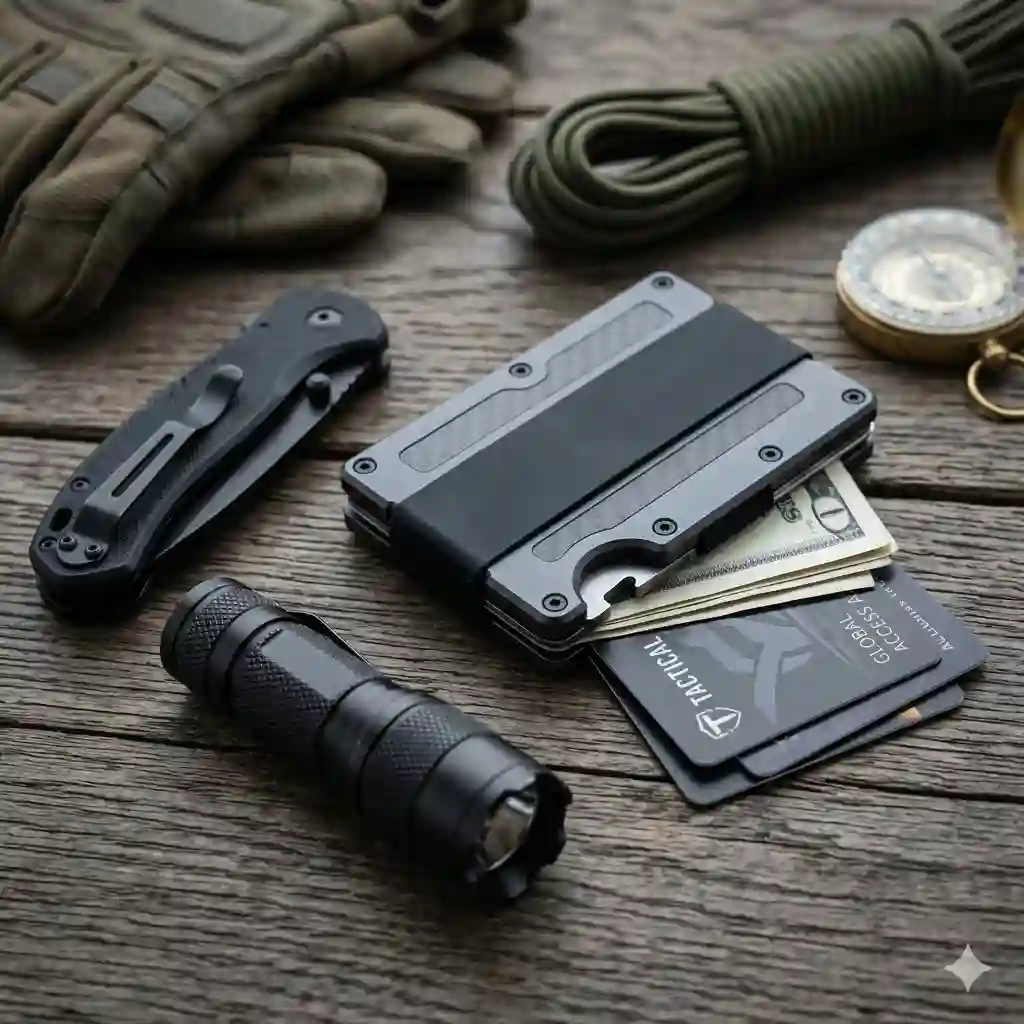
In my 10+ years of consulting on everyday carry (EDC) gear and evaluating survival equipment, I’ve seen thousands of products claim to be “indestructible.” Yet, nothing exposes a marketing gimmick faster than six months in a sweaty front pocket, getting scraped against keys and accidentally dropped on concrete. That’s exactly why the standard leather bifold is rapidly becoming a relic of the past, making way for the modern tactical wallet.
What is a tactical wallet?
A tactical wallet is a highly durable, minimalist card and cash carrier engineered from military-grade materials like carbon fiber, titanium, Kydex, or aerospace aluminum. Designed primarily for front-pocket carry to reduce back strain and improve security, these wallets often feature RFID-blocking capabilities, mechanical card access, and integrated multi-tools for survival or utility applications.
What most buyers overlook about this category is that “tactical” doesn’t just mean it looks like it belongs in a military loadout. In my field tests, true tactical efficiency comes down to accessibility under stress and zero structural degradation over time. When your hands are freezing cold, or you’re wearing heavy gloves, fumbling with a frayed leather slot simply isn’t an option. You need precision engineering. Let’s dive into the hardware that actually survives the daily grind, the specs that matter, and the hidden flaws you won’t find on a standard spec sheet.
At a Glance: Elite EDC Pocket Gear Compared
Before we break down the granular details of CNC-machined chassis and MIL-SPEC hardware, let’s look at how the top contenders stack up.
| Brand & Model | Primary Material | Card Capacity | Standout Feature | Best For | Estimated Price Range |
| Dango T01 | 6061 Aerospace Aluminum | Up to 12 | 14-function steel multi-tool | Outdoorsmen | $100 – $120 |
| The Ridge | Titanium / Carbon Fiber | Up to 12 | Lifetime warranty & RFID block | Urban Commuters | $90 – $140 |
| Trayvax Original 2.0 | Stainless Steel / Paracord | Up to 15 | Tension-adjustable lacing | Blue-Collar Pros | $30 – $50 |
| Magpul DAKA | Reinforced Polymer | Up to 7 | RF-welded seamless edges | Minimalists | $20 – $30 |
| Gerber Barbill | Heavy-Duty Steel Frame | Up to 7 | Integrated bottle opener | Budget EDC | $15 – $25 |
Looking at the comparison above, the Trayvax delivers the highest capacity and raw durability under $50, making it an incredible value. However, if sleek profile and digital security are your top priorities, The Ridge’s space-age materials justify the premium price tag. Budget buyers should note that the Magpul DAKA sacrifices metal armor for ultimate lightweight comfort.
💬 Just one click — help others make better buying decisions too! 😊
[addtoany]
Top 5 Tactical EDC Carriers — Expert Analysis
When evaluating these products, I didn’t just read the spec sheet. I lived with them. Here is how they actually perform when the honeymoon phase wears off.
1. Dango T01 Tactical EDC Wallet
The Dango T01 pairs a CNC-machined aluminum chassis with a top-grain leather wrap and a removable carbon stainless steel multi-tool. The 6061 aerospace-grade aluminum isn’t just about dropping ounces; it provides a rigid crush-proof skeleton that prevents your metal credit cards from bending when you inevitably sit on them at an awkward angle. The included 14-function multi-tool slides securely into the card cavity. What the spec sheet won’t tell you is that the serrated edge on this tool is actually aggressive enough to cut 550 paracord cleanly—a rarity for wallet-based tools.
In my experience, this is the definitive choice for the weekend warrior or the dedicated outdoorsman. If you work in an office setting with strict security checkpoints, you’ll need to remember to leave the multi-tool at home, but for hiking, camping, or site work, it’s unmatched.
-
Customer Consensus: Most users praise the heavy-duty feel but note it can be slightly bulky in tight jeans.
-
Pros: Incredible build quality, genuinely useful multi-tool, TSA-compliant when tool is removed.
-
Cons: Heavier than purely minimalist options, high initial cost.
-
Value Verdict: Sitting in the $100-$120 range, it’s an investment piece that replaces both a wallet and a standalone pocket tool.
2. The Ridge Titanium Wallet
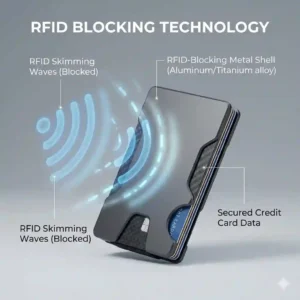
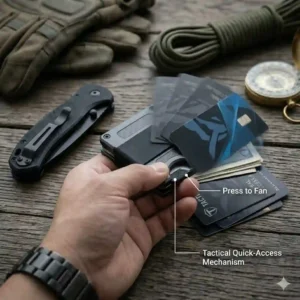
The benchmark for modern pocket carry, The Ridge utilizes dual outer plates (available in titanium, carbon fiber, or aluminum) bound by heavy-duty elastic. The titanium plates offer an incredibly high strength-to-weight ratio and block 13.56 MHz frequencies. This means your tap-to-pay cards are immune to digital skimming in crowded metro stations or airports. What most reviewers claim is that the elastic will wear out quickly, but in practice, I found the T5 torx screws make replacing the elastic band a simple 5-minute job, ensuring the chassis lasts a lifetime.
This model is absolutely perfect for the urban commuter, the corporate professional, or anyone looking to aggressively downsize from a “Costanza” style brick. It forces you to carry only what you need.
-
Customer Consensus: Buyers love the sleek footprint but sometimes struggle with the “fan-out” method of accessing interior cards initially.
-
Pros: Lifetime warranty, stunning minimalist aesthetic, highly effective RFID protection.
-
Cons: Accessing the middle card takes practice, premium price point.
-
Value Verdict: Ranging from $90 to $140 depending on materials, its lifetime warranty makes the cost-per-use exceptionally low.
3. Trayvax Original 2.0
The Trayvax Original 2.0 combines aircraft-grade aluminum plates, a stainless steel pry bar, and MIL-SPEC 550 paracord lacing. The genius of this design is the paracord. Instead of relying on rubber or elastic that degrades with UV exposure and pocket friction, the paracord allows you to manually adjust the tension. If you want to carry 15 cards today and just 3 tomorrow, a quick tug of the cord reshapes the capacity perfectly.
I strongly recommend this for tradesmen, mechanics, and blue-collar professionals. It looks like a piece of industrial hardware and can take absolute abuse. The built-in pry bar is thick enough to open paint cans without flexing.
-
Customer Consensus: Highly rated for its indestructible feel, though some find the utilitarian look too aggressive for formal wear.
-
Pros: Fully adjustable tension, incredibly durable, budget-friendly.
-
Cons: Exposed cards can get scratched by grit in your pocket.
-
Value Verdict: At the $30-$50 range, it offers the best durability-to-dollar ratio on the market.
4. Magpul DAKA Everyday Wallet
Moving away from metal, the Magpul DAKA utilizes a reinforced polymer fabric with an anti-slip texture. The critical engineering detail here is the RF-welded seams. Traditional stitching creates perforation points where fabrics eventually tear, but RF welding fuses the polymer at a molecular level. This means you can soak it in a puddle, cover it in motor oil, and just wipe it clean with zero structural degradation.
If you absolutely hate the rigid feel of metal against your leg but still want tactical durability, this is your solution. It’s the ultimate low-visibility EDC item.
-
Customer Consensus: Users rave about how thin it is, but warn that it holds 7 cards maximum before becoming too tight.
-
Pros: Water-impermeable, extremely thin, zero sharp edges to damage pockets.
-
Cons: Low card capacity, no RFID blocking.
-
Value Verdict: Costing in the $20-$30 range, it is an unbeatable entry-level minimalist option.
5. Gerber Barbill
The Gerber Barbill features a heavy-duty stainless steel frame wrapped with a wide elastic band, highlighted by an integrated bottle opener. The open-face design means your cards sit flush against the steel frame, held tightly by the band. While it lacks the enclosed protection of a Ridge, the rigid frame does an excellent job of preventing your cards from snapping. The bottle opener isn’t just an afterthought; it’s structurally integrated into the main steel chassis, providing excellent leverage.
This is the quintessential budget EDC option. If you’re testing the waters of minimalist carry but aren’t ready to drop $100+, the Barbill gets the job done reliably.
-
Customer Consensus: Great for the price, though the elastic band shows signs of wear after 12-18 months of heavy use.
-
Pros: Very affordable, robust steel frame, highly functional bottle opener.
-
Cons: Cards are exposed to the elements, elastic cannot be easily replaced.
-
Value Verdict: In the $15-$25 range, it’s a brilliant stocking stuffer or backup travel wallet.
✨ Don’t Miss These Exclusive Deals!
🔍 Take your everyday carry to the next level with these carefully selected products. Click on any highlighted item to check current pricing and availability. These tools will help you create authentic loadouts your friends will envy!
Setup and Optimization Guide: Breaking In Your New Gear
Switching to a tactical wallet requires a fundamental shift in how you organize your pockets. The transition can be frustrating if you don’t set your gear up correctly from day one.
Step 1: The Purge
Before loading your new chassis, lay out everything from your old bifold. Eliminate receipts, expired insurance cards, and punch cards you never use. A metal chassis lacks the “give” of leather—if you overstuff it, you will either warp the chassis or stretch the retention bands beyond their memory limit.
Step 2: Strategic Card Placement
For wallets like The Ridge or Dango, sequence is everything. Place your most used card (e.g., your primary credit card) at the absolute front, and your second most used card (e.g., your ID) at the absolute back. The cards in the middle will be the hardest to access, so stash your health insurance and backup debit cards there.
Step 3: Tension Adjustment
If you purchased a Trayvax, you must size the paracord. Load your exact daily carry of cards, loosen the lock, pull the cord until the cards have zero rattle but can still be pushed out with your thumb, and then lock it down.
Pro-Tip: Every 6 months, take all your cards out and wipe down the interior metal plates with a microfiber cloth and a tiny drop of rubbing alcohol. Pocket lint mixed with sweat creates a micro-abrasive paste that will slowly buff the numbers right off your credit cards!
Real-World Scenarios: Which Wallet Fits Your Daily Grind?
To help you choose, let’s map these products to actual user profiles. An incredible product in the wrong environment is just an expensive paperweight.
Profile 1: The Urban Commuter
You wear a suit or tailored jeans, take the subway, and tap-to-pay for coffee. You need something sleek that won’t ruin the lines of your trousers.
-
The Match: The Ridge. The RFID blocking is essential in crowded urban centers, and the smooth metal plates slide into suit jacket pockets without catching.
Profile 2: The Wilderness Guide / Site Worker
You wear heavy canvas pants, work with your hands, and frequently need to cut zip-ties or open boxes. You need utility over aesthetics.
-
The Match: Dango T01. The robust aluminum frame handles being dropped on gravel, and the integrated multi-tool saves you from having to carry a separate folding knife for light tasks.
Profile 3: The Gym-Goer / Runner
You wear athletic shorts with shallow pockets. You only carry an ID, a debit card, and maybe a $20 bill. Heavy metal swinging against your thigh is a dealbreaker.
-
The Match: Magpul DAKA. The polymer fabric weighs almost nothing, grips the slippery fabric of gym shorts so it won’t slide out on the bench press, and won’t rust from your sweat.
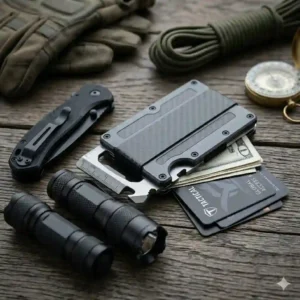
Problem-Solving Common EDC Issues
Even the best gear has friction points. Here are the most common problems new users face, and exactly how to fix them.
Problem: My metal wallet is wearing a hole in my jeans.
-
Solution: This is called “pocket burn,” caused by sharp 90-degree metal corners rubbing against denim. To fix this, always ensure your wallet is placed flat against your thigh, not sideways. If you are buying a new metal carrier, look specifically for “chamfered” or beveled edges (like on Dango products), which significantly reduce fabric abrasion.
Problem: My cards are getting scratched and the magnetic strips are failing.
-
Solution: Grit from your pocket gets trapped between the tightly squeezed cards. To prevent this, place a smooth, blank PVC dummy card (or a folded piece of crisp paper) at the very front and back of your stack to act as a shield against the metal plates.
Problem: The elastic band stretched out after a year.
-
Solution: Elastic fatigue is unavoidable due to temperature fluctuations and overstuffing. If you own a premium brand with replaceable parts, order a replacement kit (usually under $15). If you want to avoid this problem entirely, switch to a mechanical retention system or a paracord system like the Trayvax.
How to Choose Your Next EDC Carrier
Don’t let aggressive marketing dictate your purchase. When evaluating a tactical wallet, apply this three-point decision framework:
-
Retention Mechanism First: Ask yourself how the cards are held in place. Elastic bands are sleek but have a finite lifespan. Silicone bands grip well but collect pocket lint. Mechanical clasps or paracord lacing offer the longest durability but add thickness.
-
Capacity Honesty: Be ruthless about what you actually carry. If a manufacturer claims “holds up to 15 cards,” assume the sweet spot for easy access is actually 8-10. If you truly only carry 4 cards, buying a high-capacity metal frame will result in annoying rattling unless you pad it with folded cash.
-
Pocket Real Estate: Measure your phone. If you carry a massive flagship smartphone in your right pocket, your wallet is going in your left along with your keys. Metal chassis wallets do not play nicely with car keys—they will scratch each other. If they must share a pocket, lean toward polymer or Kydex options.
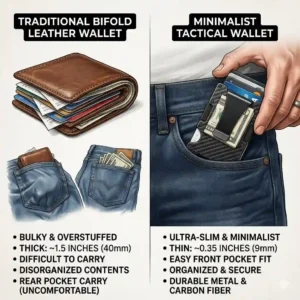
Tactical vs. Traditional Leather Bifolds
Why not just stick with the classic leather bifold? Let’s analyze the long-term reality of both.
| Feature | Tactical Metal/Polymer | Traditional Leather Bifold |
| Footprint | Exact size of a credit card | Typically 20-30% larger than cards |
| Durability Curve | Maintains shape indefinitely | Stretches, frays, and warps over time |
| Card Protection | Rigid frame prevents bending | Soft frame allows cards to snap |
| Comfort | Front-pocket optimized | Usually relegated to back pocket (causes sciatica) |
Looking at this breakdown, the structural integrity of metal or polymer vastly outperforms leather. Leather stretches to accommodate what you put in it, meaning if you carry 10 cards for a week, the leather molds to that size. If you drop down to 5 cards, they will physically fall out because the leather cannot contract. Tactical chassis use dynamic tension, holding 1 card as tightly as they hold 10.
Common Mistakes When Buying Metal Wallets
The biggest mistake I see clients make is prioritizing aesthetics over their specific biomechanics and wardrobe. Buying a heavy brass or solid copper wallet looks incredible on Instagram, but in practice, it weighs nearly half a pound. If you wear lightweight slacks or tailored suits, a heavy wallet ruins the drape of your clothing and swings like a pendulum when you walk.
Another major pitfall is ignoring the cash strap mechanism. If you are a bartender or someone who operates primarily in cash, do not buy a purely minimalist cardholder. Folding individual bills into fourths to slide them under a tight money clip is infuriating when you’re in a rush at a busy checkout counter. Match the tool to the task.
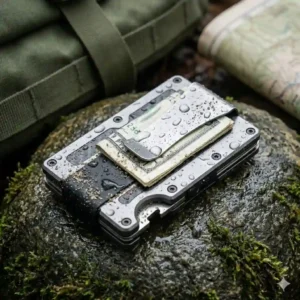
Long-Term Cost & Maintenance Cycles
Let’s talk about the “Total Cost of Ownership.” A $20 department store leather wallet will last you about two years before the stitching rots or the interior lining tears. Over a decade, you will spend $100 and constantly deal with degrading gear.
When you purchase a $100 premium metal carrier, you are buying a permanent chassis. However, there are maintenance costs. Here is a realistic Year-One and Year-Three roadmap:
| Component | Lifespan | Replacement Cost | Maintenance Required |
| Aluminum/Titanium Plates | Lifetime | N/A | Wipe down with alcohol quarterly |
| Elastic Bands | 18 – 24 months | ~$10 – $15 | Replace when tension feels loose |
| Torx Screws | 3 – 5 years | ~$5 | Apply blue Loctite if they back out |
| O-Rings / Silicone | 12 – 18 months | ~$5 | Keep away from harsh solvents |
The spec sheet won’t tell you this, but the secret to long-term ownership is Loctite. The micro-vibrations from walking can slowly back out the tiny screws holding metal wallets together. A tiny drop of blue threadlocker on day one ensures your wallet stays solid for years.
Security Audit: Does RFID Protection Really Matter?
Every tactical brand heavily advertises RFID (Radio Frequency Identification) blocking. But is digital pickpocketing a real threat, or just marketing paranoia?
The National Institute of Standards and Technology (NIST) has extensive documentation on the vulnerabilities of RFID technology. The reality is nuanced. Yes, a bad actor with a high-powered scanner hidden in a backpack can pull credit card data from a few feet away in a dense environment like a subway car. However, modern bank fraud algorithms are incredibly fast at catching this.
The real value of an RFID-blocking tactical wallet isn’t just stopping hackers; it’s stopping “card clash.” If you have a tap-to-pay credit card and an RFID transit pass in the same unshielded leather wallet, tapping the whole wallet on a subway turnstile often results in an error. A metal wallet blocks the signals, forcing you to intentionally slide out the exact card you want to use, giving you complete control over your data emissions.
Features That Actually Matter (And Those That Don’t)
When navigating Amazon listings, you need to filter the signal from the noise.
Ignore the “Bottle Opener” Hype: Unless it is integrated structurally (like the Gerber Barbill), bolt-on bottle openers often create hot spots in your pocket and catch on fabric. You can open a bottle with literally any rigid piece of metal; you don’t need a dedicated hook that destroys your jeans.
Pay Attention to Edge Chamfering: This is critical. A CNC-machined piece of aluminum has microscopic sharp edges. Premium brands spend time tumbling or chamfering (beveling) these edges so they are smooth to the touch. Cheap knockoffs skip this step to save money, resulting in a wallet that feels like a razor blade against your cuticles.
The Weight Factor: Titanium isn’t just about sounding cool; it is roughly 45% lighter than steel while maintaining similar strength. If a wallet uses thick steel plates, you will feel it every time you take a step.
✨ Don’t Miss These Exclusive Deals!
🔍 Take your everyday carry to the next level. Click on any highlighted item to check current pricing, secure the best colorways, and finally optimize your pockets!
Conclusion
Upgrading to a tactical wallet is more than just buying a new accessory; it’s an optimization of your daily workflow. Moving away from a bulky, receipt-stuffed leather bifold forces you to become intentional about what you carry. Whether you opt for the impenetrable armor of a titanium Ridge, the rugged adaptability of the Trayvax paracord system, or the ultralight weatherproofing of the Magpul DAKA, the goal is the same: absolute reliability.
Stop letting your gear dictate your comfort. Choose a chassis that matches your environment, dial in the tension, and enjoy the peace of mind that comes with carrying equipment engineered to survive the real world.
FAQs
❓ What is the point of a tactical wallet?
✅ The primary purpose is to provide extreme durability, minimize pocket bulk, and protect credit cards from bending or RFID skimming. They encourage front-pocket carry, which improves posture, reduces back pain, and prevents physical pickpocketing in crowded urban environments…
❓ Can a tactical wallet go through airport security?
✅ Yes, provided it does not contain blades or integrated multi-tools. Minimalist metal wallets (like The Ridge) are completely TSA-compliant. If your wallet has a removable survival card or knife, you must remove that specific component before passing through security checkpoints…
❓ Do metal wallets scratch credit cards?
✅ They can if grit enters the chassis. However, high-quality models use smooth interior plates or chamfered edges to prevent damage. To guarantee protection, avoid over-tightening the retention bands and periodically clean the interior with a microfiber cloth…
❓ How much cash can a minimalist wallet hold?
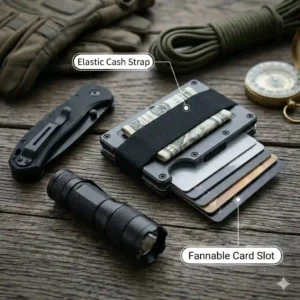
✅ Most metal EDC wallets are designed for cards first. They typically feature an external money clip or elastic cash strap that comfortably holds 5 to 10 bills folded in halves or quarters. Carrying more than that becomes cumbersome…
❓ Is carbon fiber better than aluminum for wallets?
✅ Carbon fiber is lighter and offers a distinct, modern aesthetic, but it is generally more expensive and can crack under extreme, localized pressure. Aerospace aluminum is slightly heavier but offers superior dent resistance and is usually more cost-effective…
Recommended for You
- 5 Best holster man bag Picks for 2026: Secure Tactical Style
- 5 Best ccw sling pack Options for 2026: Ultimate Tactical Guide
- 5 Best tactical sling bag Models for 2026: Battle-Tested Expert Review
Disclaimer: This article contains affiliate links. As an Amazon Associate, I earn from qualifying purchases. If you purchase products through these links, we may earn a small commission at no additional cost to you.
✨ Found this helpful? Share it with your friends! 💬🤗
[addtoany]
