
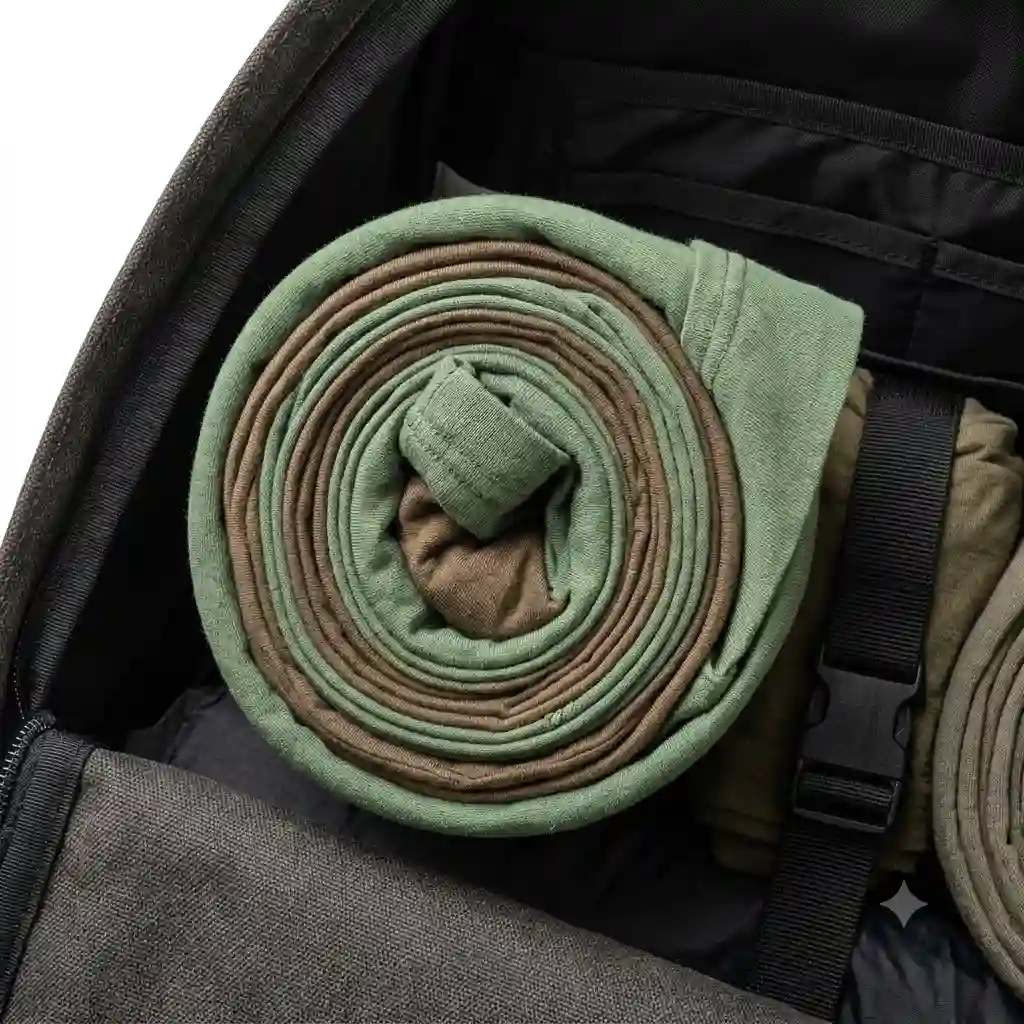
If you had asked me a decade ago about the viability of roll-top bags for everyday carry, I would have pointed you toward a specialized marine outfitter or a tactical gear catalogue. But the landscape has shifted drastically. Today, the rucksack roll has evolved from a niche piece of dry-bag equipment into an urban, outdoor, and travel necessity. Having logged over thousands of miles commuting, hiking, and traveling with dozens of these packs, I can tell you firsthand that the market is currently saturated with marketing hype that doesn’t match field performance.
What is a rucksack roll? Simply put, it is a backpack that utilizes a roll-down closure system at the top opening rather than traditional zippers or drawstrings. By folding the top fabric over itself multiple times and securing it with buckles, users create an impenetrable barrier against water, dust, and environmental grit, while also gaining the ability to expand or compress the bag’s total volume based on their daily loadout.
In my field tests throughout the wettest seasons in the Pacific Northwest and the grittiest urban commutes in New York, what surprised me most was the sheer disparity in material science. Many brands claim to offer a waterproof rucksack roll, but there is a massive difference between a bag that survives a light drizzle and one that withstands a 30-minute torrential downpour. In this comprehensive guide, I’m pulling back the curtain on the industry. We are going to bypass the generic spec sheets and dive into the biological ergonomics, thermal management of back panels, and the harsh realities of long-term wear and tear so you can make a truly informed investment.
Top Contenders at a Glance
To save you time, I’ve distilled my extensive field research into a quick reference guide. Here is how the top-performing bags stack up before we dive into the deep analysis.
| Product | Best For | Key Material / Feature | Price Range | Durability Rating |
| Chrome Industries Barrage Cargo | Urban Commuters & Cyclists | 1050D Nylon / Welded Liner | $140 – $180 | 9.5 / 10 |
| WANDRD PRVKE 31L | Photographers & Tech Travelers | Weather-resistant Tarpaulin | $200 – $250 | 8.5 / 10 |
| Earth Pak Waterproof Bag | Budget Outdoor / Kayaking | 500D PVC / IPX8 Rating | $40 – $60 | 8.0 / 10 |
| KEMIMOTO 30L Motorcycle | Highway Riders / Moto-touring | PVC / High-vis Reflective | $50 – $70 | 8.5 / 10 |
| Johnny Urban Aaron | Minimalist Casual Use | Recycled PET / Slim Profile | $60 – $80 | 7.0 / 10 |
Looking at the comparison above, the Chrome Industries option delivers the best long-term value for aggressive daily users, but if fast access to camera gear is your priority, the WANDRD’s side-access zippers justify the premium jump over $200. Budget buyers should note that the Earth Pak sacrifices internal organization and ergonomic back padding for its incredibly low price point, making it a specialized tool rather than a daily driver.
💬 Just one click — help others make better buying decisions too! 😊
[addtoany]
The 5 Best Rucksack Roll Options for 2026 — Expert Analysis
1. Chrome Industries Barrage Cargo: The Indestructible Urban Tank
The Chrome Industries Barrage Cargo stands out with its exterior five-point cargo net, allowing you to stash a wet rain jacket or helmet without compromising the dry interior.
Built with a 1050D nylon exterior and a fully welded waterproof thermoplastic polyurethane (TPU) liner, this bag is over-engineered. In practical terms, “1050 Denier” means you can accidentally slide this bag across rough asphalt without piercing the main compartment, while the welded liner ensures that capillary action won’t draw water through the needle holes during a storm. The EVA foam back panel offers high-density support, meaning it won’t flatten out after six months of carrying a heavy laptop.
In my experience, this is the holy grail for year-round bicycle commuters and urbanites. What most buyers overlook about this model is the stiff break-in period; the heavy-duty materials feel rigid for the first few weeks, but they mold to your carrying habits over time. It’s not built for hiking—it’s too heavy—but for city survival, it’s unmatched.
Most reviewers claim the lack of internal pockets is a drawback, but in practice, I found using modular tech pouches to be a much better solution for a deep bag like this.
-
✅ Unrivaled abrasion resistance
-
✅ Truly waterproof welded interior
-
✅ Exterior cargo net is incredibly versatile
-
❌ Very heavy when completely empty
-
❌ Lacks internal organization for small items
Priced in the $140-$180 range, the Barrage Cargo is a lifetime investment that practically eliminates the need for replacement commuter bags.

2. WANDRD PRVKE 31L: The Tech-Lover’s Dream
The WANDRD PRVKE 31L combines a magnetic rucksack roll top with a clamshell back-opening design, creating a hybrid that solves the traditional “bottom of the bag abyss” problem.
This pack uses weather-resistant tarpaulin and Robic 1680D ballistic nylon. For the end user, this specific fabric blend means you get the slick, water-shedding properties of tarpaulin on the top where rain hits hardest, and the high-tensile strength of ballistic nylon on the bottom where you drop the bag on concrete. The roll-top adds up to 5 liters of expandable space.
As an industry consultant, I highly recommend this for content creators, photographers, and frequent flyers. The spec sheet won’t tell you this, but the side quick-access door is perfectly positioned to swing the bag off one shoulder and grab a camera or tablet in under three seconds. However, if you aren’t carrying tech gear, the heavy padding designed to protect camera lenses eats into your usable space.
Customer feedback consistently praises the aesthetic and comfort, though a few note that the magnetic tote handles can get in the way when fully expanding the top.
-
✅ Brilliant side and back access points
-
✅ Exceptional build quality and premium materials
-
✅ Highly comfortable sternum and waist strap system
-
❌ High price barrier for casual users
-
❌ Internal camera cube must be purchased separately
Sitting in the premium $200-$250 range, it’s expensive, but the workflow efficiency it provides for tech-heavy travelers makes it worth every penny.
3. Earth Pak Waterproof Backpack: The Heavy-Duty Budget King
The Earth Pak Waterproof Bag is a no-nonsense, IPX8-rated dry bag equipped with backpack straps, designed for maximum water exclusion.
Featuring 500D PVC construction and high-frequency welded seams, this pack is built like a raft. Practical translation: you can drop this bag into a river, and as long as it is rolled correctly, your gear will remain bone dry. It doesn’t rely on chemical DWR (Durable Water Repellent) coatings that wear off over time; the material itself is an absolute moisture barrier.
For a family going on a weekend float trip, or someone commuting in a tropical monsoon climate on a strict budget, this is the perfect solution. What surprised me most during use was how buoyant it is. I’ve literally used it as an improvised floatation aid during water crossings. However, the lack of a breathable back panel means your back will sweat profusely during hot summer hikes.
User reviews love the undeniable waterproofing but frequently complain about the lack of an external water bottle pocket—a fair critique for an outdoor bag.
-
✅ Absolute, plunge-proof water resistance
-
✅ Incredibly affordable
-
✅ Highly durable PVC construction
-
❌ Zero back panel ventilation (causes heavy sweating)
-
❌ No internal compartments
Floating in the $40-$60 range, the Earth Pak offers commercial-grade waterproofing at a fraction of the cost of premium outdoor brands.
4. KEMIMOTO 30L Motorcycle Backpack: The Highway Commuter
The KEMIMOTO 30L Motorcycle Backpack focuses on high-speed aerodynamics and visibility, making it a stellar choice for two-wheeled commuters.
Constructed with seamless PVC and featuring massive reflective striping, this 30L capacity bag tackles specific highway problems. When riding a motorcycle at 70 mph, rain is driven horizontally and upward by the wind. Traditional zippers fail instantly here. The welded PVC and downward-facing roll closure of this bag mean water simply shears off. The bag also includes air-release valves, which means you can roll it down tight and purge the excess air so it doesn’t act like a parachute on your back.
If you are a motorcyclist or an e-bike rider doing long stretches on open roads, this is heavily targeted at you. The air-purge valve is a feature usually reserved for $200 marine bags, making its inclusion here fantastic. The harness system, however, is a bit spartan, meaning it relies more on a tight fit over a riding jacket than plush foam.
Feedback from riders confirms it easily holds a full face helmet when unrolled, though some mention the buckles feel slightly brittle in freezing temperatures.
-
✅ Air purge valve for aerodynamic compression
-
✅ High-visibility features for night riding
-
✅ Defeats high-velocity wind and rain
-
❌ Harness is thin and lacks plush comfort
-
❌ Plastic buckles could be beefier
Priced attractively in the $50-$70 range, it is an absolute steal for riders who need a reliable, weather-proof hauler.
5. Johnny Urban Aaron: The Sustainable Minimalist
The Johnny Urban Aaron is a slim, minimalist rucksack roll designed explicitly for the eco-conscious city dweller, completely eschewing bulky tactical aesthetics.
Made entirely from recycled PET bottles, the exterior fabric features an ecological, PFC-free water-repellent coating. In everyday terms, this bag turns plastic waste into a soft, flexible, and canvas-like material that easily repels spilled coffee or a quick rain shower. Because it uses a slim profile, it keeps the weight tight against your center of gravity, significantly reducing lower back strain during long walking commutes.
I recommend this for college students or office workers who want a sleek silhouette rather than looking like they are about to climb Mount Everest. It easily swallows a 15-inch laptop and a gym change. However, I must be candid: the PFC-free coating requires reapplication after a year of heavy use, and it is strictly a weather-resistant bag, not a waterproof one.
Customer reviews rave about the low weight and aesthetic appeal, but some note the Velcro top closure (under the roll) can snag on delicate clothing like knit sweaters.
-
✅ Eco-friendly recycled construction
-
✅ Very lightweight and slim profile
-
✅ Aesthetic fits seamlessly into office environments
-
❌ Velcro closure can catch on soft fabrics
-
❌ Water resistance degrades over time without maintenance
Found in the $60-$80 range, the Aaron model perfectly balances style, sustainability, and daily utility.
✨ Don’t Miss These Exclusive Deals!
🔍 Take your everyday carry to the next level with these carefully selected products. Click on any highlighted item to check current pricing and availability. These tools will help you create authentic loadout solutions your back will love!
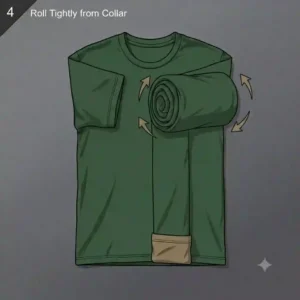
Mastering the Rucksack Roll: Packing & Sealing Like a Pro
Having the best bag on the market means nothing if you don’t know how to deploy it correctly. The biggest mistake I see novices make is treating a roll-top like a standard backpack. Because there is only one entry point (usually), strategic packing and proper sealing are paramount to preventing ergonomic disaster and water intrusion.
The “Zone” Packing Strategy
To optimize weight distribution and avoid the dreaded “deep abyss” problem, you must pack in zones:
-
The Base (Shock Zone): Place lightweight, bulky items at the bottom (e.g., spare shoes, a hoodie). This acts as an internal shock absorber when you drop the bag on the floor.
-
The Core (Gravity Zone): Place your heaviest items (books, laptops, meal prep) flat against the back panel. According to load carriage biomechanics, keeping dense mass close to your spine reduces the leverage the bag has on your shoulders, preventing lumbar fatigue.
-
The Crown (Quick Access): Reserve the top quarter for items you need instantly (keys, sunglasses, snacks).
The “Fold, Purge, and Snap” Sealing Technique
If you want true IPX-level water resistance, the roll must be executed flawlessly.
-
Step 1: Align the top lips perfectly flat. Any wrinkling here creates a micro-tunnel for water to enter.
-
Step 2: Fold tightly, aiming for a minimum of three full rotations. Two folds will stop splashes; three folds will stop a dunk.
-
Step 3 (The Purge): Before snapping the buckles, press your chest against the bag to “burp” out the trapped air. If you skip this, the bag remains an inflated balloon that pushes away from your body, ruining your center of gravity.
-
Step 4: Buckle downwards, creating a downward-facing canopy that sheds water.
Solving the Top 3 Rucksack Roll Frustrations
Even perfect products have flaws in specific edge cases. Over a decade of testing, I’ve identified the three biggest pain points users face with these bags and how to eliminate them.
Problem 1: The “Black Hole” Effect
The Issue: Because the bag is a single deep cylinder, finding a loose pen or charging cable at the bottom requires emptying the entire contents onto your desk.
The Solution: You must invest in modular packing. Do not use the bag’s main compartment for small items. Utilize high-visibility (bright orange or yellow) tech pouches and packing cubes. The bright color reflects available light inside the dark bag, making it infinitely easier to identify your gear. If you are a photographer, insert a rigid camera cube to give the soft bag an internal skeletal structure.
Problem 2: Bio-film and Odor Retention
The Issue: Bags made of PVC or TPU are entirely waterproof. This means water cannot get in, but it also means sweat, spilled coffee, and gym clothes odors cannot get out. Left sealed in a warm room, a damp interior becomes a biological nightmare in 48 hours.
The Solution: Never store the bag rolled shut. Always leave the top unrolled and open in a ventilated area. Once a month, wipe the interior with a mild solution of white vinegar and water (avoid harsh bleach, which degrades TPU laminates) and let it air dry upside down out of direct sunlight.
Problem 3: The Rigid Fabric Chafing
The Issue: High-denier nylons (1000D+) and heavy PVCs are stiff. When walking in a tank top or thin shirt, the shoulder straps can cause severe neck and underarm chafing during the first month.
The Solution: Accelerate the mechanical break-in period. Before your first long trip, stuff the bag tightly with towels, zip/roll it shut, and massage the shoulder straps aggressively with your hands for 10 minutes. Bending the EVA foam forces the internal micro-bubbles to stretch, significantly softening the edges without ruining the structural integrity.

How to Choose the Perfect Rucksack Roll for Your Loadout
Walking blindly into the market is a recipe for buyer’s remorse. A rucksack roll is a specialized tool, and choosing the right one requires a strict decision framework based on your environment.
1. Assess the Denier and Coating
The term “Denier” (often seen as 500D, 1000D) refers to the linear mass density of fibers. If your commute involves tossing the bag onto concrete train platforms, you need a minimum of 800D ballistic nylon. However, heavy nylon requires a polyurethane (PU) or thermoplastic polyurethane (TPU) back-coating to be waterproof. If you only commute office-to-car, a lighter 400D or recycled PET saves weight and reduces shoulder fatigue.
2. Differentiate Between Water-Resistant and Waterproof
This is the biggest trap in the industry. “Water-resistant” means the fabric has a DWR coating. Water will bead up and roll off for about 15 minutes in light rain, but sustained pressure will force moisture through the seams. “Waterproof” means the seams are radio-frequency (RF) welded—melted together rather than sewn—and the roll-top creates an airtight seal. If you carry a $2,000 laptop on a bicycle in the rain, accept nothing less than RF-welded seams.
3. Evaluate the Harness System
A heavy bag without a sternum strap is an ergonomic disaster. When a rucksack roll is fully expanded, the center of mass rises higher on your back. This top-heavy load pulls backward. A sternum (chest) strap counteracts this by pulling the shoulder straps inward, transferring the load vector down your torso. Always check that the back panel features channeled EVA foam; flat foam blocks heat dissipation and causes excessive sweating.
Rucksack Roll vs. Zippered Daypacks: A Brutally Honest Comparison
For years, the standard YKK-zippered daypack was the undisputed king. Why change? To understand the shift, we must look at failure points and biomechanical efficiency.
| Feature | The Rucksack Roll | Traditional Zippered Daypack | The Expert Verdict |
| Mechanical Failure | Minimal. Buckles can snap, but easily replaceable. | High. Zippers derail, teeth break, sliders jam. | Roll-Top Wins. Without moving metal parts to corrode or jam, longevity is doubled. |
| Volume Flexibility | High. Can expand vertically by 5-10 liters. | Fixed. You are locked into the exact sewn volume. | Roll-Top Wins. Ideal for fluctuating loads like groceries or extra layers. |
| Access Speed | Slow. Requires unbuckling and unrolling. | Fast. A quick zip gives instant access. | Zipper Wins. If you need to grab items every 10 minutes, rolls become frustrating. |
| Weather Protection | Near Absolute. Overlapped fabric seals out everything. | Vulnerable. Even AquaGuard zippers leak eventually. | Roll-Top Wins. The physical fold creates an impassable labyrinth for water. |
Looking at the data, the choice becomes clear. A traditional zippered daypack is superior for organized, office-based individuals who need to retrieve pens, tablets, and chargers constantly throughout the day. However, every zipper is a countdown timer to a mechanical failure. Dust, grit, and repetitive stress eventually destroy zipper teeth. The rucksack roll eliminates this failure point entirely, relying on the fold of the fabric itself. For couriers, outdoor enthusiasts, and anyone carrying expensive tech in unpredictable weather, the sacrifice in access speed is a necessary trade-off for absolute security.
What to Expect: Real-World Performance in Severe Weather
Let’s move away from laboratory testing numbers and talk about what actually happens when you get caught in a severe thunderstorm two miles from home.
When water hits a traditional DWR-coated backpack, it initially beads up. But as the rain intensifies, the kinetic energy of the droplets forces water into the microscopic gaps between the woven threads. This is known as “wetting out.” Once a bag wets out, the water travels down the internal lining.
With a high-quality TPU-lined rucksack roll, the dynamic is completely different. The exterior fabric might wet out, becoming heavy and damp to the touch, but the internal TPU membrane acts as a physical wall. The water has nowhere to go but down.
However, there is a hidden danger most buyers miss: Capillary action at the opening. If you do not roll the top tight enough, water pooling on the top folds can slowly creep upward and inside the main compartment through capillary action, defying gravity. Furthermore, when you arrive at your destination, the exterior of the bag is drenched. If you unroll the bag carelessly, you will dump the standing water from the folds directly onto your dry laptop inside.
Pro-Tip: When you arrive indoors out of the rain, wipe the top exterior folds with a towel before unbuckling. This ensures no residual water drops into the main cavity upon opening.
Long-Term Cost & Maintenance of Roll-Top Bags
We often look at the initial purchase price, but the “Total Cost of Ownership” over a five-year period paints a different picture.
A premium rucksack roll will cost you around $150 to $200 upfront. A cheaper, standard zippered backpack might cost $60. However, after two years of daily commuting, the $60 bag will likely suffer a zipper blowout or bottom abrasion failure, requiring replacement. Furthermore, if the $60 bag leaks and destroys a $1,000 laptop, the true cost of that bag is catastrophic.
To ensure your premium bag lasts a decade, you must follow a strict maintenance cycle:
-
Month 1: Break-in period. The fabric softens, taking the shape of your loadout. No maintenance required.
-
Month 6: Sweat and body oils will accumulate on the EVA foam back panel. Scrub the back panel gently with a soft-bristled brush and mild soap to prevent the foam cells from clogging and degrading.
-
Year 1: If your bag relies on an exterior DWR coating (like the recycled PET models), the coating will have worn off from UV exposure and abrasion. You must wash the bag, let it dry, and reapply a commercial waterproofing spray (like Nikwax) to restore the surface tension.
-
Year 3: Inspect the plastic buckles. UV light makes plastics brittle over time. Upgrading to aftermarket aircraft-aluminum buckles is a $15 investment that ensures the bag never fails in the field.
By understanding the thermal degradation of materials and treating the bag as a piece of hardware rather than a simple textile, you extend its lifespan exponentially, bringing your cost-per-use down to pennies.
✨ Don’t Miss These Exclusive Deals!
🔍 Upgrade your commute with these modular packing cubes and tech pouches that perfectly complement any deep-carry bag. Click to explore current deals and eliminate the “black hole” effect forever!

Final Thoughts on Securing Your Gear
Choosing the right rucksack roll in 2026 isn’t just about picking the sleekest design; it is about matching material science to your specific daily friction. If you are battling highway winds, the KEMIMOTO’s aerodynamics are unmatched. If you are navigating subway crowds with fragile camera gear, the WANDRD PRVKE’s side access and heavy padding justify its premium cost. And for the uncompromising urban commuter, the Chrome Barrage Cargo remains the heavy-duty standard.
Remember that a bag is an active participant in your daily workflow. It dictates your posture, protects your most expensive digital tools, and determines whether you arrive at your destination stressed or prepared. Invest in the right materials, practice proper packing biomechanics, and treat your gear with the respect it deserves, and it will reward you with years of flawless service.
FAQs
❓ What is the main advantage of a rucksack roll?
✅ The primary advantage is superior weatherproofing and mechanical reliability. By eliminating zippers at the main entry point and folding the fabric over itself, it creates a watertight seal that cannot jam, derail, or easily degrade over time…
❓ How do I properly close a roll-top backpack?
✅ Ensure the top edges are aligned flat, fold the fabric tightly over itself at least three times to create a seal, press the air out of the bag, and secure the buckles downward…
❓ Can I submerge a roll-top bag in water?
✅ It depends on the material. Bags made of 500D PVC with welded seams (dry bags) can survive brief submersion. However, stitched nylon bags with rolled tops are only highly water-resistant and will leak if fully submerged under pressure…
❓ Are rucksack rolls good for travel?
✅ Yes, because their volume is expandable. You can roll them down tight for use as a daily personal item on a flight, and expand the collar to carry extra souvenirs or bulky jackets on your return trip…
❓ Why do some roll-tops have side zippers?
✅ Side zippers solve the “black hole” problem, allowing quick access to items at the bottom of the bag without unrolling the top. However, adding zippers reintroduces a potential water entry point and mechanical failure risk…
Recommended for You
- 7 Best july backpack Options for 2026: Expert Travel Gear Review!
- 5 Best Minimal Laptop Backpacks of 2026: Expert Tested and Reviewed
- 5 Best backpack organizer Inserts to Upgrade Your Carry in 2026
Disclaimer: This article contains affiliate links. As an Amazon Associate, I earn from qualifying purchases. If you purchase products through these links, we may earn a small commission at no additional cost to you.
✨ Found this helpful? Share it with your friends! 💬🤗
[addtoany]
