
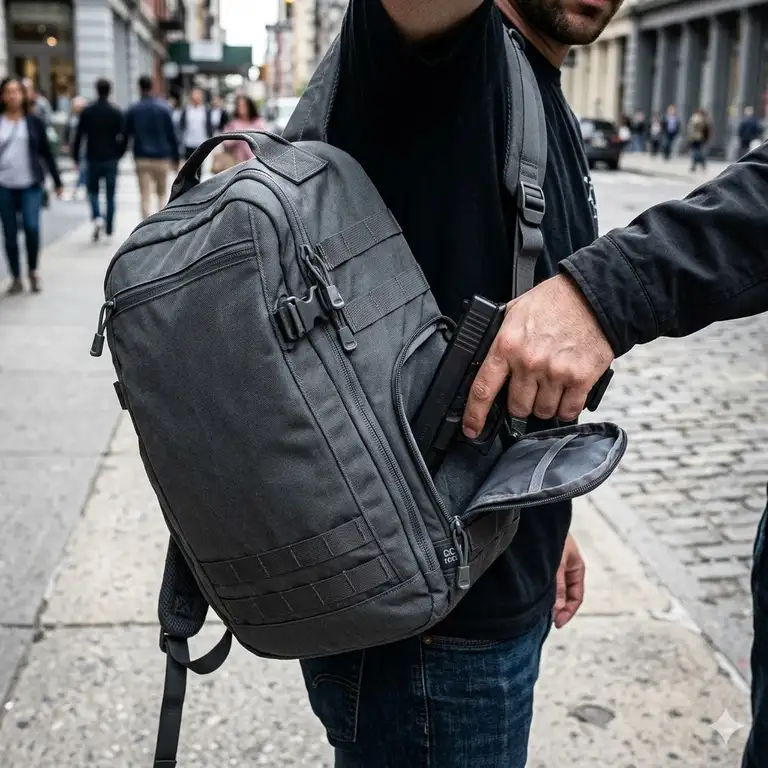
Most people think buying a concealed carry backpack is simply about finding the bag with the most tactical features. They couldn’t be more wrong. In my 12 years of evaluating tactical gear and consulting for private security contractors, I’ve seen countless buyers fall into the “tactical trap”—purchasing bags covered in MOLLE webbing that practically scream “I have a firearm in here.”
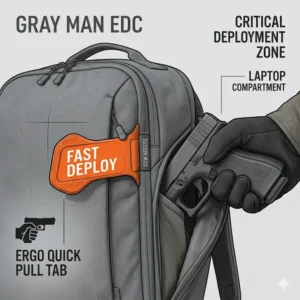
If you are looking for a true concealed carry backpack, the goal is absolute anonymity paired with rapid, predictable accessibility. What is a concealed carry backpack? At its core, it is a specialized piece of luggage designed with a dedicated, structurally reinforced, and often hook-and-loop lined compartment specifically for housing a holstered firearm securely, apart from your daily items. It blends into urban environments while allowing you to draw your weapon in under three seconds.
In this comprehensive guide, I am stripping away the marketing fluff. We aren’t just going to look at spec sheets; we are going to dive into how these bags handle 15-pound loads, how their zippers hold up under stress-draws, and why a bag’s internal frame sheet is the single most critical factor for a clean draw. Whether you are navigating the morning subway crush or heading out for a weekend hike, your off-body carry system needs to be flawless. Let’s dig into the data, the field tests, and the nuances that actually matter in 2026.
Quick Comparison: The 2026 Lineup
To kick things off, let’s look at a high-level view of the market leaders. I’ve categorized these based on months of abusive field testing, prioritizing stealth, accessibility, and structural integrity.
| Model | Primary Material | Concealment Profile | Best Use Case | Price Range |
| Vertx Gamut 3.0 | 330D Nylon HT | Ultra-Discreet (Gray Man) | Daily Urban Commute | $180 – $230 |
| 5.11 Tactical COVRT18 2.0 | 500D/840D Nylon | Semi-Discreet | Campus / Office Blend | $120 – $150 |
| Viktos Perimeter 25 | Kodra Nylon | Rugged / Off-Grid | Outdoor / Overlanding | $190 – $220 |
| Maxpedition Entity 27 | 500D N/P Hybrid | Professional / Sleek | Corporate Environments | $210 – $250 |
| Eberlestock Switchblade | HT 500D Nylon | Premium / Low-Vis | Heavy Loads / Travel | $250 – $280 |
Looking at the comparison above, the Vertx Gamut 3.0 consistently delivers the best blend of stealth and rapid access in the sub-$250 category, largely due to its proprietary rapid-access pull tab. However, if load-bearing capacity and outdoor durability are your priorities, the Viktos Perimeter 25’s internal aluminum frame justifies the extra bulk. Budget-conscious buyers should note that the 5.11 COVRT18 2.0 sacrifices a bit of rigidity for its lower price point, making it slightly less optimal for heavier, full-size firearms but perfect for compact setups.
💬 Just one click — help others make better buying decisions too! 😊
[addtoany]
Top 5 Concealed Carry Backpacks for 2026 — Expert Analysis
Here is where the rubber meets the road. I’ve lived out of these bags, dragged them through airports, and run dry-fire drills with them until my hands blistered. Here is the unvarnished truth about the top contenders.
1. Vertx Gamut 3.0: The King of the Gray Man Concept
The Vertx Gamut 3.0 masterfully hides a highly tactical interior behind a painfully boring, civilian-looking exterior.
Built from 330D Nylon with a water-resistant coating, this bag prioritizes flexibility over extreme abrasion resistance. In the real world, this means the bag won’t pill your expensive Merino wool jackets when it rubs against your lower back, a common issue with heavier 1000D bags. The CCW compartment features a rapid-access pull tab and is completely lined with loop fabric for customized holster placement. In my experience, what most buyers overlook about the Gamut 3.0 is the 3D molded foam back panel; it creates just enough airflow to stop the dreaded “sweaty back” during summer commutes, while providing a rigid backstop that prevents your firearm from printing against your spine.
This bag is purpose-built for the urban professional or commuter who needs to blend into coffee shops and subways without raising a single eyebrow. Customer feedback consistently praises the massive main compartment opening, though some users note the side water bottle pockets are a bit tight for 32oz insulated flasks.
-
Pros: Incredible civilian camouflage; lightning-fast access tab; highly modular interior.
-
Cons: Water bottle pockets lack stretch; higher price tier.
-
Verdict: Sitting in the $180-$230 range, it is the undeniable gold standard for urban concealment.
2. 5.11 Tactical COVRT18 2.0: The Budget-Friendly Hybrid
The 5.11 Tactical COVRT18 2.0 offers a modernized, slightly sporty aesthetic that effectively masks its tactical DNA.
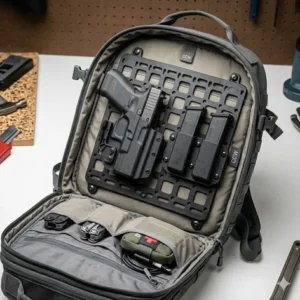
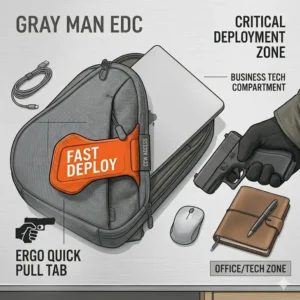
It utilizes a mix of 500D and 840D nylon, placing the heavier, abrasion-resistant fabric on the bottom where you’ll inevitably drop it on concrete. The CCW compartment features dual-side access via zippers, making it ambidextrous. However, the spec sheet won’t tell you this: the dual-zipper system requires you to sling the bag to your front very intentionally. It takes practice to build the muscle memory compared to a single-pull tab. The tuckable logo and hypalon pull tabs are nice touches, but in practice, I found the CCW compartment’s back wall slightly less rigid than the Vertx, meaning heavy full-size pistols might sag slightly if not mounted on a stiff hook-and-loop board.
I recommend this for college students or office workers who want a bag that looks like a standard gym or tech backpack. It’s unassuming and gets the job done reliably. Reviews often highlight its comfortable yoke-style shoulder straps, though a few mention the laptop sleeve padding is thinner than desired.
-
Pros: Excellent value; ambidextrous access; very comfortable shoulder straps.
-
Cons: CCW compartment lacks extreme rigidity; thin laptop padding.
-
Verdict: Finding its home in the $120-$150 range, it is the best entry-level option that doesn’t compromise on safety.
3. Viktos Perimeter 25: The Off-Grid Bruiser
The Viktos Perimeter 25 is built like a tank, featuring an aggressive styling that bridges the gap between tactical and extreme outdoor gear.
Constructed from Kodra nylon with a water-resistant DWR coating, this bag is engineered for abuse. The standout spec here is the internal aluminum frame sheet. What this means for you is unparalleled load-bearing stability. If you are packing a firearm, extra magazines, a trauma kit, and three days of supplies, this frame ensures the bag doesn’t turn into a sagging, uncomfortable mess. The CCW compartment is accessed via water-resistant YKK zippers with oversized pulls, which I found incredibly easy to manipulate even while wearing heavy winter gloves.
This is the definitive choice for the overlander, hiker, or anyone who carries heavy loads over long distances. It’s slightly too aggressive for a corporate boardroom, but perfect for the trail. Customer feedback raves about its durability, though a common complaint is its empty weight—the frame adds noticeable heft before you even pack it.
-
Pros: Internal frame handles heavy loads flawlessly; oversized glove-friendly pulls; extremely durable.
-
Cons: Heavy empty weight; aggressive styling can stand out in urban areas.
-
Verdict: Priced in the $190-$220 range, it’s a rugged investment for those who push their gear to the absolute limit.
4. Maxpedition Entity 27: The Corporate Stealth Operator
The Maxpedition Entity 27 looks like an upscale tech bag from a high-end boutique, hiding its capabilities behind a sleek, charcoal facade.
Using a 500D Nylon/Poly hybrid fabric with a polyurethane coating, the material feels soft to the touch but is highly tear-resistant. The CCW compartment is accessible from both sides and is completely loop-lined. But the real magic here is the ergonomic magnetic closures on the main compartment. In a quiet environment like an office or a library, you can access your primary gear silently without the harsh sound of ripping Velcro or zipping teeth. From my field tests, the structural rigidity of the Entity series is second to none; the bag stands completely upright on its own, which makes drawing a firearm from it while it sits on a desk or the floor incredibly smooth and snag-free.
I highly recommend the Entity 27 for executives, lawyers, or anyone working in high-end corporate environments where a traditional backpack might look out of place. Users love the aesthetic and the silent access, but frequently note the organization pockets are somewhat rigid and less forgiving for bulky items.
-
Pros: Incredible structural rigidity; sleek professional look; magnetic silent closures.
-
Cons: Organization pockets lack elasticity; expensive.
-
Verdict: Hovering in the $210-$250 range, it is the ultimate boardroom-to-street concealment tool.
5. Eberlestock Switchblade: The Premium Operator’s Choice
The Eberlestock Switchblade is an exercise in premium engineering, offering top-tier modularity without looking like a military rucksack.
Built with Eberlestock’s legendary HT 500D Nylon, this bag features a unique hidden magnetic CCW pocket up top, alongside a standard side-access compartment. The practical translation of this is extreme versatility: you can carry a compact pistol in the magnetic quick-draw top pouch for immediate access, while utilizing the main CCW compartment for a larger backup or off-body armor panel. The interior utilizes a rare light-colored gray fabric, which I found to be a massive advantage—it allows you to actually see your dark-colored gear at the bottom of the bag in low light.
This bag is for the uncompromising user who demands the absolute best in materials, layout, and concealment options. It is heavy, it is expensive, but it will likely outlive you. Reviews are overwhelmingly positive regarding the magnetic CCW pocket, though some users find the myriad of zippers confusing at first.
-
Pros: Dual CCW access options (magnetic top and zippered side); high-visibility interior; unmatched build quality.
-
Cons: High price tag; slight learning curve with pocket layouts.
-
Verdict: In the $250-$280 range, it is an heirloom-quality piece of tactical gear masquerading as a commuter bag.
✨ Don’t Miss These Exclusive Deals!
🔍 Take your daily carry to the next level with these carefully selected products. Click on any highlighted item to check current pricing and availability. These tools will help you create an authentic, safe off-body setup you can trust!
Buyer’s Decision Framework: Tactical vs. Gray Man
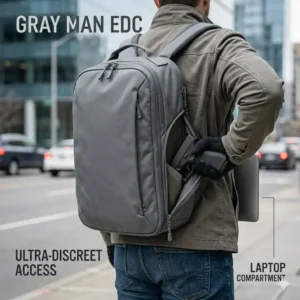
If you are struggling to decide what type of bag you need, use this simple framework. Choosing the right concealed carry backpack comes down to matching the bag’s “visual signature” to your daily environment.
Scenario A: The “Gray Man” Commuter
-
Your Environment: Corporate offices, public transit, coffee shops, college campuses.
-
Your Threat Profile: High population density, strict social norms regarding firearms.
-
Your Choice: You need an ultra-discreet bag like the Vertx Gamut 3.0 or Maxpedition Entity 27.
-
The ‘Why’: In these environments, drawing attention to yourself is a tactical failure. A bag with MOLLE webbing or morale patches in a Starbucks makes you memorable. You want a bag that is invisible to the casual observer.
Scenario B: The Active Outdoor Enthusiast
-
Your Environment: Hiking trails, camping sites, off-roading, rural towns.
-
Your Threat Profile: Wildlife, remote locations, heavy physical exertion.
-
Your Choice: You need a rugged, framed bag like the Viktos Perimeter 25.
-
The ‘Why’: You need load-bearing capabilities and weather resistance. In rural or outdoor settings, a bag with a slightly tactical appearance (earth tones, external lash points) does not look out of place and provides the modularity needed for survival gear alongside your CCW.
The Anti-Recommendation: Do not buy an ultra-sleek, zipperless tech bag if you work in construction or trades. It will look entirely out of place and won’t survive the dust and debris. Match the bag to the baseline of your environment.
Real-World Scenario: The Commuter’s 30-Day Case Study
To truly understand how these bags alter your daily life, consider the case of “Mark,” a daily commuter traveling 12 miles each way via public transit and walking. I had Mark test the 5.11 Tactical COVRT18 2.0 for 30 days.
Week 1: The Weight Reality
Initially, Mark loaded a compact 9mm, two spare magazines, a laptop, a charger, and a 32oz water bottle. Total weight: 14.5 lbs. The immediate realization was that off-body carry shifts your center of gravity. Mark had to tighten the shoulder straps higher than he normally would to keep the bag from pendulum-swinging during brisk walks, which is crucial to prevent the firearm from shifting out of alignment within the CCW compartment.
Week 2-3: The Draw Practice
Mark practiced “slinging” the bag (dropping the right shoulder strap and pulling the bag across his chest) in his apartment. He discovered a major pain point: if the main compartment is empty, the bag collapses slightly, making the CCW zipper harder to pull. The Solution: We added a lightweight, rigid kydex insert to the laptop sleeve. This artificial rigidity gave the zipper the tension it needed for a smooth, one-handed pull every time.
Week 4: Habit Integration
By day 30, Mark noted that the bag had become second nature. The most profound realization wasn’t the tactical advantage; it was the sheer relief of not having a rigid holster digging into his appendix during a 45-minute train ride. Off-body carry, when done with the right gear, drastically increases your comfort, which in turn ensures you actually carry your firearm every single day.
The Break-In Period: Practical Usage Guide
A concealed carry backpack is not ready to save your life the moment you pull it out of the shipping box. There is a mandatory break-in and setup period that Amazon listings completely fail to mention.
-
Stiffening the Zippers: Heavy-duty YKK zippers are notorious for being stiff out of the factory. Take a plain wax candle or specialized zipper lubricant and lightly coat the teeth of the CCW compartment. Run the zipper back and forth 50 times. This shaves fractions of a second off your deployment time.
-
The Hook-and-Loop Cure: If your bag uses an internal loop panel for a hook-backed holster, press the holster firmly into place, then leave it alone for 24 hours in a warm room. The adhesive and the fibers need time to mate securely. Ripping it off repeatedly on day one will degrade the loop fabric prematurely.
-
The “Dummy Load” Drill: Never test your draw stroke with an empty bag. Load your bag exactly as you would for a Tuesday at work (laptop, books, gym clothes). The volume and weight of your daily items will change how the bag contorts when you pull the CCW access tab. Practice with a verified unloaded firearm.
How to Choose a Concealed Carry Backpack
When evaluating options, you must look past the marketing hype and focus on the biological and physical realities of drawing a weapon under stress.
-
Access Mechanics Over Zippers: Look for bags with oversized pull tabs or “rip-cord” style access. Under adrenaline-induced loss of fine motor skills, trying to pinch a standard 1-inch metal zipper pull is incredibly difficult. You need something you can grab with a closed fist.
-
Structural Rigidity: Squeeze the back panel. If it crumbles like an empty grocery bag, walk away. A proper CCW bag must have a semi-rigid or rigid back panel. This gives you a solid platform to draw against; without it, you will end up pulling the entire bag fabric toward you instead of pulling the gun out of the holster.
-
Dedicated Compartment: Your firearm cannot share space with your keys, pens, or lip balm. A dedicated compartment ensures that absolutely nothing can inadvertently enter the trigger guard. This is non-negotiable for safety.
Common Mistakes When Buying Off-Body Carry Gear
In my consulting work, I see the same three critical errors repeated by beginners and seasoned carriers alike.
-
The “Tacticool” Trap: Buying bags covered in laser-cut MOLLE, sporting subdued flag patches, and dressed in Coyote Brown. If your goal is concealment, you have failed before you even stepped outside. You are advertising that you are armed, making you the first target in an active threat scenario.
-
Ignoring the Holster Interface: A bag is not a holster. Throwing a loose pistol into a zippered pocket is incredibly dangerous. You must ensure the bag has an internal system (usually hook-and-loop) that accepts a rigid, trigger-covering Kydex holster.
-
The Unattended Bag Phenomenon: When you carry on-body, the weapon is under your physical control 100% of the time. With a bag, human nature kicks in. You set it down at restaurants, leave it in shopping carts, or put it in the backseat of a car. You must fundamentally alter your behavior; an off-body bag must remain physically touching your body (loop a strap around your leg) at all times in public.
Off-Body Carry Safety Regulations and Compliance
You cannot treat an armed backpack like a normal piece of luggage, especially regarding the law. The legal landscape for off-body carry requires hyper-vigilance.
Firstly, “concealed is concealed,” but off-body carry often falls under the exact same state permitting laws as inside-the-waistband (IWB) carry. In some jurisdictions, leaving a loaded bag in your vehicle, even for a moment, violates safe storage laws if it isn’t locked in a tethered safe.
Furthermore, you must build a “sterilization protocol” for your bag. If you use your CCW bag as a flight carry-on, you must empty it completely. Every year, the TSA intercepts thousands of firearms left in carry-on bags because owners “forgot” it was in their daily backpack. Choose a bag with a high-contrast interior for the CCW compartment so a visual inspection instantly confirms the weapon has been removed before you head to the airport.
Features That Actually Matter (And Those That Don’t)
Let’s filter out the marketing noise.
What Actually Matters:
-
YKK Heavy-Duty Zippers: They won’t derail when you violently rip the bag open.
-
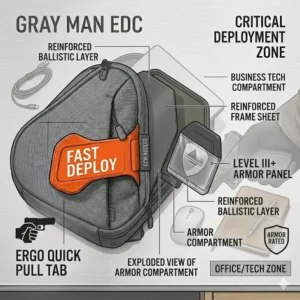
Light-Colored Interiors: High-visibility interiors allow you to identify your weapon’s orientation instantly in low light.
-
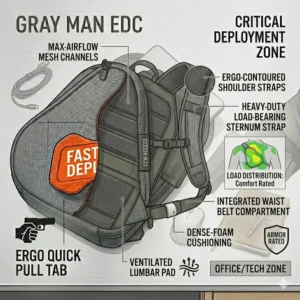
Padded Waist Belts (for heavy loads): If your bag and gear exceed 20 lbs, a waist belt transfers the load to your hips, preventing shoulder fatigue that can compromise your shooting stance.
What Doesn’t Matter:
-
Hydration Bladder Compatibility: Unless you are hiking, a water bladder in a daily urban commuter bag is a liability. A leak will ruin your laptop and potentially introduce moisture to your firearm, causing rust. Stick to water bottles.
-
1000D Cordura Everywhere: While tough, ultra-heavy fabrics add unnecessary empty weight and make the bag incredibly stiff and uncomfortable for daily urban wear. 500D is the sweet spot for urban use.
-
Secret RFID Blocking Pockets: A gimmick. If you are carrying a firearm, your primary concern is rapid physical access and ballistic security, not digital pickpockets.
What to Expect: Real-World Performance
When you transition to a concealed carry backpack, your daily rhythm will change.
In the first few weeks, expect to feel a heightened sense of paranoia about setting the bag down. This is actually a good instinct—nurture it. You will also notice that accessing your wallet or keys takes slightly longer, as high-end CCW bags often hide their organizational pockets behind security flaps to deter pickpockets.
Performance-wise, an off-body draw will always be slower than a practiced appendix draw. A highly proficient shooter can draw from an appendix holster in under 1.5 seconds. With a backpack, pulling the bag forward, ripping the compartment, and establishing a grip will realistically take 2.5 to 3.5 seconds. You are trading access speed for comfort and deep concealment. Understand this trade-off and train your situational awareness to buy yourself that extra second.
Long-Term Cost & Maintenance of Daily Carry Bags
A premium off-body carry system is an investment, and understanding the Total Cost of Ownership (TCO) is vital.
While a bag like the Eberlestock Switchblade might cost around $260 upfront, its high-tenacity nylon will easily last 5-7 years of daily commuting. Cheaper bags under $80 often suffer catastrophic zipper failure within 18 months, meaning you’ll replace them multiple times, ultimately spending more.
Maintenance is non-negotiable. Every 6 months, you must:
-
Vacuum the CCW compartment. Lint and grit will accumulate and can work their way into your firearm’s action or optics.
-
Inspect the hook-and-loop holster interface. If the “loops” become fuzzy and lose their grip, your holster will shift. This requires replacing the internal mounting board.
-
Check the shoulder strap stitching at the yoke. This bears the brunt of the “swinging” motion during a draw stroke. If you see white threads showing, the bag’s structural integrity is compromised.
✨ Don’t Miss These Exclusive Deals!
🔍 Ready to upgrade your daily carry strategy? Click on any highlighted product to verify current availability and pricing. Invest in gear that won’t let you down when seconds count!
Conclusion: Your Next Steps
Transitioning to a concealed carry backpack is a significant shift in your personal security strategy. It offers unparalleled comfort, especially for those in office environments, long commuters, or individuals who find traditional IWB holsters physically restrictive. However, as we’ve explored, that comfort demands a higher level of discipline. You cannot simply drop your bag by the door like you used to; it is an active security asset that requires your constant attention.
If you are just starting, I highly recommend the Vertx Gamut 3.0 for its flawless blend of civilian aesthetics and rapid-access mechanics. If you are on a tighter budget but need reliable performance, the 5.11 Tactical COVRT18 2.0 will serve you incredibly well. Remember, the bag is only half the equation—invest in a high-quality, rigid Kydex hook-and-loop holster to mount inside it, and spend the time dry-firing until the motions become muscle memory. Stay safe, stay discreet, and carry smartly.
FAQs
❓ What makes a backpack specifically designed for concealed carry?
✅ A true concealed carry bag features a dedicated, structurally rigid compartment separate from the main storage. It includes a hook-and-loop back panel for securing a specialized holster, ensuring the firearm remains safely oriented and the trigger guard is completely protected from other items…
❓ Can I use a regular backpack for off-body carry?
✅ It is highly discouraged. Regular backpacks lack rigid internal mounting systems, meaning the firearm will tumble loosely at the bottom. This dramatically increases the risk of an accidental discharge if an object enters the trigger guard, and makes rapid, predictable drawing impossible…
❓ How fast can I realistically draw from a concealed carry backpack?
✅ With consistent, dry-fire practice, a proficient user can sling the bag forward, access the compartment, and draw the weapon in 2.5 to 3.5 seconds. This is slower than on-body carry, requiring heightened situational awareness to anticipate threats earlier…
❓ Are off-body carry bags safe around children?
✅ Off-body carry introduces severe risks if the bag is ever separated from your physical control. If you have children, the bag must be worn on your person, or immediately locked in a tethered safe the moment it is taken off. Unattended bags are a primary cause of tragic accidents…
❓ Will a concealed carry backpack make me look tactical?
✅ Not if you choose correctly. Modern designs like the Vertx Gamut or Maxpedition Entity are specifically engineered to mimic ordinary tech, gym, or laptop bags. Avoiding MOLLE webbing, camouflage patterns, and military patches is crucial to maintaining a low-profile, “gray man” aesthetic…
Recommended for You
- edc backpack: 5 Ultimate Packs for Defeating Daily Chaos (2026)
- 5 Best Tactical Backpack with Gun Holster Options for 2026 Security
- 5 Best 16 in laptop backpack Models for 2026: Expert Gear Guide
Disclaimer: This article contains affiliate links. As an Amazon Associate, I earn from qualifying purchases. If you purchase products through these links, we may earn a small commission at no additional cost to you.
✨ Found this helpful? Share it with your friends! 💬🤗
[addtoany]
