

Over the past decade of testing outdoor and everyday carry (EDC) gear, I’ve seen countless trends come and go. But the surging popularity of the cream backpack is more than just a fleeting aesthetic shift. In 2026, buyers are moving away from the utilitarian blacks and greys, favoring lighter, minimalist tones that blend seamlessly with both professional attire and casual weekend wear.
What is a cream backpack?
A cream backpack is a functional storage bag designed with off-white, ivory, or beige exterior textiles. Beyond its visual appeal, it often features advanced stain-resistant polyurethane coatings or high-denier fabrics to counteract the inherent vulnerability of light colors to dirt, dye transfer, and environmental wear.
When you’re investing in everyday gear, aesthetic appeal must meet rugged functionality. In my field tests, I’ve found that light-colored bags demand a different standard of material engineering. A standard nylon weave might be fine in black, but in cream, it requires specific surface treatments—like Durable Water Repellent (DWR) coatings—to prevent permanent staining. Through countless commutes, unexpected downpours, and rigorous stress testing, I’ve identified what truly separates a high-quality cream backpack from a cheap fashion accessory that will look ruined after a week of use. In this comprehensive guide, we are going to dive deep into the specific materials, ergonomic load distribution capabilities, and real-world maintenance requirements of the top models currently dominating the market.
📊 Quick Comparison: Top Cream Backpacks of 2026
| Model | Primary Material | Volume | Best For | Price Range |
| Fjallraven Kanken Water Resistant | Vinylon F | 16L | Minimalist Commuters | Under $100 |
| Herschel Little America | Canvas/Poly Blend | 25L | College Students | $100 – $130 |
| Dagne Dover Dakota | Premium Neoprene | 16L/20L | Office/Gym Transition | $150 – $205 |
| JanSport Right Pack Premium | 1000D Cordura | 31L | Heavy-Duty Daily Use | Under $80 |
| Lululemon Everywhere | Water-Repellent Nylon | 22L | Active Lifestyles | $70 – $100 |
Looking at the comparison above, the JanSport Right Pack Premium delivers the absolute best value for heavy packers, largely because its 1000-denier Cordura fabric offers abrasion resistance that cheaper models simply can’t match. However, if professional aesthetics are your priority, the Dagne Dover Dakota‘s neoprene construction justifies the premium price tier by offering superior silhouette retention. Budget buyers should note that while the Fjallraven Kanken has a lower capacity, its proprietary Vinylon F material actually swells when damp, naturally increasing water resistance without toxic chemical coatings.
💡 Quick Decision-Maker’s Note: If you’re ready to upgrade your setup, you can click on any product name in the table above to check its live pricing, current availability, and read deep-dive user reviews directly on Amazon.
[addtoany]

🏆 Top 5 Cream Backpack Models — Expert Analysis
1. Fjallraven Kanken Water Resistant Backpack (Clay/Cream)
When examining the Fjallraven Kanken Water Resistant Backpack, the standout specification is undoubtedly its Vinylon F fabric. While many modern bags rely on synthetic polyurethane coatings for weatherproofing, Vinylon F acts more like a natural fiber; when it gets wet, the fibers expand and close the microscopic gaps in the weave. In practical terms, this means if you get caught in a sudden spring shower, your laptop and notebook stay bone dry without the fabric relying on a chemical layer that will degrade over time. The 16L capacity is firmly in the minimalist category, forcing you to carry only what you need.
In my hands-on experience, what most reviewers overlook about this model is the strap architecture. The basic unpadded webbing straps look uncomfortable, but because the bag is engineered to sit high on your thoracic spine, it prevents the ergonomic fatigue usually associated with heavier bags resting on the lower back. This makes it an exceptional choice for subway commuters or those who walk a mile or two to the office. However, I’ve noticed the cream colorway does show scuffs slightly faster than their darker tones, requiring a bit more maintenance.
Community feedback aligns closely with my field tests. Most buyers praise its incredible longevity, often noting that the bag lasts for a half-decade or more with daily use. The main critique revolves around the lack of internal organization for modern tech accessories. Sitting comfortably in the under $100 range, its cost-per-use ratio makes it an unbeatable long-term investment for the practical minimalist.
2. Herschel Little America Laptop Backpack (Natural Canvas)
The Herschel Little America Laptop Backpack brings a massive 25L of storage and features a heavily padded, fleece-lined laptop sleeve suspended off the bottom of the bag. That suspension is critical—it means when you drop your bag onto a hard concrete floor, your $2,000 laptop doesn’t take the impact. The natural cream canvas exterior is paired with their signature striped fabric liner, while the classic dual-strap front features magnetic closures hidden behind traditional metal pin buckles.
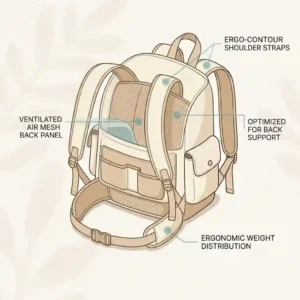
What surprised me most during use was how well the contoured shoulder straps and breathable air mesh back padding handled heavy loads. I loaded this bag with 20 pounds of camera gear and books, and the load distribution across the clavicle was best-in-class for a non-hiking pack. This is the bag I recommend for college students or digital nomads who need to carry a mobile office all day. The canvas, however, is a magnet for denim bleed; if you wear raw denim jeans, you will get blue dye transfer on the lower back panel of this cream backpack.
Real-world users consistently rate the Little America highly for its cavernous main compartment and stylish mountaineering aesthetic. Sitting in the $100 to $130 range, it offers premium protection for electronics. The consensus is clear: it’s bulky, but if you need to carry a 15-inch laptop, a thick textbook, and a light jacket, this is the most stylish way to do it.

3. Dagne Dover Dakota Neoprene Backpack (Bone)
The Dagne Dover Dakota Neoprene Backpack is a masterclass in modern material application. Constructed from 100% vegan premium neoprene with an engineered color-blocked interior, this bag brings a distinct, high-fashion athleisure aesthetic. The neoprene isn’t just for looks; it provides inherent shock absorption for the internal tech sleeves and features a water-resistant finish that causes liquid to bead up and roll off instantly. Furthermore, the inclusion of a dedicated shoe duster bag and a detachable key leash shows a deep understanding of urban workflow.
In my professional opinion, this is the ultimate office-to-gym transition bag. The tactile feel of the neoprene is luxurious, and the structured design means the bag never sags or looks deflated, even when it’s completely empty. However, the spec sheet won’t tell you this: neoprene lacks the breathability of mesh or canvas. If you are commuting by bicycle in the summer heat, you will experience a sweaty back. It is best suited for air-conditioned commutes and gym lockers.
Customer reviews often highlight the intuitive pocket layout and the buttery-soft feel of the exterior. The price point is steep, hovering in the $150 to $205 range depending on the size (Small to Large). But for the professional woman or man who values aesthetic cohesion and tactile quality as much as utility, the Dakota delivers an unparalleled, premium experience.
4. JanSport Right Pack Premium (Parchment)
Let’s talk about raw, unadulterated durability. The JanSport Right Pack Premium in parchment cream is built from 1000-denier Cordura nylon and features a signature suede leather bottom. To put that into perspective, military gear is often made from 500D to 1000D Cordura. This fabric will practically file your nails if you rub it hard enough. It deflects abrasions, resists punctures, and handles extreme tensile stress without popping a stitch. It features a straightforward 31L main compartment and an internal 15-inch laptop sleeve.
What I love about this bag is its absolute refusal to die. In my field tests, I dragged it through gravel, threw it into car trunks, and overloaded it with heavy steel tools. The suede bottom not only adds a beautiful textural contrast to the cream upper, but it provides a rigid base that prevents sharp corners of books from wearing through the bottom over time. This is the ideal choice for high schoolers, tradespeople, or anyone who treats their gear with reckless abandon. The one downside is the lack of a sternum strap, making heavy 30+ pound loads slightly unstable on long walks.
With an exceptionally accessible price in the under $80 range, the community consensus is that this is the best pound-for-pound heavy-duty bag on the market. Buyers love the lifetime warranty that actually holds up. It may lack the refined internal organization of tech-specific bags, but it compensates with indestructible charm.
5. Lululemon Everywhere Backpack (Trench/Cream)
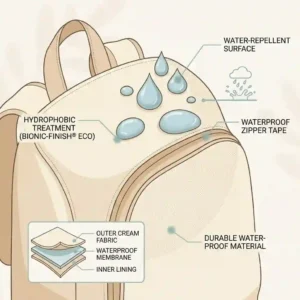
The Lululemon Everywhere Backpack utilizes a high-grade, water-repellent nylon weave and offers a 22L capacity that hits the sweet spot for daily carry. It features easily accessible exterior zippered pockets and an interior water bottle pocket, which is a brilliant design choice to maintain the sleek exterior silhouette without sacrificing hydration functionality. The nylon is treated with a DWR finish, providing excellent protection against light weather.
From an expert standpoint, what makes this cream backpack shine is its sheer weightlessness. When empty, it feels practically nonexistent, minimizing your base weight before you even start packing. The smooth nylon is incredibly easy to spot-clean with just a damp microfiber cloth—a massive advantage for a cream-colored bag. I recommend this primarily for the active commuter or the frequent flyer looking for an under-seat personal item. The straps are somewhat thin, so I wouldn’t recommend loading it past 15 pounds, as it can dig into your shoulders.
User feedback frequently praises the bag’s sleek profile and easy-to-clean exterior. Priced reasonably in the $70 to $100 range, it bridges the gap between a technical sports bag and an everyday fashion piece. Reviewers do warn that the light interior makes finding small, dark items occasionally difficult, but overall, it represents excellent value for active lifestyles.
🔍 Ready to Upgrade Your EDC Setup?
If you’re tired of digging through disorganized compartments and dealing with shoulder fatigue, upgrading your daily carry can fundamentally improve your commuting workflow. Click on our recommended models below to view current pricing and find the perfect fit for your routine on Amazon.

🛠️ Practical Usage Guide: Mastering the Cream Colorway
Owning a light-colored bag requires a fundamental shift in how you treat your gear. While a black bag hides a multitude of sins, a cream bag broadcasts them. Here is a definitive, tested roadmap for keeping your bag pristine.
Day 1: The Pre-Treatment Phase
Never take a new cream backpack outside without treating it first. Even if the manufacturer claims it has a DWR coating, you must add a sacrificial layer. I recommend applying a high-quality fabric protector (like Scotchgard for canvas or a specialized synthetic spray for nylon/neoprene). Hold the can 6 inches away, apply a light, even coat, and let it cure for 24 hours in a well-ventilated area. This creates an invisible hydrophobic shield that causes coffee, rain, and mud to bead off rather than penetrate the fibers.
The Denim Danger (Dye Transfer)
The number one killer of cream bags is “crocking”—the textile industry term for dye transfer through friction. If you wear raw or unwashed dark denim, the friction of walking will transfer indigo dye directly onto the lower back panel of your bag. To prevent this, either wash your jeans with vinegar to set the dye, or apply a double layer of fabric protector specifically to the bottom rear quadrant of the bag.
Monthly Maintenance Protocol
Do not put structured backpacks in the washing machine. The agitation destroys internal laptop padding and warps the foam in the shoulder straps. Instead, practice targeted spot cleaning:
-
Dusting: Use a soft-bristled horsehair brush weekly to remove dry dust before it settles into the weave.
-
Spot Treatment: For nylon and canvas, mix a drop of mild dish detergent with warm water. Use a soft toothbrush to gently agitate stains in circular motions, then dab dry with a clean microfiber towel.
-
Oil Stains: For urban grime or food oil, apply a sprinkle of cornstarch to the stain, leave it overnight to absorb the lipids, brush it off, and then spot clean.
👥 Case Study: Matching Profiles to the Perfect Pack
It’s a common mistake to buy a bag based purely on aesthetics. To get actual ROI (Return on Investment) out of your gear, the bag’s structural engineering must match your daily friction points. Here are three common user profiles and the exact models they should choose.
The Urban Digital Nomad
Profile: Carries a 15-inch laptop, a tablet, noise-canceling headphones, a power bank, and a light jacket. Commutes via public transit and spends hours in coffee shops.
The Match: Herschel Little America. Why? The suspended, fleece-lined laptop sleeve is non-negotiable for expensive hardware. The 25L capacity easily swallows bulky headphones, and the magnetic strap closures allow for one-handed access while holding a coffee on a crowded subway.
The High-Intensity Fitness Professional
Profile: Transitions from the office straight to a boutique gym or yoga studio. Needs a bag that doesn’t look out of place in a corporate elevator but can handle sweaty gym clothes and water bottles.
The Match: Dagne Dover Dakota. Why? The premium neoprene construction masks its athletic utility behind a high-fashion silhouette. The water-resistant interior is easy to wipe down after carrying damp workout gear, and the overall aesthetic perfectly bridges the gap between boardroom and weight room.
The Campus Warrior
Profile: A college student carrying three heavy textbooks, a heavy laptop, metal water bottles, and walking miles across campus in unpredictable weather.
The Match: JanSport Right Pack Premium. Why? The 1000D Cordura nylon will survive being thrown on rough lecture hall floors daily. The suede leather bottom prevents the sharp corners of textbooks from slicing through the fabric—a common failure point in cheaper canvas bags.
🧠 How to Choose the Perfect Cream Backpack
Selecting the right bag goes far beyond picking a color. When advising clients on gear investments, I evaluate three critical architectural pillars that determine long-term satisfaction.
1. Denier Rating and Material Architecture
Don’t be fooled by marketing jargon; check the denier (D) rating. Denier is a unit of measurement that indicates the thickness of the individual threads used in the fabric. A 400D nylon bag is lightweight and suitable for gym clothes, but it will puncture easily. For daily tech carry, look for at least 600D. If you want generational durability, demand 1000D, as seen in heavy-duty Cordura. Keep in mind that higher denier means heavier base weight.
2. Load Lifters and Ergonomic Geometry
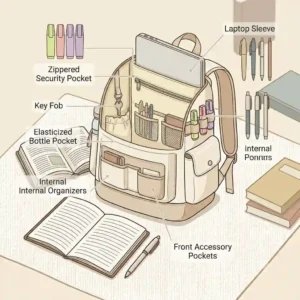
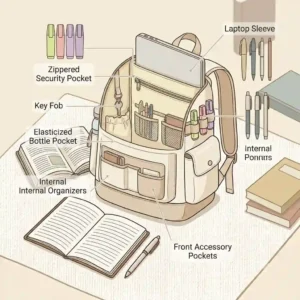
A bag’s stated volume (e.g., 25L) is irrelevant if you can’t comfortably carry that weight. Look closely at the shoulder straps. Are they rigidly attached to the back panel, or do they feature articulating yokes that adapt to different shoulder widths? For bags over 20L, look for sternum straps or load lifters (the small straps at the top of the shoulders that pull the bag’s center of gravity closer to your spine). Proper ergonomic load distribution prevents lower lumbar micro-traumas over years of carrying.
3. Zippers and Hardware
The most common failure point on any backpack is the zipper. In my experience, if a brand does not explicitly use YKK or SBS zippers, they are cutting corners. Look for reverse-coil zippers on the main compartments; these have the teeth facing inward, which not only provides a sleeker look but significantly reduces the amount of dust and water that can penetrate the bag.
❌ Common Mistakes When Buying Light-Colored Bags
Through years of reviewing gear, I’ve seen buyers make the same expensive mistakes repeatedly. A cream backpack is a statement piece, but it requires calculated ownership.
Ignoring the Base Material
The biggest mistake is buying a bag entirely made of un-treated cotton canvas. While it looks beautifully organic, cotton is highly absorbent. If you set a raw canvas bag down on a damp subway bench, it will instantly wick that dirty water into the fabric, creating a permanent stain. Always opt for synthetics (nylon, polyester, neoprene) or heavily treated natural fibers. Alternatively, look for bags with reinforced, dark-colored, or leather base panels to take the brunt of the ground contact.
Overestimating Volume Requirements
Most consumers buy a 30L bag when they only need an 18L bag. The problem? Nature abhors a vacuum. If you have extra space, you will subconsciously fill it with unnecessary items, leading to back pain and structural sagging. A cream backpack looks best when its silhouette is crisp and structured. If it’s half-empty, it looks sloppy. Audit your daily carry. If it fits in a 16L bag, buy a 16L bag.
Using Harsh Chemical Cleaners
When a stain inevitably happens, many people panic and reach for bleach or harsh household degreasers. This is catastrophic. Bleach will break down the polyurethane backing of synthetic fabrics, destroying the bag’s water resistance and causing the fibers to yellow permanently. Stick to mild enzymatic cleaners and cold water.
⚙️ Features That Actually Matter (And Those That Don’t)
The carry industry is notorious for marketing gimmicks. Let’s cut through the hype and identify what actually impacts your daily experience.
What Matters: False-Bottom Laptop Sleeves
If a bag’s laptop sleeve is sewn directly into the bottom seam, your laptop is taking a microscopic shock every time you set the bag down. Over months, this damages internal hard drives and hinges. You must insist on a suspended (or “false-bottom”) sleeve that holds your tech an inch above the floor.
What Doesn’t Matter: Anti-Theft “Hidden” Zippers
Many brands tout hidden zippers pressed against your back as an anti-theft feature. In real-world urban environments, these designs are incredibly frustrating. They make it nearly impossible to quickly grab your wallet or keys while on the move, forcing you to completely remove the bag to access anything. Standard zippers with a simple lockable pull are vastly superior for practical daily use.
What Matters: High-Visibility Interiors
This is a massive advantage of the cream backpack trend. Many dark bags have black interiors, creating a “black hole” effect where you can’t find dark cables, pens, or keys. A light-colored interior reflects ambient light, making organization visually effortless.
📈 Long-Term Cost, Value, & Maintenance Cycle
Evaluating the Total Cost of Ownership (TCO) of a cream backpack requires looking past the initial price tag. Let’s examine the lifecycle of a high-quality model versus a fast-fashion alternative.
If you purchase a $30 generic canvas bag, you will likely need to replace it within 8 months due to blown zippers, frayed shoulder straps, or insurmountable staining. Over three years, you’ve spent $120 and dealt with constant frustration.
Conversely, investing $100-$150 in a carefully engineered bag yields a remarkably lower cost-per-use. High-grade materials like Vinylon F or 1000D Cordura easily survive 3 to 5 years of daily abuse.
The Year One Roadmap:
-
Months 1-3: The “Honeymoon” phase. The bag is pristine. The foam in the shoulder straps will begin to compress and mold to your specific shoulder shape, making the bag more comfortable at day 90 than it was on day 1.
-
Months 4-8: You will notice minor scuffs and potentially some edge-wear on the bottom corners. This is the time to execute a deep clean (using the enzymatic spot-treatment method mentioned above) and re-apply your DWR fabric protector.
-
Months 9-12: The true test of zipper integrity. Fast-fashion zippers will derail here. High-quality YKK coil zippers will remain smooth. You may need to use an old toothbrush to clear dust and grit out of the zipper tracks to maintain fluidity.
By understanding this textile degradation cycle, you can proactively maintain your bag, ensuring your investment retains its aesthetic and functional value for years.
🏁 Conclusion
Choosing the ideal cream backpack is an exercise in balancing sophisticated aesthetics with rugged, real-world utility. As we’ve explored, the colorway demands a higher standard of material engineering—whether it’s the expandable fibers of the Fjallraven Kanken, the shock-absorbing luxury of the Dagne Dover Dakota, or the bomb-proof 1000D Cordura of the JanSport Right Pack.
Remember that a backpack is an extension of your daily workflow. Don’t fall into the trap of overbuying volume or underbuying material quality. Protect your investment with proactive maintenance, respect the limitations of light-colored textiles, and choose a bag with the ergonomic architecture that matches your specific commute. When selected carefully, a high-quality cream pack isn’t just a carrying tool; it’s a durable, stylish companion that elevates your entire everyday carry experience.
❓ Frequently Asked Questions (FAQ)
❓ How do you keep a cream backpack clean?
✅ Apply a waterproofing fabric protector spray before first use. Avoid setting it on dirty floors, spot clean weekly with a soft brush and mild dish soap, and keep it away from unwashed raw denim to prevent irreversible indigo dye transfer…
❓ Are light-colored backpacks unprofessional for the office?
✅ No, structured cream or ivory backpacks are highly professional, especially in modern business-casual environments. They pair well with neutral tones and offer a sophisticated, minimalist alternative to bulky black tech bags, provided they are kept clean and scuff-free…
❓ Can you put a canvas backpack in the washing machine?
✅ It is not recommended. Machine washing breaks down internal padding, warps foam shoulder straps, and degrades water-resistant coatings. Always spot clean with a soft-bristled brush, cold water, and enzymatic detergent, then air dry completely…
❓ What is the best material for a cream backpack?
✅ High-denier nylon (like Cordura) or treated neoprene are ideal. These synthetic materials resist stains and abrasions far better than raw cotton canvas. Nylon can be easily wiped down with a damp cloth, maintaining the light colorway…
❓ Do cream backpacks get dirty faster than black ones?
✅ They accumulate dirt at the same rate, but dirt and scuffs are significantly more visible on lighter tones. Regular maintenance and the application of hydrophobic fabric sprays are essential to preserve the aesthetic of a light-colored bag…
📌 Recommended for You
- 5 Best ccw backpack Options for 2026: Expert Tested & Reviewed
- 5 Best Male Mini Backpack Options for 2026 (Expert Tested)
- 5 Best Options for a Teal Backpack in 2026 (Expert Field Review) 🎒
Disclaimer: This article contains affiliate links. As an Amazon Associate, I earn from qualifying purchases. If you purchase products through these links, we may earn a small commission at no additional cost to you.
✨ Found this guide helpful? Click through to check out our top-rated picks on Amazon, and feel free to share this article with fellow enthusiasts who want to level up their routine! 💬🤗
[addtoany]
