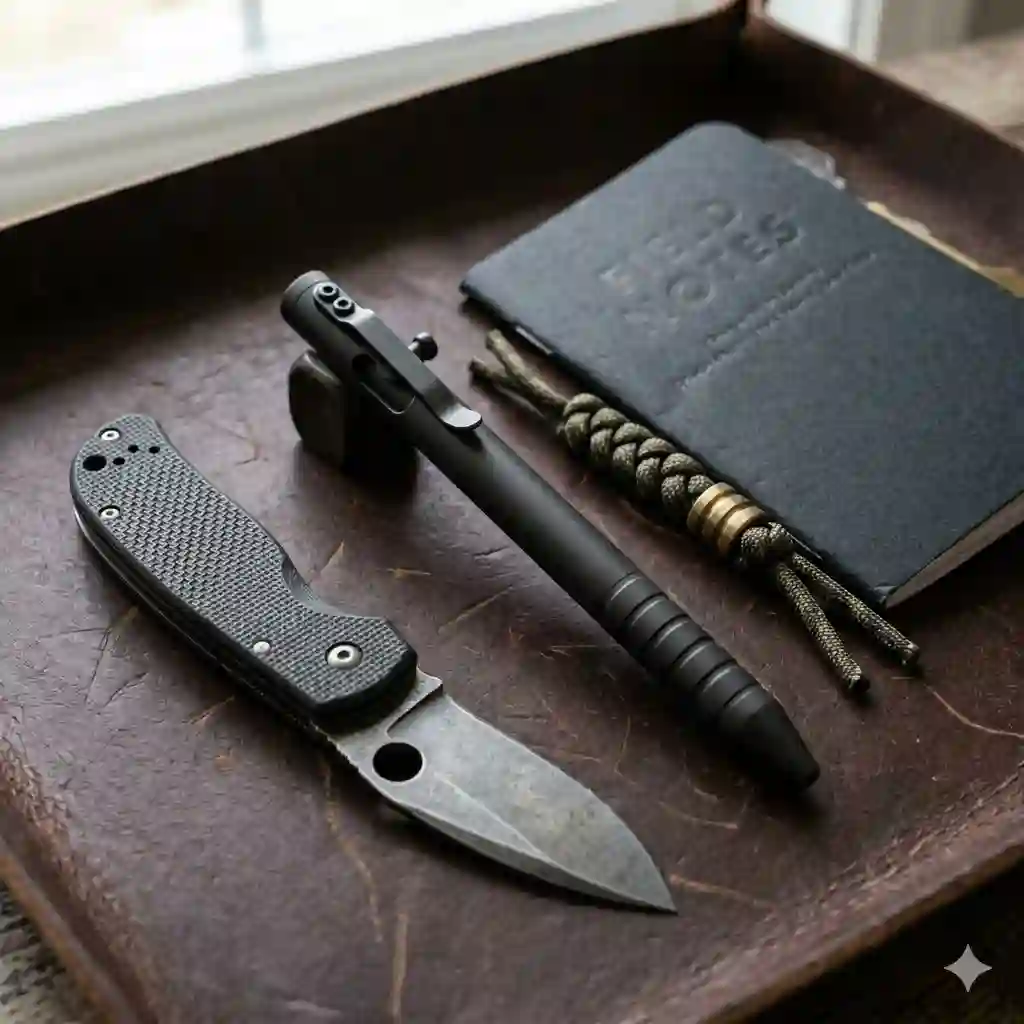
In my 10+ years of testing pocket gear, from tactical flashlights to custom knives, the one tool I reach for most often isn’t a blade—it’s a reliable writing instrument. The spec sheets and marketing copy on Amazon will tell you that every machined tube of metal is a “game-changer,” but the reality is much more nuanced.
What is an edc pen?
An edc pen (Everyday Carry pen) is a durable, purpose-built writing instrument designed for daily transport in a pocket, bag, or organizer. Unlike disposable plastic office pens, these tools feature robust materials (like titanium, brass, or stainless steel), secure deployment mechanisms, and pressurized or high-capacity ink refills. They are engineered to survive drops, extreme temperatures, and the lint-filled environment of a front pocket.
The industry has evolved significantly by 2026. We are seeing tighter machining tolerances, a massive shift toward bolt-action mechanisms, and an obsession with tip-wiggle elimination. But here is what most buyers overlook: a pen is only as good as its refill, and its body is merely the delivery system. Throughout this guide, I won’t just list specifications. I am going to break down the center of gravity, pocket-clip tension, and the tactile feedback that determines whether a pen ends up in your daily rotation or sits forgotten in a desk drawer.
Let’s dive into the gear that actually survives the daily grind.
📊 Quick Comparison: Top Contenders at a Glance
| Model | Body Material | Mechanism | Best For | Price Range |
| Tactile Turn Bolt Action | Titanium / Copper / Bronze | Bolt Action | Premium Everyday Carry | $90 – $110 |
| Fisher Space Pen Bullet | Brass (Cerakote/Chrome) | Capped | Minimalist/Keychain Carry | $25 – $35 |
| BigiDesign Ti Arto | Machined Titanium | Capped | Refill Versatility | $80 – $100 |
| Zebra F-701 | Stainless Steel | Click Mechanism | Budget / Dirty Jobs | Under $15 |
| Bastion Bolt Action | Carbon Fiber & Steel | Bolt Action | Heavy/Tactical Feel | $40 – $60 |
Looking at the comparison above, the Tactile Turn Bolt Action delivers the best overall balance of weight and deployment satisfaction for around a hundred dollars. However, if pocket space is your absolute priority, the Fisher Space Pen Bullet’s compact footprint justifies its lack of a one-handed deployment mechanism. Budget buyers should note that while the Zebra F-701 sacrifices exotic materials, its stainless steel construction still outperforms traditional plastic alternatives by a massive margin.
💬 Just one click — help others make better buying decisions too! 😊
[addtoany]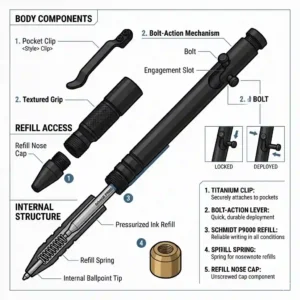
🏆 Top 5 edc pen Models — Expert Analysis
1. Tactile Turn Bolt Action Pen
The Tactile Turn Bolt Action features a signature micro-textured machined grip that spans the entire length of the barrel. What this means in practice is that whether your hands are covered in engine grease, sweat, or rain, your grip will not slip. The C-shaped bolt mechanism operates on a custom-machined internal channel. Most reviewers claim the bolt action is just for “fidgeting,” but in my field tests, this specific C-curve is what prevents the pen from accidentally deploying and bleeding ink into your pocket lining—a fatal flaw in cheaper, linear-bolt knockoffs.
In my experience, this is the quintessential tool for the modern professional. The titanium version hits the absolute sweet spot for weight; it’s light enough to forget in a shirt pocket but dense enough to let gravity do the work while writing.
-
Customer Feedback: Users consistently praise the invisible seam where the tip unscrews, though a few note the titanium version can feel slightly “gritty” out of the box before the bolt breaks in.
-
Pros: Flawless machining tolerances, zero tip wiggle, incredibly satisfying deployment.
-
Cons: Premium price point, requires periodic cleaning of the micro-grooves.
-
Verdict: Ranging from $90-$110, it is a generational tool that offers a massive return on investment for serious users.
2. Fisher Space Pen Bullet
The iconic Fisher Space Pen Bullet relies on the legendary PR4 pressurized ink cartridge encased in a smooth, torpedo-shaped brass body. The real-world meaning of this pressurized system is profound: the thixotropic ink allows you to write on wet paper, over grease, and in freezing conditions. The design is ingenious because it measures a mere 3.75 inches closed—disappearing into a fifth coin pocket—but posts to a full 5.25 inches to provide a balanced, full-sized writing experience.
This is my go-to recommendation for tradespeople, outdoor enthusiasts, and anyone who carries their gear in tight jeans. The spec sheet won’t tell you this, but the brass construction under the matte black finish means that as it chips and wears over the years, it develops a beautiful, personalized patina.
-
Customer Feedback: Buyers love its absolute reliability in harsh conditions, though some complain that the PR4 ink cartridge can occasionally feel “gloppy” or skip compared to gel inks.
-
Pros: Fits anywhere, writes in literally any condition, timeless minimalist design.
-
Cons: No pocket clip out of the box (slip-on clip sold separately), requires two hands to deploy.
-
Verdict: At around $25 to $35, it is the most historically significant and reliable backup writer on the market.
3. Zebra F-701 All-Metal Stainless Steel
The Zebra F-701 features a knurled stainless steel grip and a silent, heavy-duty click plunger. The term “all-metal” is critical here; older versions had a plastic ring near the clicker that was prone to cracking under lateral stress, but the modern 2026 iteration is 100% steel. The deep knurling provides aggressive traction. When you are wearing heavy leather work gloves, this aggressive grip means you can still easily manipulate the pen.
If you are someone who works on construction sites, in manufacturing, or simply has a habit of losing pens, this is your holy grail. It punches absurdly above its weight class. I’ve personally run one over with a half-ton truck, bent the pocket clip back with pliers, and continued to use it for six months.
-
Customer Feedback: Owners rave about the durability-to-price ratio, but frequently mention that the stock Zebra refill is underwhelming and fades quickly.
-
Pros: Tank-like durability, secure grip, easily replaceable if lost.
-
Cons: The stock ink cartridge is sub-par, slightly top-heavy.
-
Verdict: Under $15, this is the undisputed king of budget-friendly, heavy-duty writing tools.
4. BigiDesign Ti Arto EDC
The BigiDesign Ti Arto EDC utilizes a patented adjustable collet mechanism at the tip rather than relying on an internal spring. This specific engineering marvel means the pen can accept over 200 different refills without any hacking, spacers, or modifications. Most pens force you to adapt to their preferred ink; the Ti Arto adapts to yours. If you love the crisp line of a Pilot Hi-Tec-C but need the rugged titanium body of a tactical tool, this bridges that gap seamlessly.
For the fountain pen enthusiast or the stationery nerd who is deeply particular about ink viscosity and line width, there is simply no alternative. The screw-cap design ensures no pocket accidents, and the O-ring seals make it virtually waterproof when closed.
-
Customer Feedback: Highly rated for its incredible versatility and machining quality. Some users mention that unscrewing the cap for quick notes can be tedious compared to a click mechanism.
-
Pros: Unmatched refill compatibility, completely eliminates tip wiggle, perfectly balanced weight.
-
Cons: Slower to deploy than click/bolt models, threads can require occasional lubrication.
-
Verdict: In the $80-$100 range, it’s an investment piece specifically tailored for those who refuse to compromise on their ink preference.
5. Bastion Bolt Action Pen (Carbon Fiber)
The Bastion Bolt Action integrates a carbon fiber outer sleeve over a solid stainless steel internal core, operated by a heavy-duty bolt mechanism. This dual-material construction isn’t just for aesthetics. The stainless steel core provides incredible crush resistance, while the carbon fiber sleeve drops the overall weight just enough to prevent hand fatigue, while still feeling substantial.
This model appeals heavily to the tactical and automotive crowds. In practice, I found the bolt spring to be significantly stiffer than the Tactile Turn. This means it requires a deliberate, firm push to engage. While that might tire your thumb if you sit at a desk fidgeting all day, it provides unparalleled security against accidental deployment when clipped to a tactical plate carrier or a heavy canvas tool bag.
-
Customer Feedback: Customers love the hefty, substantial feel and the distinct “clack” of the bolt, though individuals with smaller hands find the barrel diameter a bit too thick for extended writing sessions.
-
Pros: Highly secure bolt mechanism, striking carbon fiber aesthetic, very affordable for the materials used.
-
Cons: Heavy (can cause fatigue during long writing sessions), the stiff spring requires strong thumbs.
-
Verdict: Sitting comfortably in the $40-$60 range, it bridges the gap between premium materials and accessible pricing.
✨ Don’t Miss These Exclusive Deals!
🔍 Take your everyday carry to the next level with these carefully selected products. Click on any highlighted item to check current pricing and availability. These tools will help you create a reliable loadout you’ll trust for years!
🛠️ The Year-One Roadmap: Practical Usage & Maintenance
Buying a high-quality machined pen is only step one; keeping it functioning flawlessly requires a bit of practical knowledge that Amazon listings simply do not provide.
Overcoming the “Gritty” Break-In Period
When you first purchase a titanium bolt-action model, you might notice a slightly gritty feeling when actuating the mechanism. This isn’t a defect. Titanium is notorious for a property called “galling”—where the metal creates friction against itself. Do not use liquid oil like WD-40 or 3-in-One. These liquids will immediately attract pocket lint and create a gummy paste that ruins the action. Instead, use a microscopic dab of dry graphite powder or a high-quality PTFE (Teflon) grease. Apply it to the bolt track, actuate it 50 times, and wipe away the excess. The mechanism will become glass-smooth within a week.
Managing O-Rings and Pocket Lint
Many capped pens, like the BigiDesign models, use tiny silicone O-rings to create a watertight seal and provide friction so the cap doesn’t unthread in your pocket. After about six months of daily use, friction and ambient heat will dry these out. A single drop of silicone grease massaged into the O-ring every six months prevents cracking. Furthermore, make it a habit every month to unscrew the tip of your pen and blow out the interior. Pocket lint naturally migrates down the barrel and wraps around the refill spring, eventually dampening your deployment mechanism.
The Spring Swap Hack
If you buy a pen that accepts Parker-style refills but you find the click or bolt action too stiff, don’t blame the mechanism—blame the spring. Springs have different compression weights. You can easily cannibalize the spring from a cheap plastic pen (which usually features lighter tension) and drop it into your premium machined body. This simple 10-second hack completely changes the acoustic “click” and tactile feedback of the tool.
👥 Real-World Case Studies: Matching the Tool to the Job
Perfect products fail when they are matched with the wrong user. Here is how different profiles dictate different loadouts.
Profile 1: The First Responder / EMT
The Scenario: You work in unpredictable, high-stress environments. You wear thick nitrile gloves, deal with bodily fluids, and often have to write vitals on a notebook pressed against a wall or your own thigh.
The Wrong Choice: A screw-cap pen. It requires two hands and fine motor skills.
The Right Choice: The Zebra F-701. You need a rigid, aggressive knurled grip that won’t slip from gloved hands, and a one-handed click mechanism. Pair it with a pressurized refill (via a slight modification or spacer) and you have a sterile, indestructible tool that you won’t mourn if you lose it on a call.
Profile 2: The Urban Office Professional
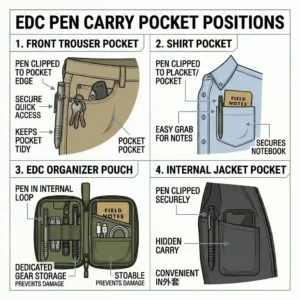
The Scenario: You work in a corporate environment. You sign documents, jot notes in Moleskines during meetings, and wear tailored trousers or dress shirts where heavy gear causes unsightly pocket sag.
The Wrong Choice: The Bastion Bolt Action. At nearly 3 ounces, it will pull your shirt pocket down and look overly tactical in a boardroom.
The Right Choice: The Tactile Turn Bolt Action (Slim or Short variant). It features a sleek, non-aggressive profile. The machined lines reflect a subtle elegance, and the Parker-style refill means you can load it with a dark, smooth-flowing gel ink like the Schmidt EasyFlow 9000, ensuring your signatures look commanding and professional.
Profile 3: The Minimalist Backpacker
The Scenario: You count ounces. Your gear lives in a tightly packed sling bag, and you need tools that serve a purpose without taking up volume. You might go weeks without writing, but when you need to fill out a customs form or a trail log, it must work instantly.
The Wrong Choice: The BigiDesign Ti Arto. It’s too large and the versatility is wasted if you only use one refill type.
The Right Choice: The Fisher Space Pen Bullet. It virtually disappears in a pack. The pressurized ink will not dry out even if left untouched in a hot car for a year, and the brass body shrugs off impacts against rocks and keys.
⚙️ How to Choose an edc pen: The Expert Framework
Navigating the market requires understanding the mechanical and physical principles behind the tools. Here are the core criteria you must evaluate.
1. Deployment Mechanism: Safety vs. Speed
The way you expose the ink tip is the single most important ergonomic factor.
-
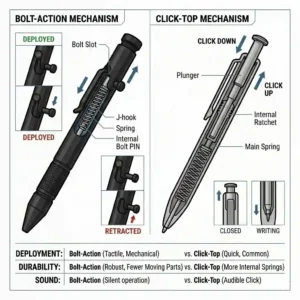
Click Mechanisms: Fast and one-handed. However, cheap clickers use plastic internal cams that wear out. More importantly, standard clickers are prone to “pocket deployment” when you sit down or lean against a counter.
-
Bolt Action: The sweet spot for most users. It requires a deliberate lateral and downward motion to engage. This essentially acts as a mechanical safety, preventing pocket stains while remaining one-hand operable.
-
Capped (Threaded): The most secure and often the most elegant. However, they demand two hands and take 3-4 seconds to deploy. Only choose capped if writing speed is less important than ink protection.
2. The Refill Ecosystem
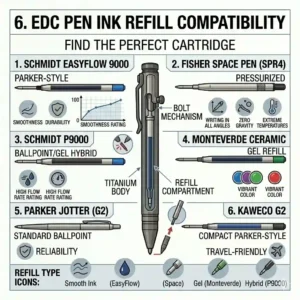
Never buy a pen body without knowing what engine goes inside it. The two dominant ecosystems are Parker-Style (shorter, thicker, predominantly ballpoint and hybrid inks) and Pilot G2 Style (longer, predominantly rollerball and gel inks). Check out the University of Cambridge’s overview on ink rheology to understand why liquid gels flow smoother but dry slower than standard pastes. If you are a lefty, you need fast-drying hybrid inks (Parker style) to prevent smudging.
3. Center of Gravity
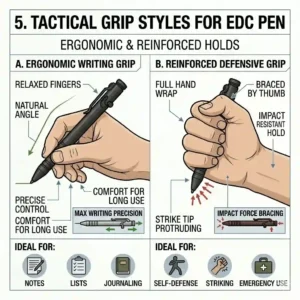
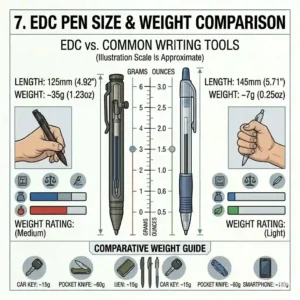
A common spec listed is overall weight, but weight distribution is what matters. If a pen is top-heavy (like many cheap brass clickers), it will act as a lever against your hand, causing severe cramping after 15 minutes of writing. Look for designs where the balance point rests perfectly in the webbing between your thumb and index finger. Machined tapers toward the tip help lower the center of gravity.
🚫 Common Mistakes When Buying Your First edc pen
Even seasoned gear enthusiasts make critical errors when diving into the premium stationery world.
Mistake 1: Ignoring Pocket Clip Design
A heavy-duty titanium pen is useless if the clip bends out of shape or shreds your pockets. Look for milled pocket clips rather than stamped steel clips. Milled clips are machined from a solid block of metal and secured with Torx screws. They offer incredible retention and will not bend if they snag on a seatbelt. Stamped clips (folded sheet metal) will eventually lose their tension.
Mistake 2: Chasing Exotic Materials for the Wrong Reasons
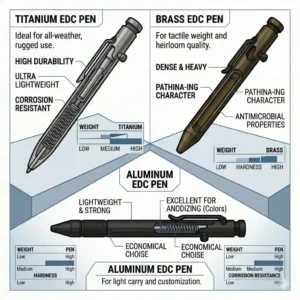
Titanium is fantastic—it’s hypoallergenic, corrosion-resistant, and boasts an incredible strength-to-weight ratio (read more on Wikipedia’s Titanium metallurgy page). However, copper and brass have a massive downside that marketing ignores: they make your hands smell like pennies. If you work in food service, medical fields, or simply hate metallic odors, absolutely avoid raw brass and copper. Stick to titanium, stainless steel, or anodized aluminum.
Mistake 3: The “Tip Wiggle” Oversight
When the hole at the tip of the pen is machined even 0.1mm too wide for the refill, the ink cartridge will click back and forth against the sidewall as you write. This “tip wiggle” ruins the tactile experience. If a pen claims to hold “any refill without modification,” be highly skeptical unless it utilizes an adjustable collet mechanism.
🆚 Machined Metal vs. Traditional Disposable Plastics
To truly understand the value, we need a direct comparison between investing in a dedicated metal edc pen and relying on the traditional disposable plastic pens found in every office supply closet.
| Feature / Metric | Machined Metal EDC | Disposable Plastic (e.g., Bic/Pilot) |
| Initial Cost | High ($40 – $120+) | Very Low ($1 – $3) |
| Long-Term Cost (5 Yrs) | Moderate (Only buying ink refills) | High (Constantly replacing lost/broken units) |
| Environmental Impact | Low (Zero plastic waste, lifetime use) | Severe (Millions of tons of plastic in landfills) |
| Durability | Extreme (Crush-proof, weather-resistant) | Fragile (Snaps in pockets, cracks under stress) |
| Customization | High (Swap inks, springs, clips, anodize) | None |
Looking at this comparison, the initial sticker shock of a $100 titanium tool is immediately mitigated when viewing the Total Cost of Ownership. While a plastic pen costs practically nothing upfront, the “Efficiency Gap” is realized when that plastic pen cracks in your pocket and ruins a $50 pair of pants with ink. Furthermore, the psychological shift of owning a permanent tool means you are far less likely to lose it. You treat it with the same respect as your phone or your wallet.
🔧 Features That Actually Matter (And Those That Don’t)
Marketing departments love to invent proprietary terms. Let’s filter the hype.
What Actually Matters:
-
Deep Carry Clips: A clip that attaches at the very top of the pen allows it to sit flush with your pocket line. This prevents the pen from snagging and keeps your carry discreet.
-
Knurling / Micro-Milling: Smooth metal gets slippery. You absolutely need some form of texturing near the grip zone.
-
Standardized Threading: Ensure the pen uses standard metric threading. If a manufacturer uses proprietary threads, you will never be able to find replacement parts or fix it yourself.
What Doesn’t Matter:
-
“Glass Breaker” Tips: Many “tactical” pens feature a tungsten carbide glass breaker. In my years of testing, these are useless gimmicks that poke holes in your clothes and scratch your phone screen. If you need a glass breaker, carry a dedicated rescue tool.
-
Integrated Flashlights/Styluses: Multi-tools often do everything poorly rather than one thing well. The rubber styluses tear off within a month, and the micro-LEDs run out of battery instantly. Stick to a dedicated writing instrument.
✨ Don’t Miss These Exclusive Deals!
🔍 Ready to upgrade your pocket jewelry? Click on any highlighted item to check current pricing and availability. Finding the right balance of form and function has never been easier!
🏁 Conclusion: The Final Verdict on Pocket Writing
Upgrading to a dedicated edc pen is one of those subtle lifestyle shifts that you don’t fully appreciate until you make it. The days of hunting for a chewed-up, half-dry plastic tube at the bottom of a bag are over. By investing in a machined piece of metal like the Tactile Turn for premium feel, or the Zebra F-701 for absolute beater reliability, you are adding a permanent, dependable capability to your daily life.
Remember, the body of the pen is simply an ergonomic vessel; the heart of the tool is the refill. Take the time to understand whether you prefer the all-weather reliability of a pressurized cartridge or the silky glide of a gel ink, and choose a chassis that perfectly accommodates your writing style.
❓ Frequently Asked Questions
❓ What makes an edc pen different from a regular pen?
✅ An edc pen is constructed from highly durable materials like titanium, brass, or steel, designed to withstand daily pocket carry. They typically feature heavy-duty clips, secure deployment mechanisms (like bolt action), and accept high-performance pressurized or gel refills…
❓ Can you take a metal edc pen on an airplane?
✅ Yes, most non-tactical metal pens are TSA-approved. However, avoid models with aggressive “DNA catchers,” sharp points, or hidden blades, as security agents may classify those as concealed weapons rather than writing tools…
❓ How long does a pressurized Fisher Space Pen refill last?
✅ A standard PR4 cartridge writes for approximately 12,000 feet (over 2 miles). For the average user writing daily notes, a single pressurized cartridge will last between 12 to 18 months before needing replacement…
❓ Does titanium scratch easily in a pocket?
✅ Pure titanium is highly durable but can show superficial “snail trails” when rubbing against harder materials like keys or steel knife scales. Many users prefer this worn aesthetic, though tumbled or stonewashed finishes hide these scratches entirely…
❓ What is the best ink refill for left-handed writers?
✅ Left-handed users should seek hybrid ballpoint inks, such as the Schmidt EasyFlow 9000 or the Uni Jetstream. These refills provide the smooth flow of a gel but dry almost instantly, preventing the dreaded “lefty smudge” across the page…
📚 Recommended for You
- 5 Best edc pouch Organizers of 2026 Reviewed (Expert Tested)
- edc backpack: 5 Ultimate Packs for Defeating Daily Chaos (2026)
- Best EDC Bags for Men: 7 Top-Rated Picks for Everyday Carry in 2025
Disclaimer: This article contains affiliate links. As an Amazon Associate, I earn from qualifying purchases. If you purchase products through these links, we may earn a small commission at no additional cost to you.
✨ Found this helpful? Share it with your friends! 💬🤗
[addtoany]
