
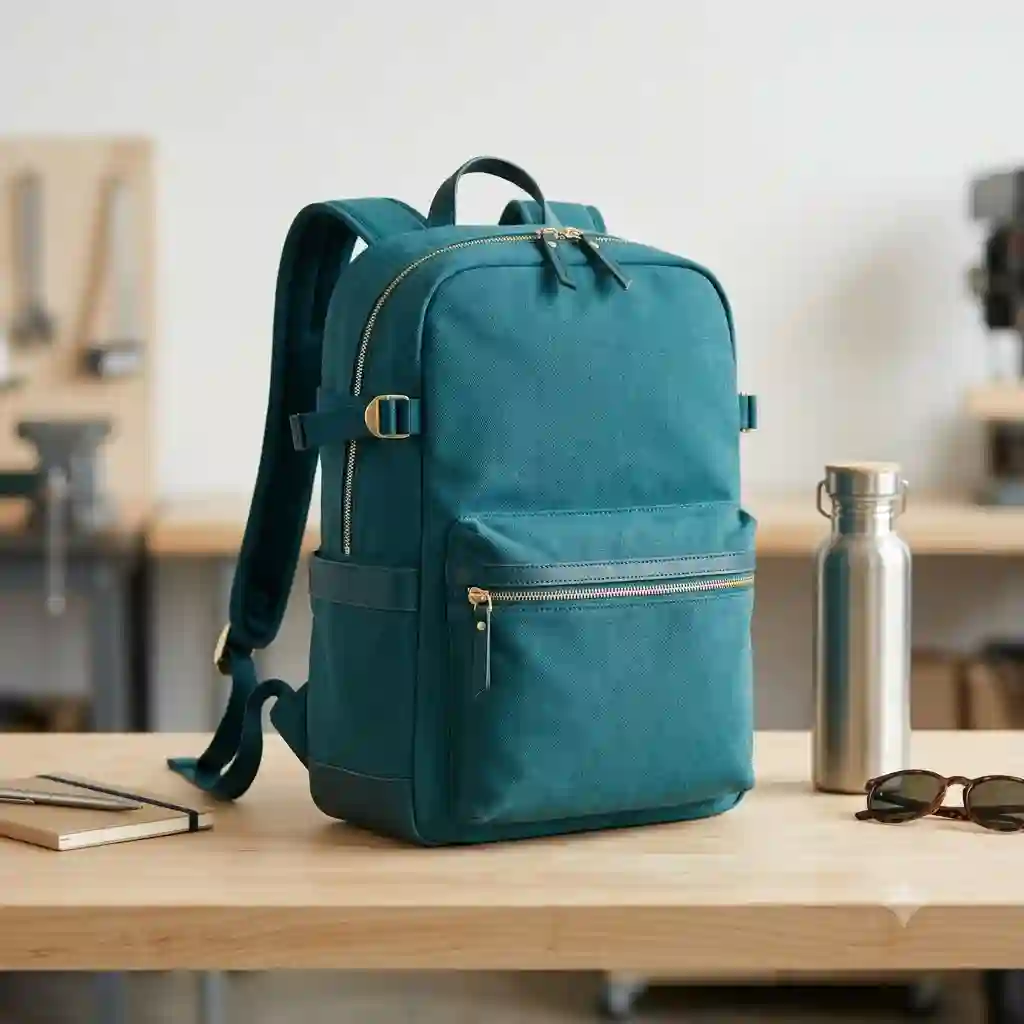
What is a teal backpack? At its core, it is a versatile carrying solution—often ranging from 15 to 30 liters—that utilizes a blue-green colorway to balance professional subtlety with personal expression. In my decade of consulting on everyday carry (EDC) gear and testing hundreds of bags in diverse environments, I’ve noticed a fascinating psychological shift. People often assume color choices in gear are purely cosmetic. However, choosing a teal backpack actually serves a highly functional purpose in the real world.
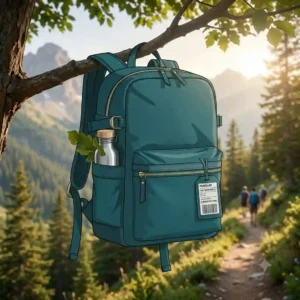
In my field tests across crowded urban subways and dense hiking trails, black and grey bags tend to disappear. They blend into the asphalt and shadows, making them prime targets for accidental swaps at coffee shops or airport lounges. Conversely, neon colors scream for attention, which isn’t always ideal for professional environments or travel security. Teal hits the perfect “Goldilocks” zone. It is recognizable instantly from across a crowded room, yet muted enough to carry into a corporate board meeting without raising eyebrows.
But not all bags are created equal. When evaluating these packs, we must look beyond the color and examine the architecture. Are the shoulder straps using closed-cell EVA foam, or cheap open-cell padding that will flatten out in six months? Is the base reinforced to protect your $2,000 laptop when you inevitably drop the bag on a concrete floor? In this comprehensive 2026 guide, I am going to break down the exact specifications, real-world durability, and hidden quirks of the top models on the market.
Quick Comparison: Top Contenders at a Glance
| Brand & Model | Best For | Capacity | Key Material feature | Estimated Price Range |
| Fjallraven Kanken Classic | Minimalist Commuters | 16L | Vinylon F (Water-resistant) | $80 – $90 |
| The North Face Borealis | Heavy-Duty Tech Carry | 28L | Recycled Ripstop Nylon | $95 – $110 |
| Herschel Little America | Vintage Style & Travel | 25L | Heavyweight Polyester | $110 – $130 |
| Osprey Daylite Plus | Active Hybrid Use | 20L | Bluesign® Recycled PET | $65 – $80 |
| JanSport Right Pack | Campus & Budget Durability | 31L | 915D Cordura / Suede | $55 – $70 |
When analyzing the data in the table above, the North Face Borealis clearly delivers the best value for tech-heavy users needing robust organization under $110, but if sheer weight and minimalist aesthetic are your priorities, the Fjallraven justifies its higher cost-per-liter ratio. Budget-conscious buyers should note that the JanSport sacrifices advanced airflow back panels for absolute raw durability, making it the best long-term investment for students.
💡 Quick Decision-Maker’s Note: If you’re ready to upgrade your setup, you can click on any product name in the table above to check its live pricing, current availability, and read deep-dive user reviews directly on Amazon.
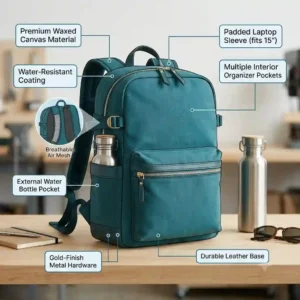
Top 5 Teal Backpacks on the Market: Expert Field Analysis
1. Fjallraven Kanken Classic (Frost Green/Teal)
The Kanken is practically an institution at this point, but what the spec sheet calls “Vinylon F” needs real-world interpretation. This synthetic fiber actually swells when it gets damp, tightening the weave to naturally repel water without needing a chemical DWR (Durable Water Repellent) coating. In practice, this means if you get caught in a sudden downpour on your walk to work, your electronics inside are safe for about 15-20 minutes of moderate rain. However, the lack of padded shoulder straps on the base model (16L capacity) means if you load this past 10 pounds, you will feel it digging into your collarbones.
In my experience, this bag is strictly for the minimalist commuter. It is a fantastic secondary travel bag because it packs flat, but it is a terrible choice for someone carrying heavy textbooks or multiple water bottles. What most buyers overlook is the removable foam seat pad in the back compartment; it’s not just for sitting on wet grass, it actually serves as the bag’s structural frame. Remove it, and the bag becomes a floppy sack.
Community feedback consistently praises the aesthetic and longevity, often noting that the color fades into a beautiful vintage patina after two years. Sitting in the $80-$90 range, it’s a premium price for a simple design, but the sheer durability of the stitching and the robust YKK zippers make it a “buy it for life” contender for light users.
2. The North Face Borealis Commuter (Storm Blue/Teal)
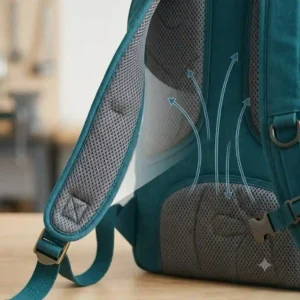
When you read that the The North Face Borealis features an “updated FlexVent suspension system,” it sounds like pure marketing jargon. But let me translate: the yoke is built from custom injection-molded shoulder straps and a padded mesh back panel with a highly breathable lumbar panel. What this actually means for you is that during a sweaty summer commute, you won’t arrive at the office with a massive, embarrassing sweat stain down your spine. The 28L capacity and dedicated fleece-lined 15-inch laptop compartment make it an absolute beast for tech organization.
I highly recommend this for the hybrid worker. If you transition from a coffee shop to an office to a weekend day hike, this is your bag. The hidden con? It’s over-engineered. The sheer number of straps, bungee cords, and compression clips can get caught on subway turnstiles or airplane armrests. The stand-up design is brilliant—it doesn’t flop over when you set it down—but it means the bag is rigid and cannot be easily stuffed into an already full locker.
Real-world users constantly rave about its load-bearing capabilities, stating that 20 pounds in this bag feels like 10 pounds in a cheaper alternative. Ranging from $95 to $110, it represents the absolute sweet spot for ergonomic engineering, especially for those who suffer from lower back pain during long commutes.
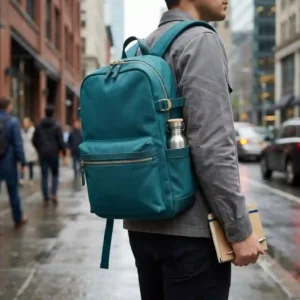
3. Herschel Little America (Deep Teal)
The Herschel Little America markets itself with a “drawcord closure and magnet fastened straps.” In daily use, this translates to a slightly slower access time compared to traditional zip-around bags. You can’t just rip it open with one hand while holding a coffee. You have to unclip the magnets, pull the flap back, and loosen the drawcord. However, this top-loading 25L design creates an incredibly weather-resistant seal, and the heavyweight polyester canvas can take a serious beating against concrete floors and abrasive brick walls.
I view this bag as the ultimate “airport to hotel” companion. The heavy padding on the back and the contoured shoulder straps make it remarkably comfortable for long walks through terminals. The internal laptop sleeve is heavily suspended, meaning if you drop the bag upright, your laptop never actually touches the ground. The anti-recommendation here? Don’t buy this if you need quick access to small items frequently; the front pocket is notoriously tight and difficult to navigate when the main compartment is full.
At the $110-$130 range, you are paying a premium for the vintage mountaineering aesthetic. Yet, community reviews consistently highlight the incredible durability of the faux-leather straps and magnetic snaps, which rarely fail even after years of daily abuse.
4. Osprey Daylite Plus (Wave Blue/Teal)
Osprey’s claim of using “Bluesign® approved recycled fabrics” isn’t just an eco-friendly buzzword; it represents a massive shift in textile durability. According to standards set by the EPA regarding textile sustainability, these tightly woven recycled PET plastics actually offer superior abrasion resistance compared to cheap virgin polyester. The Osprey Daylite Plus offers 20 liters of space and a highly ventilated die-cut EVA foam back panel. In my field testing, this means the bag conforms completely to your back shape without adding excess weight.
This is the ultimate active-lifestyle pack. If you commute on a bicycle, the removable webbing hip belt keeps the bag from swinging into your ribs when taking sharp corners. What surprised me most during use was the “shove-it” panel on the front—a stretchy fabric pocket that is absolutely perfect for stuffing a wet rain jacket so it doesn’t soak the electronics inside the main compartment. It is, however, not great for rigid, boxy items, as the bag lacks a structured base.
Users love the unbeatable Osprey “All Mighty Guarantee,” which promises repairs for any reason. Sitting comfortably in the $65-$80 range, this is hands-down the best ROI for outdoor enthusiasts who need a reliable daypack that can occasionally serve as a light work bag.
5. JanSport Right Pack Expression (Teal/Aqua)
The spec sheet for the JanSport Right Pack highlights “915 Denier Cordura fabric and a suede leather bottom.” To put that in perspective, standard backpacks use 400 to 600 denier fabric. 915D Cordura is practically military-grade. You could drag this bag across a gravel driveway and barely leave a scratch. The suede leather bottom isn’t just for classic looks; it adds crucial impact resistance for laptops and heavy textbooks when the bag is dropped on hard university floors.
In my professional opinion, this is the definitive campus bag. It is essentially a massive 31L bucket. It lacks the nuanced organization of the North Face, which means your pens, cables, and chargers will end up in a chaotic pile at the bottom of the front pocket unless you use separate tech pouches. Furthermore, the straight-cut shoulder straps lack ergonomic contouring, making it less comfortable for long treks.
Despite these ergonomic shortcomings, community feedback is universally positive regarding its lifespan. Many users report keeping this same bag from middle school all the way through college graduation. At a price range of $55-$70, it is the undisputed champion of budget-friendly, long-term durability.
🔍 Ready to Upgrade Your EDC Setup?
Finding a bag that balances load distribution with your personal aesthetic doesn’t have to be a guessing game. Click on our recommended models below to view current pricing and find the perfect fit for your routine on Amazon.
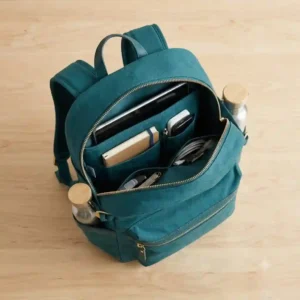
Practical Usage Guide: Maximizing Your Pack’s Lifespan
Purchasing a high-quality teal backpack is only the first step; maintaining its structural integrity and vibrant color requires intentional care. Amazon listings will simply tell you “spot clean only,” but that doesn’t help you when a pen explodes in the bottom of your bag after six months of use.
The First 30 Days: Breaking It In
When your pack arrives, the zippers (especially heavy-duty YKK zippers) will likely feel stiff. Do not force them. A trick I’ve learned over the years is to take a simple graphite pencil or a specialized zipper wax and run it along the teeth of the zipper track. This lubricates the metal and prevents the slider from misaligning. Secondly, if your bag features water-resistant coatings, avoid leaving it in direct sunlight (like the backseat of a car) for extended periods during the first month, as intense UV and heat can degrade the factory DWR seal.
The 6-Month Deep Clean
By month six, the shoulder straps will have absorbed sweat and natural skin oils, which can break down the EVA foam padding. To clean it, never put your backpack in a washing machine—the agitator will destroy the internal laptop suspension. Instead, fill a bathtub with lukewarm water and a mild, non-detergent soap. Submerge the bag, use a soft-bristle toothbrush on the straps and back panel, and rinse thoroughly. Always hang it upside down to dry in a well-ventilated, shaded area.
Preventing “Base Sag”
A common mistake users make is packing all their heaviest items (like dense chargers or thick books) at the very bottom of the bag. Over time, this stretches the bottom seams and ruins the bag’s center of gravity. Always pack heavy items as close to your spine as possible, and use lighter items (like clothing or headphones) to fill the bottom.
Real-World Scenarios: Finding Your Perfect Match
To truly understand which pack fits your lifestyle, we need to move beyond raw specifications and look at how these bags perform in specific environments.
Scenario 1: The Multi-Modal Commuter
Profile: You walk 10 minutes to the train station, ride the crowded subway for 30 minutes, and then bike the final mile to the office. You carry a 14-inch laptop, noise-canceling headphones, a thermos, and a light jacket.
The Perfect Match: The North Face Borealis. The FlexVent system ensures you aren’t sweating through your shirt on the bike ride, while the rigid, stand-up design allows you to keep it securely between your feet on a packed train without it getting crushed. The dual external water bottle pockets mean your coffee thermos never threatens your laptop inside.
Scenario 2: The Digital Nomad Traveler
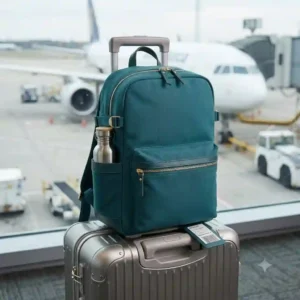
Profile: You work from coffee shops and frequently take budget airlines where you need to maximize your “personal item” allowance under the seat.
The Perfect Match: The Fjallraven Kanken Classic. Because it lacks a bulky internal frame or massive padded straps, the internal dimensions are almost 100% usable space. You can utilize packing cubes to turn this small 16L bag into a weekend travel system. Plus, the boxy dimensions fit perfectly into budget airline sizers.
Scenario 3: The Heavy-Load Student
Profile: You are carrying two textbooks, a 15-inch gaming laptop, a binder, and lunch. You walk miles across campus daily and drop your bag onto concrete floors during lectures.
The Perfect Match: The JanSport Right Pack. The 915D Cordura will survive the abrasive floors, and the massive 31L main compartment doesn’t force you to play Tetris with your textbooks. While it lacks advanced back ventilation, the sheer volume and indestructible base make it the only logical choice for this specific burden.
How to Choose the Right Pack for Your Posture
When evaluating a new backpack, most consumers look at pocket layout and color. However, according to the American Chiropractic Association, carrying a bag improperly can lead to chronic neck and back pain. The spec sheet won’t tell you this, but the architecture of the bag dictates your posture.
-
Evaluate the Sternum Strap Placement: A sternum strap isn’t just for hikers. By pulling the shoulder straps slightly inward, it redistributes the weight off the front of your shoulders and onto your stronger pectoral muscles. If you carry more than 15 pounds daily, a sternum strap is non-negotiable. Look for adjustable rails, not fixed clips.
-
Check the Laptop Compartment Placement: The laptop is usually the heaviest single item in your bag. It must be situated flush against your back. If the laptop sleeve is positioned toward the front of the bag, the weight will act as a lever, constantly pulling you backward and forcing your neck into a forward-leaning, strained posture.
-
Assess Strap Width and Density: Wide straps aren’t always better if the foam is cheap. You want high-density, closed-cell foam that feels slightly stiff to the touch initially. Soft, squishy straps will compress to the thickness of paper under a heavy load, causing the nylon webbing to dig directly into your trapezius muscles.
Common Mistakes When Buying Daypacks
Over my years of consulting, I’ve watched consumers make the same expensive mistakes repeatedly. The marketing hype is designed to sell you features you don’t need while obscuring the metrics that actually matter.
The biggest pitfall is overbuying capacity. People think, “I might need to carry groceries one day, so I’ll buy a 35L bag instead of a 20L.” What happens in practice? A 35L bag lacks structure when it’s only half full. It sags at the bottom, throws off your center of gravity, and looks sloppy. You are much better off buying a 20-25L bag that compresses well and carrying a reusable tote for overflow days.
Another major error is ignoring zipper quality. You can have the most durable Kevlar fabric in the world, but if the manufacturer uses unbranded, cheap alloy zippers, the bag will be useless within a year. Always look for YKK brand zippers, or at least SBS. If the spec sheet doesn’t proudly mention the zipper brand, they are likely cutting corners.
Finally, people fall for useless proprietary electronics, like built-in USB charging ports. These ports almost always use outdated USB-A tech, they break easily if the bag is dropped, and they compromise the weather resistance of the bag. You are vastly better off just carrying a quality portable power bank in a quick-access pocket.
Long-Term Cost & Maintenance: The 12-Month Outlook
Let’s do a realistic ROI (Return on Investment) analysis on purchasing a quality teal backpack. The “Total Cost of Ownership” goes beyond the initial price tag at checkout.
If you purchase a generic $25 bag from a big-box store, the weak nylon threading will likely begin to fray at the shoulder yoke within 4 months of daily commuter use. By month 8, the plastic zipper teeth will warp. You will end up buying three $25 bags over two years ($75 total), suffering through poor ergonomics the entire time.
Conversely, investing in the $95-$110 range (like the Osprey or North Face models) changes the math completely. These bags feature bartack stitching at high-stress points. At the 12-month mark, the bag will likely only need a mild soap wash to look brand new. Furthermore, premium brands offer lifetime or highly generous warranties. If a buckle snaps in a car door on month 14, Osprey will replace the part for free. The efficiency gap is massive. You pay more upfront, but your cost-per-use drops to fractions of a penny over a five-year lifespan.
Features That Actually Matter (And Those That Don’t)
To cut through the noise of modern EDC marketing, you need an expert filter. Here is what actually dictates a good user experience.
Features That Matter:
-
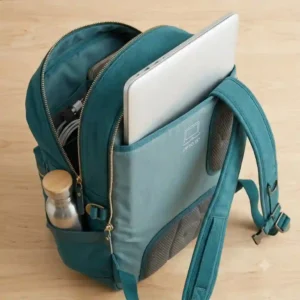
False-Bottom Laptop Sleeves: This means the laptop compartment stops an inch or two before the actual bottom of the bag. When you drop the bag on the floor, the laptop never impacts the ground. This single feature saves thousands in tech repairs.
-
High-Contrast Interiors: A bright interior lining (like yellow or silver) inside a teal bag isn’t just for looks. It reflects light, making it exponentially easier to find a loose black flash drive or dark keys at the bottom of the bag in low-light environments.
-
Weather-Guarded Zippers: Zippers with polyurethane coatings or fabric storm flaps stop the primary point of water ingress during heavy rain.
Marketing Hype to Ignore:
-
“Anti-Theft” Slash-Proof Mesh: Unless you are traveling to highly specific pickpocket hotspots globally, the extra weight and stiffness of steel mesh embedded in the fabric is overkill and ruins the bag’s flexibility.
-
Countless Micro-Pockets: Bags with 25 tiny internal pockets force you into their organization system. If your gear changes, the bag becomes useless. Look for 3-4 varied pockets and use modular pouches for the rest.
Conclusion: Your Next Steps
Finding the perfect teal backpack in 2026 is an exercise in balancing aesthetics with rigorous, real-world utility. As we’ve explored, the market offers highly specialized tools masked as simple carrying bags. Whether you lean toward the indestructible simplicity of the JanSport Right Pack for campus life, the ergonomic brilliance of the North Face Borealis for heavy tech commutes, or the vintage, weather-resistant charm of the Herschel Little America, the key is matching the bag’s structural architecture to your specific daily burden.
Remember, don’t overbuy on capacity, prioritize closed-cell foam for your shoulders, and always ensure your technology is protected by a suspended, false-bottom sleeve. A great backpack shouldn’t just carry your gear; it should actively make your daily transit more comfortable, more organized, and slightly more colorful.
FAQs
❓ What is the most durable fabric for a teal backpack?
✅ The most durable common fabric is high-denier Cordura (usually 500D to 1000D). It offers exceptional abrasion and tear resistance. Ballistic nylon is also excellent, originally designed for military use, ensuring your pack survives years of heavy friction and drops…
❓ Can you wash a teal backpack in the washing machine?
✅ No, you should never machine wash structured backpacks. The agitation can destroy laptop suspension systems, warp EVA foam straps, and strip away water-resistant coatings. Instead, hand wash with mild soap and water in a tub, then air dry in the shade…
❓ Why are YKK zippers so important on backpacks?
✅ YKK zippers are the industry gold standard due to their self-lubricating properties and precise engineering. They rarely snag, split, or derail off the tracks. A bag with cheap zippers will become useless long before the actual fabric tears or fails…
❓ What size backpack is best for daily commuting?
✅ For everyday carry, a 20L to 26L bag is the optimal sweet spot. It provides enough volume for a 15-inch laptop, a jacket, lunch, and tech accessories without looking bulky or sagging when only half full during lighter days…
❓ Do lighter colored backpacks get dirty faster?
✅ While teal is exceptional at hiding dust compared to pure black, it can show dark scuffs or ink stains more clearly. Treating the fabric with a protective fabric spray initially and wiping down the bottom panel monthly prevents permanent discoloration over time…
Recommended for You
- 5 Best EDC Backpack Picks for 2026: An Expert’s Guide
- The 5 Best Everyday Carry Backpacks (2026) | Expert Commuter Guide
- 5 Best edc carry backpack Models Tested for 2026 (Expert Review)
Disclaimer: This article contains affiliate links. As an Amazon Associate, I earn from qualifying purchases. If you purchase products through these links, we may earn a small commission at no additional cost to you.
✨ Found this guide helpful? Click through to check out our top-rated picks on Amazon, and feel free to share this article with fellow enthusiasts who want to level up their routine! 💬🤗
[addtoany]
