
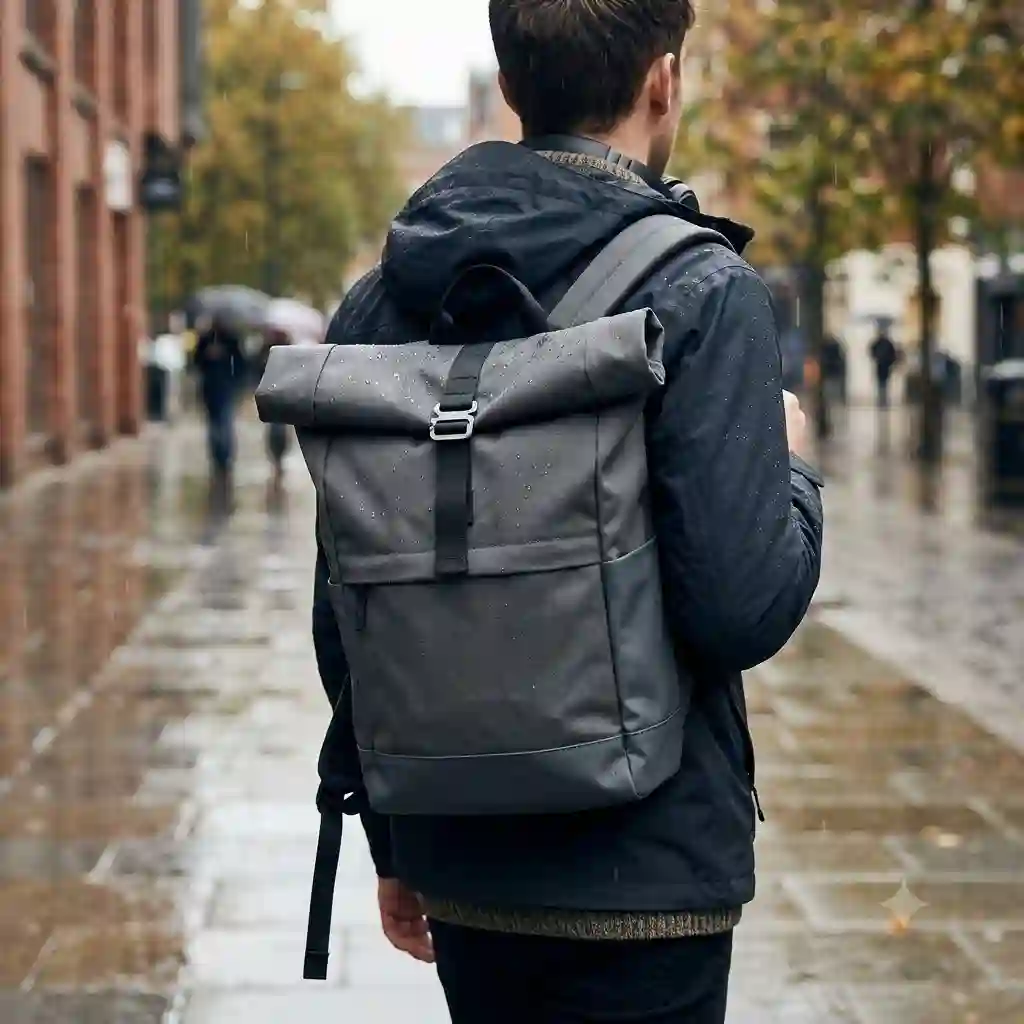
For over a decade, I’ve tested hundreds of carry systems as an industrial gear consultant. During my time out in the field, navigating torrential rains in Seattle and sweltering subway commutes in New York, one truth has emerged: the traditional zipper is a catastrophic point of failure waiting to happen. This is why the roll backpack has transitioned from a niche dry-bag used by whitewater rafters to the absolute gold standard for urban commuters, cyclists, and digital nomads alike.
What is a roll backpack? Simply put, it is a bag utilizing a roll-top closure mechanism—where the fabric opening is pinched, rolled down several times, and secured via buckles or hooks—rather than relying on teeth and sliders. This design accomplishes two critical things. First, it creates an impenetrable barrier against water ingress. Second, it offers dynamic volume expansion. If you need to haul groceries after work, the bag accommodates the extra load by unrolling an inch or two.
However, not every roll-top bag is created equal. The market is currently flooded with cheap knockoffs boasting faux-leather straps and flimsy canvas that will soak through during a heavy mist. In this guide, I’m skipping the generic marketing fluff. I will break down the exact materials, ergonomic designs, and hidden flaws of the top contenders. We will look at why 1050D ballistic nylon matters, how RF welding differs from standard stitching, and what it truly costs to keep your $2,000 laptop safe. Let’s dive into the gear.
Quick Comparison: Finding Your Ideal Match
Before we get into the granular details of denier counts and thermoplastic polyurethane coatings, let’s establish a baseline. Here is a rapid overview of my top field-tested picks tailored to specific user profiles.
| Product Model | Best For | Standout Material | Estimated Price Range | Volume (L) |
| Chrome Industries Barrage Cargo | Urban Cyclists & Couriers | 1050D Nylon & TPE Tarp | $150 – $180 | 18L – 22L |
| WANDRD PRVKE | Photographers & Creatives | Waterproof Tarpaulin | $200 – $240 | 21L – 31L |
| Patagonia Black Hole Roll Top | Outdoor Adventurers | Recycled Ripstop TPU | $120 – $150 | 30L |
| Timbuk2 Spire 2.0 | Campus Students & Office | Water-Resistant Canvas | $90 – $120 | 26L |
| GOT BAG Roll-Top | Eco-Conscious Minimalists | Ocean Impact Plastic | $140 – $170 | 23L – 30L |
Expert Analysis: Looking at the comparison above, the WANDRD PRVKE clearly dominates the premium creative space, but its rigid structure isn’t for everyone. If sheer indestructibility is your priority, the Chrome Barrage’s dual-wall construction justifies its weight penalty. Budget-conscious buyers should note that the Timbuk2 Spire sacrifices total waterproof immersion for a lighter carry and a highly accessible sub-$130 price point, making it my go-to recommendation for dry-weather college students.
💬 Just one click — help others make better buying decisions too! 😊
[addtoany]
Top 5 Roll Backpack Contenders — Expert Analysis
1. Chrome Industries Barrage Cargo: The Indestructible Workhorse
The Chrome Industries Barrage Cargo is legendary in the bike messenger community, and after logging nearly 1,000 cycling miles with one, I understand why. It features a 1050D nylon outer shell paired with an independently suspended, welded 22-oz TPE tarp liner. In practical terms, this dual-wall construction means the bag is completely waterproof. Even if the outer nylon layer eventually wets out in a monsoon, the floating internal liner prevents any moisture from reaching your laptop. The signature 5-point external cargo net is brilliant for stashing a wet rain jacket or a bulky bike helmet, keeping your damp gear isolated from your electronics.
In my experience, this roll backpack is built for the hardcore urbanite. It’s not a bag for corporate boardrooms; its aesthetic is raw and aggressive. The EVA foam back panel offers decent breathability, but the bag itself is undeniably heavy—weighing nearly 3 pounds empty. What most reviewers overlook is the break-in period. Out of the box, the tarp liner is incredibly stiff, making the rolling action a bit of a wrestle. However, after about three weeks of daily use, it softens up perfectly.
Community feedback routinely praises its bomb-proof durability, with many users reporting their Barrage Cargo still looks new after five years. Retailing in the $150-$180 range, it represents an outstanding long-term investment. If you live in a rainy climate like the Pacific Northwest and bike to work, this is the bag that will guarantee your gear survives the trip.
-
✅ Pros: Absolute waterproofing, external cargo net, lifetime warranty.
-
❌ Cons: Heavy empty weight, stiff during the initial break-in period.
2. WANDRD PRVKE: The Photographer’s Dream
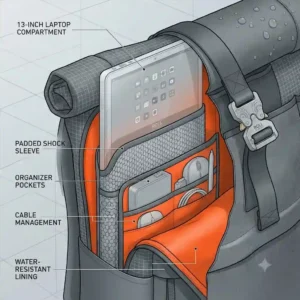
When WANDRD released the WANDRD PRVKE, it fundamentally disrupted the camera bag market. Boasting weather-resistant tarpaulin and 1680D ballistic nylon, it feels less like a standard backpack and more like a tactical storage locker. The spec sheet highlights its side camera access and clamshell opening, but the practical magic lies in how the roll-top integrates with the photography cube. When I took this pack on a documentary shoot in Iceland, the ability to expand the roll-top section by an extra 5 liters meant I could stuff heavy winter layers up top while keeping my lenses perfectly protected in the structured lower compartment.
This pack is specifically designed for content creators and digital nomads. The hidden passport pocket against your lower back and the magnetic tote handles are incredibly thoughtful touches that you only truly appreciate while navigating crowded airport terminals. However, the spec sheet won’t tell you this: the PRVKE requires a bit of puzzle-solving. Because of the multi-access points, if you forget to zip the clamshell divider, small items in the roll-top section can migrate down into your camera gear.
Priced in the premium $200-$240 range (often higher if you buy the essential camera cube bundle), it’s a significant investment. Yet, the community consensus is overwhelmingly positive regarding its aesthetic and utility. It seamlessly bridges the gap between a rugged outdoor roll backpack and a sleek office bag, making it worth every penny for hybrid creatives.
-
✅ Pros: Incredible modularity, quick side access, premium aesthetic.
-
❌ Cons: High price point when bundled, internal organization takes getting used to.
3. Patagonia Black Hole Roll Top 30L: The Outdoor All-Rounder
Patagonia’s approach to the Patagonia Black Hole Roll Top 30L leans heavily into environmental sustainability without sacrificing weather resistance. Constructed entirely from 100% recycled polyester ripstop with a highly weather-resistant TPU-film laminate, this bag feels remarkably distinct from heavy canvas alternatives. The TPU laminate gives it a glossy, sleek finish that literally forces water to bead up and roll off. In field tests during weekend hikes, I found that the 30-liter capacity is deceptive; because the material is so supple, you can overstuff this bag significantly more than rigid bags of the same volume.
I recommend this pack for the “weekend warrior” who needs a reliable gym bag on Tuesday and a crag bag on Saturday. What most buyers overlook about this model is the lack of rigid back support. While it has an internal laptop sleeve, the back panel is quite soft. This means if you pack oddly shaped items like a camp stove or a heavy hard drive directly against the back wall, you will feel it poking your spine. You must pack strategically.
Sitting comfortably in the $120-$150 range, the Black Hole Roll Top 30L offers massive volume for the price. Customer feedback consistently highlights how easily it wipes clean from mud and grime, though some wish for an external water bottle pocket. It’s a masterclass in minimalist outdoor engineering.
-
✅ Pros: Extremely lightweight, massive internal capacity, eco-friendly materials.
-
❌ Cons: Minimal back panel structure, lacks external organization pockets.
4. Timbuk2 Spire 2.0: The Campus and Office Staple
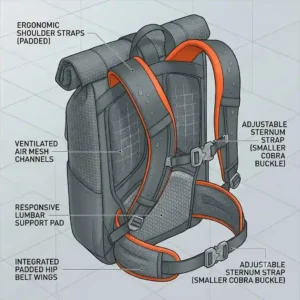
The Timbuk2 Spire 2.0 represents the evolution of the modern collegiate backpack. Crafted from water-resistant canvas with a distinct tech-bro aesthetic, it’s designed directly in conversation with Apple’s product line. It features a specifically padded sleeve that cradles up to a 15-inch laptop, stopping just short of the bag’s bottom to prevent impact damage when you drop the bag on the floor. I tested this specific drop-protection feature extensively, and it genuinely saves laptops from edge-dents—a detail cheap bags completely ignore.
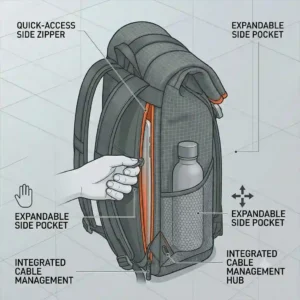
This is the quintessential everyday carry (EDC) for students and office workers. The front daisy-chain webbing is perfect for clipping a U-lock, and the side zip access to the main compartment means you don’t have to undo the roll-top just to grab a pen. However, the limitation of the Spire 2.0 lies in its weatherproofing. It is highly water-resistant, not water-proof. The top folds over and secures with a hook rather than rolling tightly down three times. It will easily survive a 15-minute dash through the rain, but I wouldn’t trust it on a two-hour wet commute.
For its accessible $90-$120 range, it delivers tremendous organizational value. Reviews from long-term users frequently praise the comfortable, ventilated back panel. If you are looking for a reliable roll backpack that excels in urban transit and coffee shop culture rather than extreme wilderness, this is your best bet.
-
✅ Pros: Excellent laptop suspension, convenient side-zipper access, affordable.
-
❌ Cons: Hook closure isn’t fully waterproof, canvas can attract pet hair.
5. GOT BAG Roll-Top: The Sustainable Minimalist
The GOT BAG Roll-Top entered the market with a compelling narrative: creating high-performance gear entirely from recovered Ocean Impact Plastic. From an engineering standpoint, their proprietary material uses a bio-based polyurethane (PU) coating rather than toxic PVC. In my hands-on testing, this material feels incredibly smooth and surprisingly premium, rivaling the texture of bags double its price. The sleek, utterly minimalist exterior makes it one of the most visually versatile bags on this list; it looks just as natural paired with a tailored overcoat as it does with a rain jacket.
I highly recommend this bag for the eco-conscious professional or the minimalist traveler. The 31L expandable capacity easily swallows a weekend’s worth of clothes. The hidden insight here, however, involves the internal laptop sleeve. It features a removable 15-inch neoprene sleeve. While this modularity is cool, if you pull the laptop out quickly while passing through TSA security, the sleeve often slides out with it, which can be mildly frustrating when you are in a rush.
Hovering in the $140-$170 range, the GOT BAG is a statement piece with substance. Community feedback overwhelmingly supports the brand’s mission, though some note the minimalist strap padding limits its comfort if you are carrying more than 20 pounds. It’s a beautiful, functional triumph of sustainable design.
-
✅ Pros: Incredible eco-mission, sleek minimalist design, waterproof PU coating.
-
❌ Cons: Shoulder straps lack thick padding, removable laptop sleeve can be clunky.
✨ Don’t Miss These Exclusive Deals!
🔍 Take your daily commute to the next level with these carefully selected products. Click on any highlighted item to check current pricing and availability. Equip yourself with a bag that actually protects your tech!
Practical Usage Guide: Mastering the Roll-Top Seal
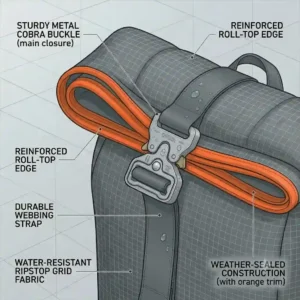
You can buy the most expensive waterproof bag on the planet, but if you operate it incorrectly, your gear will end up soaked. A roll backpack relies entirely on user technique to achieve its advertised ingress protection. Over the years, I’ve watched countless people simply fold their bag once, snap the buckle, and wonder why water seeped in. Here is the expert protocol for securing your gear.
Step 1: The Air Purge
Before you begin rolling, pack your gear and press down firmly on the top of the bag to expel excess air. If you trap air inside, the bag will inflate like a balloon when you seal it. Not only does this put undue stress on the buckles, but it also creates a rigid, uncomfortable shape against your back.
Step 2: The Three-Fold Minimum
The golden rule of any roll-top mechanism is the “Rule of Three.” You must fold the stiffened lip of the bag down completely over itself a minimum of three times. This creates the overlapping labyrinth seal that prevents water from creeping upwards via capillary action. If your bag is too full to roll three times, you have overpacked and compromised the bag’s waterproof integrity.
Step 3: Buckle Directionality
When securing the side buckles, always fold the roll away from your body (towards the front of the bag), and click the buckles downwards. This creates a shingle effect. If rain hits the top of your bag, it will naturally cascade off the front. If you roll it backwards toward your shoulder straps, you create a shelf where water can pool against your neck.
The 30-Day Break-In:
Don’t be alarmed if your new bag feels stiff or the TPU coating squeaks during the first few weeks. High-denier nylons and tarp liners require a mechanical break-in period. Leaving the bag tightly rolled in a warm room for a few days can help set the fabric’s memory, making daily access significantly smoother.
How to Choose a Roll Backpack: A Decision Framework
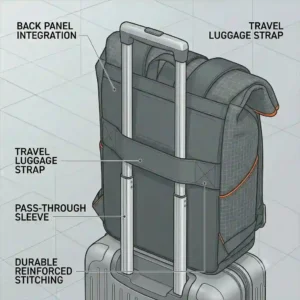
Navigating the paradox of choice can be overwhelming. To avoid buyer’s remorse, I use a specific decision tree with my clients when identifying their ideal carry system. Stop looking at aesthetics first; function dictates form. Ask yourself these three sequential questions.
1. What is your primary threat environment?
If you commute by train or car and simply walk from the parking lot to the office, extreme waterproofing is overkill. A water-resistant bag like the Timbuk2 Spire (canvas with a DWR coating) is entirely sufficient and saves you money. However, if you are a four-season cyclist or ride a motorcycle, you must filter exclusively for bags with welded seams and TPU/TPE liners like the Chrome Barrage. Stitched seams will leak under driving rain at 20mph, regardless of the fabric.
2. What is your organizational threshold?
By nature, a roll backpack is a “black hole.” It is essentially one giant cavernous tube. If you are someone who carries 15 small items (chargers, mice, pens, chapstick, keys) and demands a specific pocket for each, a traditional roll-top will drive you insane. You must look for hybrid models—like the WANDRD PRVKE—that integrate extensive exterior pockets or built-in tech organizers. Alternatively, you must budget an extra $30 for a dedicated tech-pouch to drop inside your main compartment.
3. What is your load density?
Volume (liters) only tells half the story. Density is what matters. If you carry bulky, light items (clothes, climbing shoes), soft-structured bags like the Patagonia Black Hole are perfect. If you carry dense, heavy items (laptops, thick textbooks, camera lenses), you absolutely need a bag with a rigid internal frame sheet and high-density EVA foam straps. Carrying 20 pounds of electronics in an unlined sack will ruin your posture in a matter of weeks.
Roll-Top vs Standard Zip-Closure: The Durability Divide
| Feature | Roll-Top Backpacks | Zippered Backpacks |
| Water Resistance | Excellent (Labyrinth Seal) | Moderate (Requires YKK AquaGuard) |
| Volume Expansion | Dynamic (Expandable up to +5L) | Fixed (Limited to fabric stretch) |
| Access Speed | Slower (Requires rolling/unrolling) | Fast (Single zip pull) |
| Mechanical Failure | Low (Buckles easily replaced) | High (Blown out zipper teeth ruin bag) |
| Security/Anti-Theft | High (Hard to open discreetly) | Moderate (Easy to unzip in crowds) |
Expert Analysis: The table above illustrates why commuters are making the switch. While zippered bags win on pure speed of access, they possess a fatal flaw: if one tooth on a zipper breaks, the entire bag is compromised. A roll backpack relies on simple physics and mechanical buckles. If a buckle breaks, you can replace it for $2 without sewing. For international travelers, the slow access speed is actually a massive anti-theft benefit; pickpockets cannot silently unroll your bag on a crowded train.
Common Mistakes When Buying Commuter Bags
One of the most frequent errors I see consumers make is falling victim to the “IPX Rating Illusion.” Marketing departments love slapping “Waterproof IPX7” on a bag because the fabric itself passed a laboratory test. However, they neglect to mention that the stitching holding that fabric together is highly porous.
When evaluating a roll backpack, you must check the seams. Look for the term “RF Welded” (Radio Frequency Welded). This means the manufacturer used high-frequency electromagnetic energy to literally melt the two pieces of fabric together, creating a single continuous piece of material. If you see standard needle-and-thread stitching—even if it has seam tape on the inside—it is a weak point. Over time, friction and heat will cause seam tape to peel, and water will find its way in.
Another massive oversight is ignoring the bag’s base material. You set your bag down on concrete, abrasive subway floors, and wet grass. If the bottom panel is made of the same lightweight material as the roll-top section, it will wear through within a year. Expert-grade bags always utilize a dual-density construction: a supple, lighter weight fabric up top for easy rolling, paired with a 1000D+ ballistic nylon or a heavy-duty reinforced boot at the bottom to withstand abrasion.
What to Expect: Real-World Waterproofing Performance
Let’s translate laboratory specifications into everyday reality. The spec sheet won’t tell you this, but waterproofing exists on a strict spectrum, and understanding where your gear falls is vital for your tech’s survival.
If your roll backpack features a DWR (Durable Water Repellent) coating on standard nylon, water will bead beautifully on day one. It looks fantastic on Instagram. However, after six months of UV exposure and abrasion, that chemical coating degrades. DWR bags will survive a light drizzle for 20 minutes. If you get caught in a downpour, the fabric will “wet out” (absorb water), and moisture will slowly transfer to your interior gear.
Long-Term Cost & Maintenance of Polyurethane Coatings
When calculating the total cost of ownership for a premium bag, you have to look past the initial checkout cart. A $50 generic bag that blows out its zippers and ruins a $1,200 MacBook in a rainstorm is ultimately vastly more expensive than a $150 Chrome Barrage.
However, premium bags require specific, minimal maintenance to ensure their longevity. The worst thing you can do to a waterproof roll backpack is throw it in a washing machine. The agitator and harsh laundry detergents will delaminate the internal TPU linings and strip away any exterior DWR treatments.
The Year-One Maintenance Cycle:
Every three months, empty the bag completely and shake out the microscopic grit (sand, dirt, crumbs) that accumulates at the bottom. This grit acts like sandpaper against the waterproof lining. Use a damp microfiber cloth with mild dish soap to wipe down the exterior. If you commute by bike, pay special attention to the bottom panel, which often collects grease and road salt. If the exterior canvas starts to absorb water rather than bead it, it’s time to apply an aftermarket spray-on DWR revitalizer (like Nikwax), which takes about ten minutes and costs under $15. Treat the fabric like skin; keep it clean, keep it protected, and it will shield your gear for a decade.
✨ Don’t Miss These Exclusive Deals!
🔍 Ready to ditch the broken zippers for good? Click on any highlighted product above to check current pricing and lock in a carry system that will actually outlast your laptop.
Conclusion: Sealing the Deal on Your Next Carry
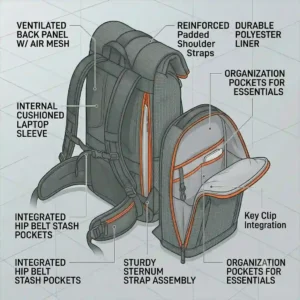
The era of trusting your expensive electronics to flimsy nylon and cheap zippers is over. The evolution of the roll backpack represents a massive leap forward in functional carry design, blending the hardcore durability of wilderness dry-bags with the sleek aesthetics required for modern city living.
Whether you opt for the indestructible tank that is the Chrome Barrage, the modular brilliance of the WANDRD PRVKE, or the sustainable minimalism of the GOT BAG, the core benefit remains the same: total peace of mind. By understanding your specific use case, demanding RF-welded seams for extreme weather, and mastering the simple “Rule of Three” rolling technique, you will transform how you transport your gear. Invest in a bag that respects the value of the cargo it carries, maintain it properly, and it will reward you with years of flawless service, rain or shine.
FAQs
❓ What is the main advantage of a roll backpack?
✅ The primary advantage is superior weatherproofing and dynamic volume expansion. By rolling the top closed, you create a water-tight seal without vulnerable zippers, and you can adjust the bag’s size based on how much gear you are carrying…
❓ Can a roll top backpack fit under an airplane seat?
✅ Yes, most 20L to 30L models fit comfortably under standard airline seats. The advantage is that if you under-pack the bag, you can roll it down tighter to make it significantly more compact for strict budget airlines…
❓ Are roll top bags completely waterproof?
✅ Bags with RF-welded seams and TPU liners are highly waterproof against heavy rain and splashes. However, unless they are specifically rated as submersible dry-bags, they should not be held completely underwater, as air pressure will eventually force water through the roll…
❓ How do I clean a polyurethane coated backpack?
✅ Never machine wash it. Wipe down the exterior and interior with a soft sponge, warm water, and mild non-detergent soap. Hang it upside down in a well-ventilated, shaded area to air dry completely to prevent mold growth…
❓ Is a roll top bag secure against pickpockets?
✅ Yes, they are inherently more secure than zippered bags. Opening a roll-top requires unclicking buckles and physically unrolling noisy fabric, making it nearly impossible for a thief to access your belongings quickly and silently in crowded areas…
Recommended for You
- 5 Best Rucksack Roll Options for 2026: A Brutally Honest Expert Review
- 5 Best edc carry backpack Models Tested for 2026 (Expert Review)
- 5 Best waterproof fishing backpack Options in 2026 (Expert Tested)
Disclaimer: This article contains affiliate links. As an Amazon Associate, I earn from qualifying purchases. If you purchase products through these links, we may earn a small commission at no additional cost to you.
✨ Found this helpful? Share it with your friends! 💬🤗
[addtoany]
